Key takeaways
- The top pick for most buyers who want a capable, enclosed, multi-color FDM platform is the Bambu Lab P1S Combo at $549—it removes the greatest source of frustration for intermediate users. The best value entry point is the FLASHFORGE Adventurer 5M at $249, offering genuine…
Picking from the crowded field of 3d printer brands has never been harder, and it is rarely about raw resolution anymore. The real question a first-time buyer faces is whether a machine will actually produce usable parts out of the box, how much assembly and tuning the platform demands, and whether multi-material or multi-color work is genuinely accessible at the price point. Enthusiasts upgrading from an older Ender or Kobra care about speed, enclosed chambers, and ecosystem lock-in, while parents shopping for children want a closed housing and a library of models that requires zero CAD knowledge.
What separates a worthwhile purchase from a regrettable one is how well the machine matches the buyer’s patience and intended use case. A CoreXY frame rated at 600 mm/s means little if you plan to print slow, high-detail miniatures with fragile supports. An auto-leveling sensor on a $200 mini printer saves a genuine headache, but a $549 combo with AMS still assumes you are comfortable dialing in slicer profiles. This roundup compares published specifications, street prices, and recurring themes in owner feedback across 3d printer brands to sort these eight options by who they truly serve.
Our top picks


As an Amazon Associate we earn from qualifying purchases at no extra cost to you. Ratings are shown as listed on Amazon.
Quick Picks
| Product | Best for | Price |
|---|---|---|
| Bambu Lab P1S Combo | Multi-color FDM printing | $549 |
| FLASHFORGE Adventurer 5M | Speed and coreXY value | $249 |
| AOSEED AI 3D Printer | Kids with a guided experience | $329.99 |
| FLASHFORGE AD5X | Precision multi-color work | $349 |
| Entina Tina2C | Absolute beginners and STEM | $199.99 |
| AMOLEN Silk PLA Bundle | Display models and gifts | $27.99 |
| 3D Printer Tools Kit (34 pcs) | Post-processing on a budget | $15.99 |
| 68Pcs Tools Kit with Case | Owners of multiple printers | $34.19 |
How We Picked
We evaluated each entry against four criteria drawn from spec sheets and long-term owner reports: first-print success rate (does the machine deliver a decent part straight from the box?), build quality and long-term reliability of the frame and hot end, software and ecosystem friction (how steep is the learning curve between unboxing and a finished print?), and value relative to the price bracket it occupies. Where a manufacturer advertises a speed or temperature figure, we cross-referenced that claim with community reports of sustained performance.
The 8 Best 3D Printer Brands in 2026
Bambu Lab P1S Combo
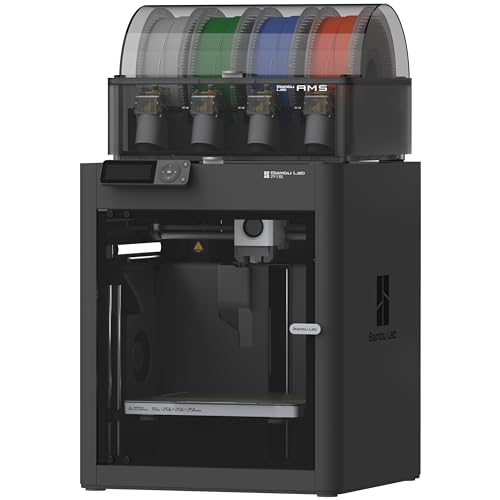
The P1S Combo is aimed at hobbyists and small studios that want reliable multi-color output without building a separate enclosure or hand-wiring an AMS. Owners consistently praise the enclosed chamber, which stabilizes ABS and ASA parts, and the plug-and-play nature of the bundled AMS unit. The CoreXY kinematics keep motion smooth even at high accelerations, and the overall finish quality on functional parts is noticeably better than budget open-frame alternatives. The main drawback is the locked ecosystem: third-party filament works, but Bambu Lab has historically restricted some slicer features and cloud functions to verified materials, which irritates tinkerers. Skip this combo if you are on a tight budget or refuse to accept any form of software gatekeeping on your hardware.
FLASHFORGE Adventurer 5M
For buyers who want the fastest credible single-extruder FDM printer under $250, the Adventurer 5M is difficult to ignore. The 600 mm/s rated speed is supported by a rigid CoreXY all-metal frame, and the 280°C direct extruder with a quick-swap nozzle system means material changes take seconds rather than minutes. Auto leveling works reliably out of the box according to most owner reports, and the 220x220x220 mm volume handles the majority of common projects. The trade-off is a limited ecosystem for multi-color or multi-material printing—you are essentially locked into single-extruder output. Skip it if your primary goal is full-color figurines or you need a heated enclosure for engineering filaments beyond PLA and PETG.
AOSEED AI 3D Printer for Kids
The AOSEED targets parents and educators who want a child to produce a tangible print within minutes, not after a week of calibration. The enclosed design keeps hot components away from small hands, the AI-driven interface simplifies model selection from a library of over 8,000 designs, and the 400 mm/s speed keeps impatient kids engaged while a part builds. Owner feedback highlights the safety enclosure and the guided app experience as the key differentiators from generic budget printers. The limitation is creative ceiling: advanced users will find the slicer controls shallow, and the enclosed size constrains larger projects. Skip this if you are an adult hobbyist seeking deep customization or multi-material capability.
FLASHFORGE AD5X Multi-Color 3D Printer
The AD5X extends the Adventurer platform into multi-color territory with a 300°C direct-drive extruder and a one-click auto-leveling system that owners report as genuinely reliable. The 600 mm/s CoreXY frame carries over, so speed and color mixing coexist without the dramatic time penalty some competitors impose. Build volume matches the single-color variant at 220x220x220 mm, which is practical for most tabletop projects. The recurring complaint centers on the color-change purge volume: each filament swap wastes material, inflating consumable costs for high-frequency users. Skip it if you print large monochrome functional parts and view multi-color as a gimmick you will not maintain.
Entina Tina2C
The Tina2C is the most approachable entry point on this list. It ships fully assembled, claims an eight-minute setup to first print, and pairs with an app that includes a library of over 3,000 models plus STEM modules for children. The auto-leveling bed and WiFi control remove the intimidation factor entirely. Owner reviews praise the simplicity and the compact footprint on a desk. The build volume is smaller than the competition, and the plastic frame, while adequate for PLA, limits material options. Skip it if you intend to print functional parts in ABS, nylon, or any filament requiring sustained bed temperatures above the safe range.
AMOLEN Silk PLA Filament Bundle
This four-spool bundle of dual-color silk PLA at 1.75 mm gives any FDM printer a dramatic visual upgrade for display models, cosplay props, and decorative prints. Owners note the shiny finish hides layer lines effectively, making prints look more polished without post-processing. At $27.99 for 800 g of filament total, the per-spool cost is reasonable for experimentation. The con is durability: silk PLA is brittle and unsuitable for functional or load-bearing parts, and the dual-color transition requires consistent extrusion to avoid banding on slow prints. Skip it if your workflow prioritizes strength or you are still fighting with bed adhesion on your current filament.
3D Printer Tools Kit, 34 pcs
This kit covers the essential post-processing tools a new owner needs: nozzle cleaning needles, scrapers for bed removal, finishing files in five grades, brushes, a wire cutter, and an engraving knife. At under $16, it is one of the cheapest ways to improve the final quality of prints across all FDM and SLA platforms. Owners appreciate having everything in one package rather than sourcing items individually. The downside is build quality on some of the metal files, which can feel soft compared to dedicated tooling. Skip it if you already own a comprehensive set of needle files and precision scrapers from a machinist supply.
68Pcs 3D Printer Tools Kit with Storage Case
The larger 68-piece kit adds a deburring tool, hand drill, tweezers, and a hard storage case, making it the better choice for owners of multiple printers or those who transport their tools to workshops and classrooms. Compatibility with Bambu Lab, Ender, and Kobra ecosystems is listed, though the tools themselves are universal. Owner feedback highlights the case as the practical upgrade, keeping small bits from disappearing. The price at $34.19 still undercuts buying components separately. The minor drawback is redundancy: experienced users will already own several of the included items. Skip it if you only print occasionally and already manage with a single scraper and needle set.
Buying Guide
Frame Type and Speed Claims
CoreXY frames dominate the current generation of 3d printer brands because they allow both motors to stay stationary while the bed moves only on one axis, reducing vibration at high acceleration. When a manufacturer advertises 600 mm/s, check whether that figure applies to travel moves only or to actual infill and perimeter work. Owner reports on sustained print quality at speed are more informative than the headline number, because thin walls and small features often require dramatically reduced speeds to avoid ringing.
Enclosure and Material Compatibility
An enclosed chamber is not cosmetic. It stabilizes ambient temperature, which prevents warping on ABS, ASA, nylon, and PC filaments. If you plan beyond PLA and PETG, prioritize machines like the P1S Combo that ship with a full enclosure and active heating. Open-frame printers can be retrofitted, but the DIY approach adds cost and introduces safety concerns around heat and fumes. For kids or classroom use, a sealed housing is a non-negotiable safety feature regardless of material choice.
Multi-Color and Multi-Material Systems
True multi-color printing adds complexity: purge volumes waste filament, color-change logic lengthens print times, and each additional filament requires its own spool position or AMS module. Evaluate whether the workflow savings of pre-bundled systems justify the cost premium over running separate single-color prints and assembling after. For functional parts, multi-color rarely adds structural value, so weigh the visual benefit against increased consumable waste before committing to a bundle like the AD5X.
Our Verdict
The top pick for most buyers who want a capable, enclosed, multi-color FDM platform is the Bambu Lab P1S Combo at $549—it removes the greatest source of frustration for intermediate users. The best value entry point is the FLASHFORGE Adventurer 5M at $249, offering genuine speed and reliability for single-material work. However, if the primary user is a child under twelve, the AOSEED AI 3D Printer wins because its guided app and safety enclosure reduce the adult supervision burden, making the slightly higher price a worthwhile trade.
FAQ
Do I need a heated bed for basic printing?
For PLA, a standard bed with a PEI or textured surface is sufficient and heated beds are optional. PETG benefits from a warmed surface to prevent sticking, and ABS or nylon requires active heating above 90°C to avoid warping, so consider your intended materials before deciding on enclosure features.
Is multi-color printing worth the extra cost?
Multi-color adds visual appeal for figurines, toys, and decorative items but introduces purge waste and longer print times. For functional prototypes or mechanical parts, single-color printing on a fast machine like the Adventurer 5M delivers better value and simpler workflow.
Can I use any brand of filament on these machines?
Most FDM printers accept standard 1.75 mm filament regardless of brand. Some enclosed systems like the Bambu Lab P1S implement software recognition for verified spools, though manual selection and third-party profiles still work. Always check whether your printer firmware gates material profiles before stocking bulk generic filament.
What tools do I actually need after my first print?
A scraper for bed removal, flush cutters for support snipping, and a small file set for finishing covers the majority of post-processing tasks. A nozzle cleaning kit becomes essential once you switch materials frequently. Bundled tool kits at under $35 replace these individual purchases conveniently.