Key takeaways
- Pros: Structured full-session plans rather than scattered exercise descriptions; accessible to complete beginners with no gear
- Con: Physical book format means you cannot easily reference it hands-free during a set
Most people searching for home workout routines hit the same wall: the internet offers thousands of free plans, yet very few of them give you a structured system that survives contact with real life. You need something you can glance at mid-session without fumbling through a phone app, or a book that lays out a progressive plan so you are not guessing your way through week four. The products on this list solve that problem at different price points and with different formats — printed cards, wall posters, and guided digital routines — each designed to replace the chaos of open-tab browsing with a clear next step.
What separates a worthwhile purchase from a waste of money in this category is format fit and content depth. A $1 book that dumps 200 exercises without programming guidance is fundamentally different from a structured six-week routine, even though both claim to solve “home workouts.” Similarly, a single poster listing dumbbell exercises is less useful than a multi-sheet set that covers stretching, resistance bands, and bodyweight movements together. We compared each option on published specs, listed price, and owner feedback from verified buyers to sort the genuinely useful from the merely cheap.
Our top picks



As an Amazon Associate we earn from qualifying purchases at no extra cost to you. Ratings are shown as listed on Amazon.
Quick Picks
| Product | Best For | Price |
|---|---|---|
| 100 No-Equipment Workouts Vol. 1 | Beginners wanting full-session structure | $15.25 |
| POCAZONE Dumbbell Workout Posters | Visual learners who train with dumbbells | $15.95 |
| NewMe Fitness Exercise Cards | Shuffling through options at a glance | $19.97 |
| gisgfim 12PCS Workout Posters | Building a full home gym wall | $17.99 |
| 9Pcs Exercise Poster Set | Maximum equipment variety on a budget | $7.99 |
| Palace Learning QuickFit 3 Pack | Large-format reference in a garage gym | $17.97 |
| Home Workout For Beginners | Lowest-risk entry into guided routines | $0.99 |
| goremote Dumbbell Poster Set | Compact setup with minimal wall space | $9.95 |
How We Picked
We evaluated these options against four criteria that matter most in this category: format suitability for mid-workout use, breadth of exercises covered relative to price, programming structure (does it tell you what to do next or just hand you a list?), and build quality for the stated price. A product that checks three of these boxes is worth buying; one that checks only price is usually a lesson learned cheaply.
The 8 Best Home Workout Routines in 2026
100 No-Equipment Workouts Vol. 1
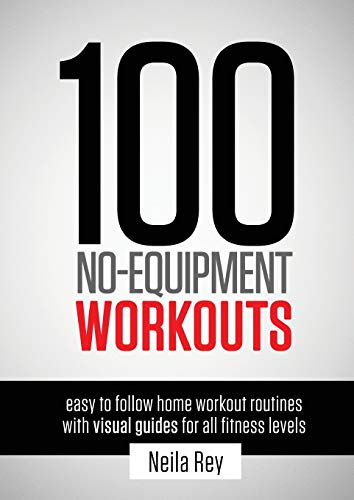
This book targets the person with zero gym equipment who still wants session-level programming rather than a random exercise list. Owners appreciate that it covers all fitness levels, meaning the first pages are not a wall of text you need to skip. The no-equipment constraint keeps it accessible, and the 100-workout count provides enough variety to avoid repeating the same routine weekly.
- Pros: Structured full-session plans rather than scattered exercise descriptions; accessible to complete beginners with no gear
- Con: Physical book format means you cannot easily reference it hands-free during a set
Skip this if you already own resistance bands or dumbbells and want equipment-specific guidance; you will get more from a poster set that shows loaded movement patterns.
POCAZONE Dumbbell Workout Posters, 6 Pack
Aimed at people whose primary equipment is a pair of dumbbells, this six-pack gives wall-mounted visual reference for multiple muscle groups. Owners note the included video guide as a meaningful upgrade over static posters alone, since it clarifies form on movements where angle matters. The six-pack format lets you arrange a cohesive gym wall without buying multiple sets.
- Pros: Video guide adds form instruction beyond the printed visuals; six sheets cover enough muscle groups for full-body programming
- Con: Limited to dumbbell movements, so bodyweight or band work still needs a separate resource
Skip this if your home setup has no wall space or you train exclusively with bodyweight; the format assumes a garage or spare-room gym.
NewMe Fitness Exercise Cards for Home Workouts
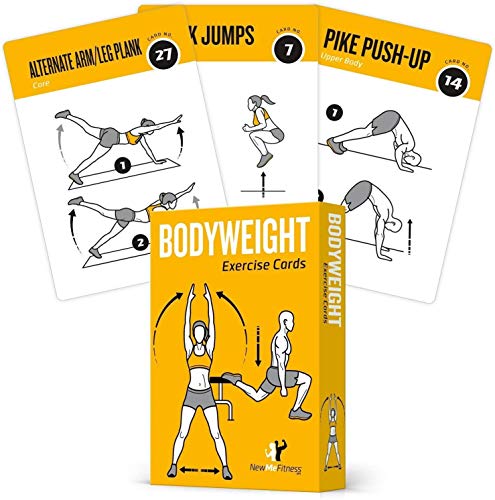
The deck format appeals to people who want a pick-a-card approach to building their own sessions, or who prefer shuffling through options instead of scrolling. It serves both women and men, and owners report the physical card stock holds up well with frequent handling. The flexibility of pulling random cards works as a creativity tool when your usual routine feels stale.
- Pros: Portable and hands-free-friendly; card format encourages building varied sessions without a fixed plan
- Con: No built-in progression or weekly structure, so it requires more planning from the user
Skip this if you want a guided program that tells you exactly what to do each day; cards assume you already know how to assemble a session.
gisgfim 12PCS Workout Posters for Home Gym
This is the broadest single purchase on the list, covering dumbbells, bodyweight, stretching, resistance bands, yoga, and kettlebells across twelve sheets. Owners with mixed-equipment garages find it replaces several smaller sets. The muscle engagement chart component helps users understand which movements overlap, which is useful for avoiding redundancy in a self-built plan.
- Pros: Twelve sheets span more modalities than any other product here; garage gym aesthetic doubles as decor
- Con: Wide coverage means less depth per modality compared to single-topic sets
Skip this if you only use one type of equipment; you are paying for sheets that will stay rolled up in a drawer.
9Pcs Exercise Poster Set
At $7.99, this nine-sheet set is the price-to-coverage leader. It spans dumbbells, kettlebells, yoga, stretching, Pilates, resistance bands, stability ball, and bodyweight exercises. Owners highlight the low risk: even if you discard two or three sheets, you still get usable content. The educational-fitness framing makes it practical for people who want reference material without a premium price tag.
- Pros: Best coverage-per-dollar on the list; broad equipment range for a small budget
- Con: Print quality and paper stock are budget-tier, so durability may suffer in humid or high-traffic spaces
Skip this if you need a premium wall look for a visible living-space gym; the visual finish is functional rather than decorative.
Palace Learning QuickFit 3 Pack
These laminated 18″ x 24″ sheets target people who want large, legible wall charts without the bulk of a twelve-piece set. The three-topic split — dumbbell, bodyweight, stretching — covers the core needs of most home exercisers. Owners appreciate the laminate finish for wiping down sweat and dust, a practical detail that paper posters cannot match.
- Pros: Large format is readable from across the room; laminate survives real gym conditions
- Con: Only three sheets means equipment types beyond dumbbells and bodyweight are absent
Skip this if you need band, kettlebell, or yoga guidance; the three-sheet scope is intentionally narrow.
Home Workout For Beginners
At $0.99, this digital book removes almost every barrier to entry. The six-week guided structure is its defining feature: it tells a beginner exactly what to do each day, removing the decision fatigue that kills most home exercise habits. The mindset component addresses the psychological side of starting, which owners say matters as much as the physical plan.
- Pros: Lowest price with real programming structure; six-week plan eliminates guesswork for first-time exercisers
- Con: Digital-only format means you need a screen or printout for mid-session reference
Skip this if you already train consistently; the beginner scope will feel too easy and too brief after the first week.
goremote Dumbbell Workout Poster Set (2 Pack)
Two sheets, focused on dumbbell exercises, at $9.95. This suits people with limited wall space or renters who cannot mount large sets. Owners with small apartments report that two well-placed charts are easier to keep visible than a full gallery wall. The compact format also works as a clip-on reference near a weight rack.
- Pros: Minimal footprint fits small spaces; focused content avoids information overload
- Con: Only dumbbell coverage, and the limited sheet count may leave muscle groups under-referenced
Skip this if your space allows more coverage; the nine-piece or twelve-piece sets offer strictly more content at similar or better value per dollar.
Buying Guide
Format Fit for Your Training Environment
A poster on a wall you face during every set will be used. A book on a coffee table three rooms away will not. Match format to where you actually train: wall space favors poster sets, small apartments favor compact two- or three-sheet options, and a phone or tablet stand in your workout area makes digital books practical. If you train in a shared space where wall mounting is impossible, cards or a book with a phone stand are your realistic options.
Equipment Breadth Versus Focused Depth
Multi-modal poster sets like the gisgfim twelve-piece or the nine-piece set cover bands, kettlebells, yoga, and more, but each sheet receives less exercise count than a single-topic set. If you own only dumbbells, a focused six-pack or two-sheet set with form cues and a video guide will serve you better than a broad set where half the sheets gather dust. Buy for the equipment you actually use, not the equipment you might one day own.
Programming Structure Versus Exercise Reference
This is the most underappreciated distinction. A list of exercises is a reference; a guided weekly plan is a routine. If you are new to home workout routines or prone to quitting after two weeks, pay for structure — the $0.99 six-week plan or the 100-workout book. If you already have a split and just need form reminders, posters and cards deliver more value per dollar because they fill the reference role without the planning overhead.
Our Verdict
Top pick: the gisgfim 12PCS Workout Posters offer the best balance of coverage, visual reference quality, and value for anyone with a dedicated home gym space. Budget pick: Home Workout For Beginners at $0.99 is the lowest-risk way to start a structured routine, and its six-week plan is genuinely useful for anyone who has never maintained a home training habit. Conditional winner: if you train in a shared or rented space with no wall access, NewMe Fitness Exercise Cards win because the deck format works on a table or chair arm without mounting anything.
FAQ
Are printed workout posters actually useful, or will I ignore them?
Owner feedback consistently shows that posters placed directly in your line of sight during exercise get used, while those in a hallway or storage room do not. The key variable is placement relative to your workout position, not the content quality alone.
Do I need equipment-specific routines, or is a general plan enough?
A general plan works for the first several weeks of training, but as you add weight or varied resistance, form cues for loaded movements become critical. Poster sets with detailed angle and range-of-motion illustrations address this better than text-only books.
What is the best starting point for someone with zero experience?
A structured guided routine with a defined end date, like the six-week plan, beats an open-ended exercise list because it eliminates the daily decision of what to train. Pair it with a single dumbbell poster for form reference and you have a complete beginner system under $10.
Can I replace all gym memberships with home workout routines?
For general fitness and strength maintenance, yes — the resources on this list cover enough volume and variety. For sport-specific training, heavy compound lifts beyond dumbbell ranges, or group accountability, a gym still has advantages that no poster or card deck replicates.