Key takeaways
- The best bookshelf speakers are the ones whose sensitivity, bass capability, and physical size suit your room and amplifier—not simply the pair with the largest woofer or the lowest listed frequency. Our top picksTop pickEdifier R1280T Powered Bookshelf Speakers -2.0…
The best bookshelf speakers are the ones whose sensitivity, bass capability, and physical size suit your room and amplifier—not simply the pair with the largest woofer or the lowest listed frequency.
Our top picks
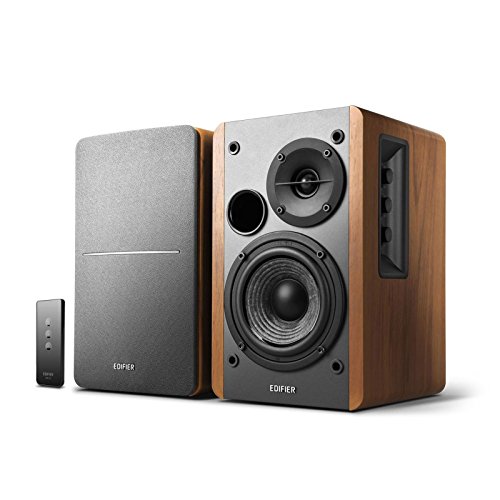


As an Amazon Associate we earn from qualifying purchases at no extra cost to you. Ratings are shown as listed on Amazon.
Quick picks by room and listening goal
| Situation | Best fit | Why it makes sense |
|---|---|---|
| Small room, desk, or apartment | JBL Stage A130 | Compact 5.25-inch design, relatively high 86 dB sensitivity, and easy placement |
| Balanced music and home theater | Wharfedale Diamond 12.1 | Controlled cabinet, forgiving treble, and useful bass from a modest enclosure |
| Large bookshelf speaker for a medium room | ELAC Debut 2.0 B6.2 | Large 6.5-inch woofer and strong low-frequency output for the money |
| Detailed stereo listening | KEF Q350 | Coaxial Uni-Q driver gives consistent imaging over a broad listening area |
| Warm, spacious presentation | Q Acoustics 3030i | Large cabinet volume, rear-firing port, and relaxed balance |
These are passive speakers, so they require a stereo amplifier or AV receiver. Typical market pricing ranges from roughly $250 to $800 per pair, depending on discounts, finish, and model generation. A subwoofer can add another $300 to $1,000, but it is not automatically necessary in a small room.
How to match bookshelf speakers to your room
Small rooms: prioritize control and placement
For a room under about 150 square feet, a 4- to 5.25-inch woofer is often easier to integrate than a large 6.5-inch design. Smaller speakers usually produce less deep bass, but they are less likely to overload the room with one-note bass when placed near a wall. Their narrower cabinets also fit more easily on a desk, media console, or compact stand.
Look for sensitivity around 85 dB or higher if you are using a modest amplifier. A speaker rated at 86 dB sensitivity needs less power to reach a given volume than one rated at stiffer 84 dB, although sensitivity figures from different manufacturers are not perfectly comparable.
Medium rooms: balance output with distance
In a 150- to 250-square-foot room, a 5.25- or 6.5-inch woofer is usually the most versatile choice. It can produce convincing kick drums and movie effects without requiring a subwoofer immediately. However, the larger enclosure should sit on a rigid stand rather than directly on a resonant cabinet.
For listening positions 8 to 12 feet away, aim for speakers rated at approximately 85 to 88 dB sensitivity and an amplifier capable of around 50 to 100 watts per channel into the speaker’s nominal impedance. More power is useful for headroom, but it does not turn a bookshelf speaker into a full-range floorstander.
Large rooms and home theater: consider output before bass claims
In rooms above 250 square feet, or when the listening position is more than 12 feet away, maximum output and sensitivity become more important. A pair of bookshelf speakers can still work well as front or surround channels, but a powered subwoofer should handle frequencies below roughly 70 to 100 Hz. This reduces the excursion demanded from the main speakers and gives the AV receiver more headroom.
For loud movie playback, choose speakers with robust power handling and at least moderate sensitivity. Do not select solely by a quoted frequency response such as “45 Hz–35 kHz.” That range may not state whether the bass figure is measured at a realistic tolerance, and it says nothing about distortion at high volume.
Head-to-head: what the main contenders do differently
| Model | Driver and enclosure | Approx. sensitivity | Approx. low-frequency specification | Approx. size and weight per speaker | Placement and amplification notes |
|---|---|---|---|---|---|
| JBL Stage A130 | 5.25-inch woofer, 1-inch tweeter, rear port | 86 dB | About 55 Hz | 12.6 × 7.6 × 9.0 in; about 11 lb | Easy to drive; leave roughly 8–12 inches from the rear wall |
| Wharfedale Diamond 12.1 | 5.25-inch woofer, 1-inch tweeter, rear port | 88 dB | About 65 Hz | 12.2 × 6.9 × 9.8 in; about 14 lb | Flexible for moderate amplifiers; benefits from stands and toe-in |
| ELAC Debut 2.0 B6.2 | 6.5-inch woofer, 1-inch tweeter, front port | 87 dB | About 44 Hz | 14.8 × 10.6 × 8.8 in; about 16 lb | Front port helps near-wall placement; use a stable stand |
| KEF Q350 | 6.5-inch coaxial Uni-Q driver, rear port | 87 dB | About 42 Hz | 14.2 × 8.3 × 12.0 in; about 17 lb | Excellent imaging; avoid placing the rear port directly against a wall |
| Q Acoustics 3030i | 6.5-inch woofer, 0.9-inch tweeter, rear port | 88 dB | About 46 Hz | 12.8 × 7.9 × 8.7 in; about 13 lb | Moderately easy to drive; needs breathing room behind the cabinet |
Specifications vary by region and measurement method, so use the table to establish scale rather than to treat every number as a laboratory comparison. The practical distinction is clearer: the JBL is compact and forgiving, the Wharfedale emphasizes refinement, the ELAC and KEF offer more bass capability, and the Q Acoustics combines a relatively large sound with a manageable footprint.
Amplifier requirements: a useful estimate
Suppose a speaker has 86 dB sensitivity and your seat is 10 feet away. Distance reduces level compared with the one-meter sensitivity measurement. Allowing roughly 9 to 10 dB for distance, the speaker may produce about 76–77 dB from 1 watt at the listening position. Reaching 95 dB peaks requires approximately 18–20 dB more level, or around 64 to 100 watts, before allowing extra headroom.
This is an estimate, not a guarantee. Room reflections, speaker impedance, music dynamics, and the amplifier’s current capability all matter. For normal listening, a clean 40- to 60-watt-per-channel amplifier can be adequate with efficient speakers. For a large room, demanding movie soundtracks, or insensitive speakers, 80 to 120 watts per channel gives more margin.
Do not confuse loudness with bass extension. A powerful amplifier cannot make a small woofer safely reproduce deep, high-volume bass. Set an AV receiver’s crossover near 80 Hz when using a subwoofer, then adjust by ear and measurement. With no subwoofer, use the speakers’ manufacturer-recommended setting or the receiver’s full-range mode, while watching for audible strain.
Placement is part of the speaker choice
- Use stands when possible. Put the tweeters near ear height while seated. A 24- to 30-inch stand is common for a low sofa, but measure rather than buy by habit.
- Keep the cabinets stable. Tighten stand hardware and use appropriate isolation pads. A wobbly stand blurs bass and creates a safety risk.
- Start 12 to 24 inches from the front wall. Move rear-ported speakers farther out if bass sounds thick. Front-ported models are more tolerant, but they still need space.
- Form an approximate triangle. Begin with speaker spacing close to the distance from each speaker to your head. Toe the speakers inward until vocals lock into the center.
- Do not place them inside a shelf cubby. Nearby side, top, and rear panels cause reflections and can emphasize certain frequencies. If a shelf is unavoidable, pull the speakers flush with the front edge and use isolation pads.
Cabinet construction and long-term ownership
Cabinet rigidity matters because panels that vibrate add coloration to voices and instruments. MDF cabinets with internal bracing are common at this price, while thicker front baffles and better damping can reduce resonance. A heavier speaker is not automatically better, but weight often reflects a larger cabinet, stronger magnet, thicker panels, or more bracing.
The parts most likely to suffer over time are the grille fabric, foam or rubber surrounds, binding-post threads, and tweeter diaphragms. Keep grilles fitted in homes with pets or children, but remove them for critical listening if they audibly affect treble. Dust with a dry microfiber cloth; do not spray cleaner onto the drivers or cabinet seams. Avoid pressing dome tweeters, and never use a vacuum directly on a cone or surround.
Clipping is a more common failure cause than ordinary rated power. If sound becomes harsh, compressed, or crackly, reduce the volume. Also check polarity: reversing one speaker’s positive and negative connections can make bass disappear and weaken the center image.
Which should you buy?
Choose the JBL Stage A130 for a compact system, desktop, or small room where easy driving and placement flexibility matter most. Choose the Wharfedale Diamond 12.1 when you want a balanced music-first speaker that remains comfortable with long listening sessions. Pick the ELAC Debut 2.0 B6.2 if you want substantial bass from a large bookshelf enclosure and can provide a solid stand. The KEF Q350 is the strongest choice for wide, precise imaging and a shared listening position, while the Q Acoustics 3030i suits listeners who prefer a fuller, relaxed presentation.
For a first system, spend enough on stands, speaker cable with secure connections, and sensible placement rather than chasing a small difference in frequency-response numbers. The best bookshelf speakers should fit the room physically, reach your preferred volume without strain, and leave the amplifier with enough headroom for peaks.