Key takeaways
- Measure first: compare the speaker’s full width and depth with the shelf, including cable clearance and grille thickness.
- Do not place it inside a closed cubby without checking: reflections from the top and sides can make speech sound boxy.
- Protect the drivers: use a soft, dry cloth for the cabinet and a gentle brush or low-power vacuum held away from the tweeter. Do not press a vacuum nozzle against a cone.
- Watch for loose grilles: grille pegs and fabric are often the first cosmetic parts to wear, especially when the speaker is removed frequently.
- Check amplifier compatibility: a low nominal impedance does not automatically make a speaker unsuitable, but several 4-ohm channels played loudly can stress a basic AVR.
- Do not choose by sensitivity alone: a high-sensitivity speaker may play louder, but tonal matching and off-axis clarity still determine whether speech sounds natural.
Best Center Channel Speakers for Clearer Dialogue
The best center channel speaker for most living rooms is the Polk Reserve R400, while the KEF R6 Meta is the stronger premium choice, the ELAC Uni-Fi 2.0 UC52 offers excellent value, and the Klipsch RP-504C II suits listeners who want high output with an easy-to-drive amplifier.
A center speaker handles much of a movie’s spoken dialogue, so its important qualities are not simply maximum bass or volume. Clear consonants, natural vocal timbre, low distortion at normal listening distances, suitable sensitivity, and a cabinet that fits your furniture matter more. The best match also depends on the left and right speakers: a center with a noticeably different tonal balance can make voices sound detached as characters move across the screen.
Our top picks
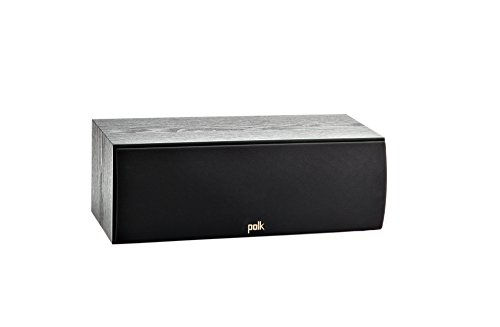
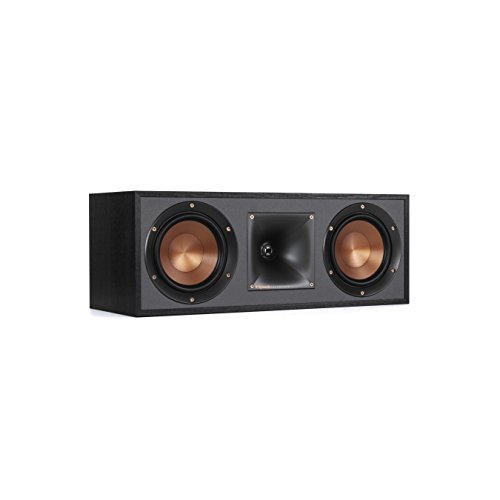
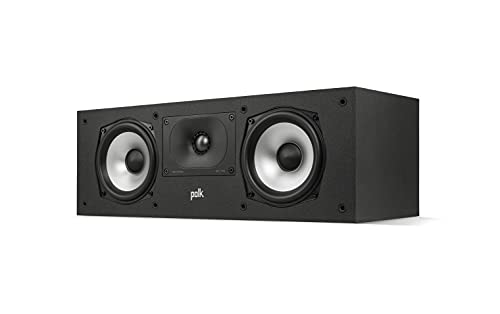
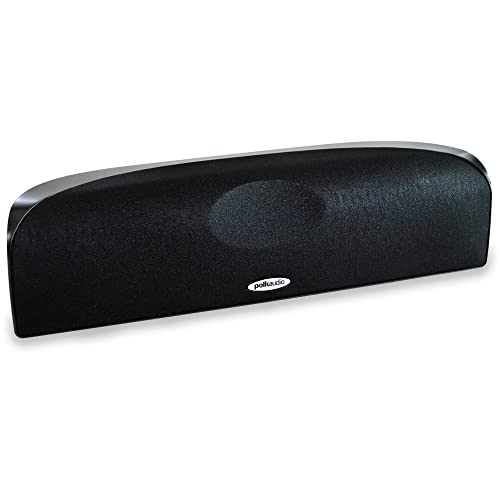
As an Amazon Associate we earn from qualifying purchases at no extra cost to you. Ratings are shown as listed on Amazon.
Quick comparison of the leading choices
| Speaker | Design | Approx. size (W × H × D) | Nominal impedance | Sensitivity | Best suited to |
|---|---|---|---|---|---|
| Polk Reserve R400 | 2.5-way, dual 6.5-inch woofers | 25.1 × 8.5 × 14.6 in | 4 ohms | 87 dB | Large rooms and detailed dialogue |
| KEF R6 Meta | 3-way, Uni-Q coaxial midrange/tweeter | 24.0 × 6.3 × 12.6 in | 4 ohms | 88 dB | Premium systems and wide seating |
| ELAC Uni-Fi 2.0 UC52 | 3-way, coaxial midrange/tweeter | 27.1 × 7.9 × 10.6 in | 6 ohms | 87 dB | Value-focused systems |
| Klipsch RP-504C II | 2.5-way, four 5.25-inch woofers | 31.1 × 6.8 × 14.4 in | 8 ohms | 96 dB | High-output home theaters |
| Wharfedale Diamond 12.C | 2-way, dual 5.25-inch woofers | 20.9 × 6.1 × 8.5 in | 4 ohms | 89 dB | Smaller rooms and balanced voices |
| Bowers & Wilkins HTM6 S3 | 2-way, dual 4-inch woofers | 18.7 × 8.5 × 10.3 in | 8 ohms | 87 dB | Compact premium systems |
Dimensions and specifications can vary slightly by market or revision. Sensitivity figures are not measured under one universal standard, so use them for broad comparisons rather than as a guarantee of equal loudness.
Best overall: Polk Reserve R400
The Polk Reserve R400 is a strong all-rounder because its 2.5-way layout gives the center channel more controlled vocal coverage than a basic horizontal two-way design. Its dual 6.5-inch woofers provide useful lower-midrange weight for male voices, soundtracks, and television programs without requiring the subwoofer to reproduce every vocal fundamental.
Dialogue is typically substantial and focused, with enough treble detail to reveal consonants without making poorly recorded voices excessively sharp. The cabinet is deep, however, and its 4-ohm nominal impedance deserves attention. It is a good choice for an AVR with a stable power supply, especially in a medium or large room, but not the safest pick for a very old or entry-level receiver driving several demanding channels.
Best premium choice: KEF R6 Meta
The KEF R6 Meta uses KEF’s Uni-Q coaxial driver, placing the midrange and tweeter in the same acoustic center. That arrangement can help dialogue remain consistent for listeners sitting to the side of the main listening position. It is particularly useful when a sofa is wider than the screen or when several people watch together.
The R6 Meta has a refined, even vocal balance and good control at higher levels. Its low profile is easier to place below a television than some large three-way centers, although its depth still requires a substantial shelf. It is a natural partner for KEF’s R-series left and right speakers. It can work with other brands, but mixing it with bright or aggressively voiced speakers may reduce the seamless front-stage effect.
Best value for detailed voices: ELAC Uni-Fi 2.0 UC52
The ELAC Uni-Fi 2.0 UC52 is one of the more technically interesting choices at its usual mid-market price. Its coaxial midrange and tweeter provide a coherent sound source, while the separate woofers add scale. Dialogue tends to sound full rather than thin, and the center remains composed at ordinary movie levels.
Its cabinet is wide and its 6-ohm nominal impedance is moderate, but the speaker is not exceptionally sensitive. In a large room, or when listening at cinema-like levels, an AVR with reasonable power reserves is preferable. The UC52 is especially appealing when paired with ELAC Uni-Fi 2.0 left and right speakers, though it can be integrated with another system after careful level and equalization adjustment.
Best for high output: Klipsch RP-504C II
The Klipsch RP-504C II has a 96 dB sensitivity rating, making it much easier to drive loudly than most speakers in this comparison. That is useful for large rooms, action films, and AVRs that have limited power. Its horn-loaded tweeter delivers strong articulation and forward presence, so quiet dialogue can remain intelligible over sound effects.
The trade-off is size and tonal character. At more than 31 inches wide, it may not fit between the legs of many televisions or inside a narrow media console. Its lively presentation should be matched with the Klipsch Reference Premiere left and right channels for the most consistent front soundstage. If your existing speakers are warm and relaxed, auditioning or using room correction is sensible before buying.
Best for limited space: Wharfedale Diamond 12.C
The Wharfedale Diamond 12.C is shorter and less deep than several larger alternatives. Its 89 dB sensitivity is respectable, and its voicing generally favors smooth, natural speech rather than exaggerated treble. It is a practical choice for a modest living room, apartment, or television stand with limited depth.
Its dual 5.25-inch woofers cannot move as much air as the larger Polk or Klipsch designs. That is not a major problem for normal dialogue, but the difference becomes more apparent in a large room or at high playback levels. The Diamond 12.C makes the most sense with Diamond-series front speakers, particularly if you want a restrained, cohesive sound.
How to choose by room and system
| Your situation | Recommended direction | Why |
|---|---|---|
| Small room, TV stand, moderate volume | Wharfedale Diamond 12.C or Bowers & Wilkins HTM6 S3 | More manageable cabinets and controlled vocal balance |
| Medium room, mixed movie and television use | Polk Reserve R400 or ELAC Uni-Fi 2.0 UC52 | Good detail, scale, and integration flexibility |
| Large room or frequent high-volume viewing | Klipsch RP-504C II or Polk Reserve R400 | Higher output capability and strong dynamic headroom |
| Wide seating area | KEF R6 Meta or ELAC Uni-Fi 2.0 UC52 | Coaxial driver arrangement helps maintain consistent off-axis voices |
| Existing branded speaker package | Use the matching center from that series first | Similar tweeter, crossover, and tonal balance reduce front-stage mismatch |
Placement matters more than a small specification difference
Place the center speaker as close to the screen as possible, with its tweeter aimed toward ear height at the main seats. If it sits below the television, angle the front edge upward with a stable wedge or isolation feet. If it is above the screen, angle it downward. Do not leave a large gap between the screen and center speaker: voices can appear to come from below or above the actor.
Keep the front of the cabinet flush with, or slightly beyond, the front edge of a deep shelf. A shelf overhang can reflect sound and blur consonants. Leave ventilation space around the speaker and never block a rear port tightly against a wall unless the manufacturer specifically permits it.
After connecting the speaker, run the AVR’s room-calibration system, then check the result manually. If dialogue is recessed, raise the center level by 1–2 dB before making a large equalization change. Set the crossover according to the speaker’s capability and room; an 80 Hz starting point is common, while a smaller center may benefit from a higher setting.
Ownership details and common mistakes
- Measure first: compare the speaker’s full width and depth with the shelf, including cable clearance and grille thickness.
- Do not place it inside a closed cubby without checking: reflections from the top and sides can make speech sound boxy.
- Protect the drivers: use a soft, dry cloth for the cabinet and a gentle brush or low-power vacuum held away from the tweeter. Do not press a vacuum nozzle against a cone.
- Watch for loose grilles: grille pegs and fabric are often the first cosmetic parts to wear, especially when the speaker is removed frequently.
- Check amplifier compatibility: a low nominal impedance does not automatically make a speaker unsuitable, but several 4-ohm channels played loudly can stress a basic AVR.
- Do not choose by sensitivity alone: a high-sensitivity speaker may play louder, but tonal matching and off-axis clarity still determine whether speech sounds natural.
Bottom line
Choose the Polk Reserve R400 for the broadest combination of clarity, scale, and cinematic impact. Choose the KEF R6 Meta when premium dispersion and a wide listening area matter most. The ELAC Uni-Fi 2.0 UC52 is a compelling value choice, the Klipsch RP-504C II is ideal for efficient high-output systems, and the Wharfedale Diamond 12.C is the sensible compact option. Above all, match the center to the tonal character of the left and right speakers and give placement at least as much attention as the product specification sheet.