Key takeaways
- Best balance for many households: TP-Link Deco BE63. A tri-band Wi-Fi 7 system with 2.5GbE ports and wired-backhaul support; a good fit for multi-gig internet and several busy devices.
- Best for an easier setup: eero Pro 7. It supports Wi-Fi 7 and wired backhaul, with an app-led setup that suits people who prefer fewer manual network settings. Some advanced controls and security features depend on subscriptions.
- Best value for ordinary broadband: TP-Link Deco X55. Wi-Fi 6 is sufficient for many internet plans, and the system offers Ethernet backhaul. It is a more sensible spend than Wi-Fi 7 if your devices and connection do not need newer capabilities.
- Best for control and tuning: ASUS ZenWiFi BQ16 Pro. A high-end Wi-Fi 7 option with extensive configuration features and multi-gig connectivity. It costs more and may be more system than a small household needs.
- Best when your home already uses Orbi: Netgear Orbi 970 Series. A premium Wi-Fi 7 family designed for high-capacity networks; check the exact kit’s ports and included node count before buying, as these affect value and expansion cost.
Best Mesh Wi-Fi Systems for Reliable Whole-Home Coverage
The best mesh Wi-Fi system for most homes is a tri-band Wi-Fi 7 kit with two or three nodes, wired-backhaul support, and a clear return policy; choose a less expensive dual-band kit for a smaller home, or add nodes only when a floor plan or measured signal dead zone calls for them.
Mesh Wi-Fi is most useful when one router cannot reliably reach every room. The right choice depends less on the biggest advertised speed number than on your internet plan, home layout, client devices, and whether you can connect nodes by Ethernet. The recommendations below focus on practical trade-offs: throughput, roaming, latency, setup, backhaul, and coverage—not claims that every household will see the same results.
Our top picks


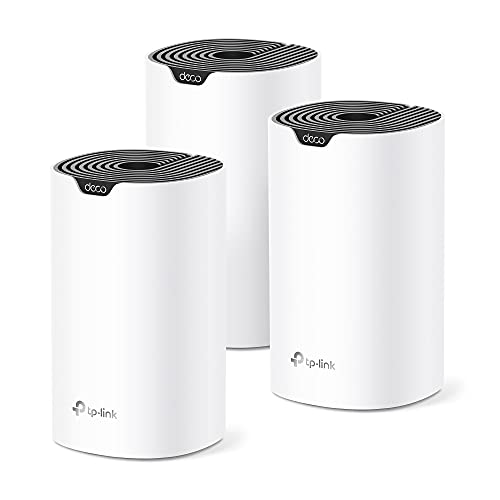

As an Amazon Associate we earn from qualifying purchases at no extra cost to you. Ratings are shown as listed on Amazon.
Quick picks by home and budget
- Best balance for many households: TP-Link Deco BE63. A tri-band Wi-Fi 7 system with 2.5GbE ports and wired-backhaul support; a good fit for multi-gig internet and several busy devices.
- Best for an easier setup: eero Pro 7. It supports Wi-Fi 7 and wired backhaul, with an app-led setup that suits people who prefer fewer manual network settings. Some advanced controls and security features depend on subscriptions.
- Best value for ordinary broadband: TP-Link Deco X55. Wi-Fi 6 is sufficient for many internet plans, and the system offers Ethernet backhaul. It is a more sensible spend than Wi-Fi 7 if your devices and connection do not need newer capabilities.
- Best for control and tuning: ASUS ZenWiFi BQ16 Pro. A high-end Wi-Fi 7 option with extensive configuration features and multi-gig connectivity. It costs more and may be more system than a small household needs.
- Best when your home already uses Orbi: Netgear Orbi 970 Series. A premium Wi-Fi 7 family designed for high-capacity networks; check the exact kit’s ports and included node count before buying, as these affect value and expansion cost.
How the options compare
Specifications help narrow the field, but theoretical wireless rates are not a promise of room-to-room speed. Real throughput varies with distance, walls, interference, client capability, and the internet connection. The table compares practical buying factors; node coverage figures are manufacturer estimates, not guaranteed floor plans.
| System | Wi-Fi generation | Ethernet ports per unit | Backhaul | Best match |
|---|---|---|---|---|
| TP-Link Deco BE63 | Wi-Fi 7 | 4 × 2.5GbE | Wireless or Ethernet | Multi-gig plans and newer devices |
| eero Pro 7 | Wi-Fi 7 | 2 × 5GbE | Wireless or Ethernet | App-first setup and simple management |
| TP-Link Deco X55 | Wi-Fi 6 | 3 × Gigabit | Wireless or Ethernet | Value-focused homes with gigabit-class needs |
| ASUS ZenWiFi BQ16 Pro | Wi-Fi 7 | Multiple multi-gig ports; varies by port type | Wireless or Ethernet | Advanced controls and high-capacity networks |
| Netgear Orbi 970 Series | Wi-Fi 7 | Multi-gig ports; varies by unit | Wireless or Ethernet | Large homes and premium multi-gig setups |
Port configurations can differ between router and satellite units or by regional version. Confirm the exact model’s specifications before purchase, especially if you need a multi-gig wired connection at a satellite.
Choose by your actual bottleneck
For an apartment or compact home
Start with a single good router or a two-node Wi-Fi 6 mesh, rather than buying a three-pack by default. In a compact, open layout, extra wireless nodes can add congestion without improving coverage. Deco X55 is a practical lower-cost mesh choice if one router leaves a genuine dead zone. For a mesh, place the second unit between the router and the weak room—not inside the dead zone itself.
For a two-story home or long floor plan
A two- or three-node kit can help bridge distance and floor-to-floor signal loss. Deco BE63 or eero Pro 7 makes more sense if you have Wi-Fi 7 devices, a fast broadband plan, or several simultaneous high-bandwidth users. For older devices and plans below gigabit speeds, Wi-Fi 6 may provide a better value. Thick masonry, foil-backed insulation, and radiant barriers can block signals far more than an extra room or two suggests.
For gaming, video calls, or a home office
Prioritize stable latency over headline speed. Ethernet backhaul—an Ethernet cable connecting mesh units—keeps node-to-node traffic off the wireless spectrum and usually reduces the performance penalty of a distant satellite. If wiring is impossible, choose a tri-band system and place nodes where they still receive a strong signal. A mesh cannot eliminate latency caused by a congested internet connection or a distant game server.
For a large home or many connected devices
Consider a premium system such as ASUS ZenWiFi BQ16 Pro or the Orbi 970 Series when you need multi-gig ports, broader configuration options, or capacity for many active clients. First check whether Ethernet wiring or a more central router placement would solve the problem for less. Additional nodes are not automatically better: overlapping cells can increase interference and make roaming less predictable.
What real-world performance depends on
Mesh systems use a shared wireless link for backhaul unless they have a dedicated radio or are wired together. With wireless backhaul, a satellite may deliver substantially less throughput than the main router, especially across multiple walls or floors. Wi-Fi 7 features can improve capacity with compatible devices, but older phones and laptops do not gain those capabilities merely by joining a new network.
Roaming is another variable. Mesh products use common standards and their own steering logic to encourage devices to move to a closer node, but the client device ultimately decides when to switch. A phone may cling to a distant access point during a call. Keep the network name consistent, update device software, and test movement through the house before assuming a small interruption is a mesh failure.
Setup that avoids common problems
- Place the main unit centrally: Connect it to the modem, then position it in the open rather than in a cabinet or behind a television.
- Place satellites midway: Use the app’s signal check if available. A node needs a healthy connection to the router or another node to improve the next room.
- Use Ethernet backhaul where practical: Connect units through a switch or existing home wiring, then verify in the app that the system recognizes the wired link.
- Update before troubleshooting: Install firmware updates, then run speed tests near the main unit and each satellite. Compare wired and wireless results to distinguish an internet issue from a Wi-Fi issue.
- Avoid unnecessary network changes: Start with default band steering and one network name. Change channels or split bands only to solve a specific compatibility or interference problem.
What to budget for—and what to check later
Prices vary by node count and sales, but a two-node Wi-Fi 6 kit generally sits in a lower market range than a premium Wi-Fi 7 system; premium three-node Wi-Fi 7 bundles can cost several times as much. Compare the cost of the exact number of units you need, not just the entry price. Also check whether parental controls, security tools, or detailed network history require an ongoing subscription.
Mesh hardware has few routine consumables, but heat and dust can shorten its useful life. Keep units uncovered, clean vents with a dry cloth, and avoid placing them near heaters or in direct sun. As broadband speeds rise, limited Ethernet ports or gigabit-only links may become the first constraint. A wired switch can expand port count, but it cannot make a gigabit port faster.
Bottom line: Choose the TP-Link Deco X55 for affordable Wi-Fi 6 coverage, the Deco BE63 or eero Pro 7 for a modern Wi-Fi 7 home, and a premium ASUS or Orbi system only when its capacity and controls match a real need. Measure coverage after setup, and use wired backhaul before buying extra nodes if reliability matters most.