Key takeaways
- Choose the Rega Fono MM Mk5 when you want a simple, dedicated MM system. Choose the Schiit Mani 2 when adjustable gain and loading provide the best upgrade path. Choose the iFi ZEN Phono 3 when low noise, high MC gain, and broader connectivity matter…
The best phono preamps for most turntable owners are the Schiit Mani 2 for flexible system building, the iFi ZEN Phono 3 for unusually low noise and broad gain options, the Cambridge Audio Alva Duo for simple MM/MC switching with a headphone output, and the Rega Fono MM Mk5 for a focused, easy-to-use MM setup.
A phono preamp performs two jobs: it raises a cartridge’s very small signal to line level, and it applies the RIAA equalization needed to restore the tonal balance cut into a record. The right choice depends less on the number of inputs than on cartridge type, required gain, electrical loading, noise performance, and how often you expect to change components.
Our top picks
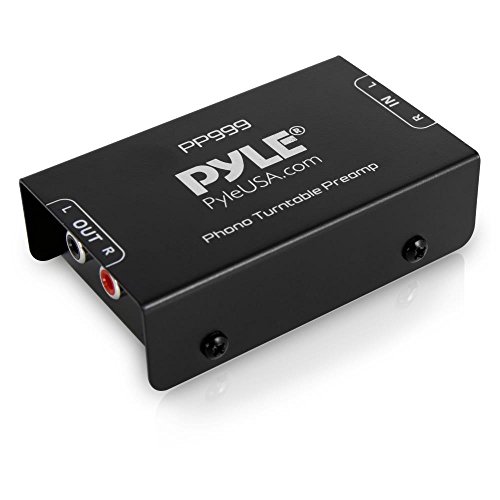


As an Amazon Associate we earn from qualifying purchases at no extra cost to you. Ratings are shown as listed on Amazon.
Best phono preamps by situation
| Situation | Best fit | Why | Typical market range |
|---|---|---|---|
| Affordable MM or MC system with future flexibility | Schiit Mani 2 | Selectable gain and loading in a compact case | About $150–$200 |
| Very low-output MC or a system that reveals hiss | iFi ZEN Phono 3 | Multiple gain levels, subsonic filtering, and balanced-capable output | About $200–$300 |
| MM and MC cartridges with minimal setup | Cambridge Audio Alva Duo | Clear front-panel selection and built-in headphone amplifier | About $300–$400 |
| MM cartridge and the shortest path to good sound | Rega Fono MM Mk5 | Simple, quiet, carefully matched MM design | About $300–$400 |
| Starter system using an integrated amplifier’s line input | Basic MM phono stage | Enough gain and RIAA accuracy without paying for unused MC circuitry | About $60–$150 |
MM versus MC: compatibility comes first
Moving-magnet (MM) cartridges usually produce approximately 3–6 millivolts and normally expect a 47,000-ohm input. They are the easier match: a phono stage typically needs around 35–45 dB of gain. MM cartridges also use replaceable styli in many designs, which can make long-term ownership less expensive.
Moving-coil (MC) cartridges generally produce less output, often around 0.2–0.6 millivolts for low-output models. They need more gain—commonly 55–70 dB—and lower input resistance, frequently between 50 and 1,000 ohms. Some high-output MC cartridges can use an MM input, but the cartridge manufacturer’s recommended load should take priority.
A phono preamp that merely says “MM/MC” may still be a poor MC match. Check whether its MC gain is high enough, whether the input impedance is suitable, and whether the extra gain introduces audible hiss. If you own an MM cartridge today but may move to MC later, selectable gain and loading are worth paying for.
Head-to-head: the leading choices
Schiit Mani 2: the flexible value choice
The Mani 2 is attractive when the cartridge may change over time. Its selectable gain and loading let it accommodate common MM cartridges, higher-output MC designs, and many low-output MC cartridges without immediately requiring a replacement. It uses RCA connections, has a small footprint, and keeps the controls on the rear panel through switches rather than a menu.
Its trade-off is convenience. You may need to move the unit or use a flashlight to confirm rear-panel settings, and it lacks a built-in headphone output. The external power supply and compact metal chassis are practical rather than luxurious. For a two-channel system where flexibility matters more than polished ergonomics, it is one of the best phono preamps in its price class.
iFi ZEN Phono 3: the noise-conscious option
The ZEN Phono 3 offers a particularly broad set of gain choices, commonly reaching from MM-friendly levels into high-gain MC territory. It also includes loading options, a subsonic filter, RCA connections, and a balanced 4.4 mm output that can be useful with compatible equipment. The subsonic filter can reduce very low-frequency energy caused by warped records, helping protect amplifier headroom without changing ordinary bass as dramatically as a poorly chosen filter.
Its main advantage is system matching rather than raw feature count. The higher gain settings are useful only when the cartridge output requires them; using excessive gain can make background hiss more obvious. Its front-panel controls are easier to access than the Mani’s rear switches, but the range of settings can still feel technical to a first-time buyer.
Cambridge Audio Alva Duo: the easiest MM/MC all-rounder
The Alva Duo is designed for owners who want both cartridge types covered without learning a long list of loading values. It provides separate MM and MC modes, a front-panel headphone output, and a mute function that is useful when changing records or adjusting the turntable. It is a good fit for a living-room system where more than one person may use the equipment.
The built-in headphone amplifier is a meaningful ownership benefit, not just a specification. It removes the need to power up the main amplifier for a quick listening session. The compromise is less fine-grained loading control than some enthusiast-oriented phono stages offer, so it is not the best match for experimenting with unusual cartridges.
Rega Fono MM Mk5: the focused MM choice
The Fono MM Mk5 is best understood as a dedicated MM phono stage rather than a universal upgrade platform. Its approximately 41 dB of gain and standard 47,000-ohm loading suit the majority of MM cartridges. With no MC section to configure, setup is quick: connect the turntable, attach the ground wire, and run the output to a line-level input.
This simplicity can improve reliability because there are fewer switches to mis-set. It is less suitable if you already own a low-output MC cartridge or expect to change to one soon. Do not confuse a dedicated MM model with a general-purpose MM/MC unit simply because both use the same RCA connectors.
What matters beyond the headline specifications
Noise floor and gain
Noise becomes more noticeable as gain rises, particularly with low-output MC cartridges. A quiet MM stage may sound cleaner than a poorly matched MC stage even when both have similar published specifications. Match gain to cartridge output rather than selecting the highest available number. As a rough guide, start around 40 dB for MM, 50–60 dB for medium-output MC, and 60–70 dB for very low-output MC, then confirm the cartridge maker’s recommendation.
Loading and capacitance
MM cartridges are sensitive to capacitance from the cartridge, tonearm wiring, and interconnect. Excessive capacitance can make the treble sound prominent or brittle. If your cartridge specifies a total capacitance range, include the cable in the calculation. MC cartridges are usually more affected by resistance loading, and adjustable values can help control tonal balance and electrical damping.
Connectivity
RCA input and output are sufficient for almost every ordinary turntable system. Balanced outputs are useful only when the receiving amplifier or headphone amplifier has a compatible balanced input; they do not automatically improve sound when connected to an ordinary RCA input. A headphone output is valuable for convenience, but it should not be the reason to overlook cartridge compatibility.
Build quality and placement
A metal enclosure helps with physical protection and can reduce susceptibility to electrical interference, but placement matters too. Keep the phono stage away from Wi-Fi routers, power bricks, switching supplies, and the amplifier’s large transformer. Use the shortest sensible turntable interconnect and connect the turntable’s ground wire before diagnosing hum.
Setup steps that prevent the most common problems
- Confirm the cartridge type and output. Read the cartridge specification rather than relying on the turntable model.
- Select gain and loading before listening. Begin with the manufacturer’s recommended values. Excessive gain usually raises hiss; an incorrect load can alter tonal balance.
- Connect the turntable to the phono input. Attach the separate ground wire if the turntable provides one. Never connect a phono-level signal directly to a normal line input unless the amplifier specifically includes a phono input.
- Use a line-level input on the amplifier. Choose AUX, CD, or another ordinary input—not another PHONO input, which would apply RIAA equalization twice.
- Set volume low and check both channels. Confirm that left and right are not reversed and that the stylus guard is removed only after the tonearm is ready.
- Listen for hum, hiss, and distortion separately. Hum usually points to grounding or cable placement; hiss often indicates excessive gain; harsh distortion may indicate incorrect loading, a damaged stylus, or an overloaded input.
Ownership costs and maintenance
The phono preamp itself has few consumables, but the stylus is the part that wears first. A frequently used stylus may need inspection after roughly 500–1,000 playing hours, with replacement timing depending on alignment, tracking force, record cleanliness, and stylus shape. Replacing a stylus is often cheaper than replacing an entire cartridge, but not every cartridge has a user-replaceable stylus.
Clean records and a clean stylus can do more for clarity than moving from one competent phono stage to another. Use a soft stylus brush in the direction recommended by the cartridge maker, keep dust off the record surface, and avoid touching the stylus with fingers or solvent. Also check that the turntable is level and tracking force is correctly set; a phono preamp cannot correct mechanical setup errors.
Bottom line
Choose the Rega Fono MM Mk5 when you want a simple, dedicated MM system. Choose the Schiit Mani 2 when adjustable gain and loading provide the best upgrade path. Choose the iFi ZEN Phono 3 when low noise, high MC gain, and broader connectivity matter most. Choose the Cambridge Audio Alva Duo when easy MM/MC operation and headphone listening are more important than extensive manual loading control. In every case, cartridge compatibility and correct gain should come before brand, appearance, or extra connectors.