Key takeaways
- Full deadbolt replacements (Schlage Encode Plus, Yale Assure Lock 2, Kwikset Halo, Aqara U100) swap out your entire deadbolt, inside and out. You get a keypad, a cleaner look, and usually a keyed backup cylinder — but your old keys stop working, and installation takes 15–30 minutes with a screwdriver.
- Retrofit locks (August Wi-Fi Smart Lock, Level Bolt) replace only the interior thumb-turn, keeping your existing exterior hardware and keys. They’re ideal for renters and anyone whose building or HOA restricts exterior hardware changes. Level Bolt goes further, hiding entirely inside the door itself.
Best Smart Locks at a Glance
The best smart locks for most homes in 2026 are the Schlage Encode Plus for a full deadbolt replacement with built-in Wi-Fi, the Yale Assure Lock 2 for slimmer styling and Matter support, the August Wi-Fi Smart Lock if you want to keep your existing deadbolt and keys, and the Aqara U100 for Apple Home Key access at a mid-range price. Which one fits your door depends less on features than on three physical questions: whether you’re replacing the deadbolt or retrofitting over it, how thick your door is, and which smart-home platform your household already uses.
Retrofit vs. Full Replacement: The First Decision
Smart locks split into two categories, and picking the wrong one is the most common buying mistake.
Our top picks
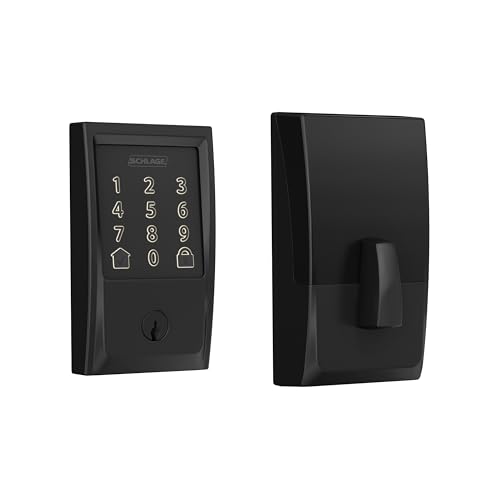


As an Amazon Associate we earn from qualifying purchases at no extra cost to you. Ratings are shown as listed on Amazon.
- Full deadbolt replacements (Schlage Encode Plus, Yale Assure Lock 2, Kwikset Halo, Aqara U100) swap out your entire deadbolt, inside and out. You get a keypad, a cleaner look, and usually a keyed backup cylinder — but your old keys stop working, and installation takes 15–30 minutes with a screwdriver.
- Retrofit locks (August Wi-Fi Smart Lock, Level Bolt) replace only the interior thumb-turn, keeping your existing exterior hardware and keys. They’re ideal for renters and anyone whose building or HOA restricts exterior hardware changes. Level Bolt goes further, hiding entirely inside the door itself.
Before buying, check three measurements: door thickness (most locks fit 1⅜”–2″, some need an adapter), backset (2⅜” or 2¾” — both are usually included), and whether your deadbolt hole is the standard 2⅛” bore. Also confirm your current deadbolt throws smoothly; a smart lock’s motor will fail early fighting a misaligned strike plate, which is the single most common cause of retrofit-lock returns.
Spec Comparison: Leading 2026 Models
| Lock | Type | Connectivity | Battery / Rated Life | Access Methods | Backup Key |
|---|---|---|---|---|---|
| Schlage Encode Plus | Full replacement | Wi-Fi, Thread, Matter, Apple Home Key | 4× AA, ~6 months | Keypad (up to 100 codes), app, NFC tap, key | Yes |
| Yale Assure Lock 2 | Full replacement (keyed or key-free) | Wi-Fi module, Matter, Bluetooth | 4× AA, ~6–12 months | Touchscreen keypad, app, optional fingerprint model | Key-free versions: none (9V jump terminal) |
| August Wi-Fi Smart Lock | Retrofit | Wi-Fi (built-in), Bluetooth, Matter | 2× CR123, ~3–6 months | App, auto-unlock, existing key, optional keypad accessory | Existing key retained |
| Aqara U100 | Full replacement | Bluetooth, Matter via hub, Apple Home Key | 4× AA, ~8 months | Fingerprint, keypad, NFC card, app, key | Yes |
| Kwikset Halo Touch | Full replacement | Wi-Fi, Bluetooth | 4× AA, ~6–9 months | Fingerprint (up to 100 users), app, key | Yes |
| Level Lock+ | Full replacement (hidden electronics) | Bluetooth, Apple Home Key, Thread | 1× CR2 in bolt, ~12 months | App, NFC tap cards, key, voice | Yes |
| Ultraloq U-Bolt Pro | Full replacement | Wi-Fi (bridge or built-in), Bluetooth | 4× AA, ~8–12 months | Fingerprint, keypad, app, mechanical key, auto-unlock | Yes (hidden) |
Battery figures assume roughly 10 lock/unlock cycles per day. Live Wi-Fi connections drain noticeably faster than Bluetooth-to-hub designs — expect the lower end of every range if you enable real-time notifications and remote locking.
Which Lock Fits Your Situation
| Your situation | Best pick | Why |
|---|---|---|
| Renter; can’t change exterior hardware | August Wi-Fi Smart Lock | Installs over existing deadbolt in ~10 min; landlord’s keys still work; removes cleanly at move-out |
| Apple household wanting tap-to-unlock | Schlage Encode Plus or Aqara U100 | Apple Home Key works even with a dead iPhone via power reserve |
| Many users: kids, cleaners, Airbnb guests | Schlage Encode Plus or Ultraloq | 100-code capacity, scheduled codes, per-user fingerprint enrollment |
| Short-term rental host | Yale Assure Lock 2 | Auto-generated guest codes tied to booking calendars via partner integrations |
| Minimalist look, no visible keypad | Level Lock+ | All electronics inside the door; looks like a normal deadbolt |
| Off-grid / unreliable Wi-Fi | Aqara U100 or Kwikset Halo Touch | Fingerprint + keypad work fully offline; connectivity is a bonus, not a dependency |
| Tight budget, basic keyless | Kwikset or Yale base keypad models | Bluetooth-only versions run roughly $80–120 vs. $180–320 for Wi-Fi flagship models |
Access-Control Options Compared
Not every access method suits every household:
- PIN codes are the workhorse — cheap to issue, easy to revoke. Look for at least 25–30 user code slots and “scramble” or anti-peep digits (Ultraloq lets you pad your real code with random numbers so onlookers can’t steal it).
- Fingerprint readers are fastest for daily entry and great for kids who forget codes, but accuracy degrades with wet or worn fingerprints — always keep a PIN fallback enrolled.
- Apple Home Key / NFC tap is the most seamless option but platform-locked; Android households get nothing from it.
- Auto-unlock via geofencing (August, Ultraloq) is convenient but battery-costly on the phone side and can misfire in dense apartment buildings where GPS drifts.
- Physical key backup matters more than spec sheets suggest. Key-free models like some Yale Assure variants rely on a 9V battery held to external terminals if the batteries die — effective, but you can’t “pick” your way in if the electronics fail entirely.
Connectivity: Wi-Fi, Matter, and the Hub Question
Built-in Wi-Fi gives true remote control without extra hardware but costs battery life — roughly half the runtime of a Bluetooth-plus-hub design. If you already run a smart-home ecosystem, a Matter-over-Thread lock (Encode Plus, Level Lock+, Assure Lock 2 with the right module) paired to an existing hub is the better trade: remote access, faster response, and longer battery life.
One worked example: a lock rated 8 months on Bluetooth through a hub may last only ~4 months on direct Wi-Fi at 10 cycles/day, meaning 2 sets of AA batteries per year versus 1 — plus the Wi-Fi radio adds latency of 1–3 seconds on remote commands versus near-instant Thread response. Over five years that’s maybe $15–20 in batteries, but the responsiveness difference is what you notice daily.
Ownership Realities and Common Mistakes
- What wears first: keypad legends fade on sun-exposed doors within 2–3 years (choose backlit capacitive touchscreens over rubber buttons), and fingerprint sensors need occasional cleaning with a dry cloth.
- The alignment trap: a smart lock motor can’t force a deadbolt into a misaligned strike the way your hand can. Test by locking the door with it open — if it throws smoothly only then, fix the strike plate before blaming the lock.
- Battery warnings are late: most locks alert at ~15–20% remaining, which under heavy use is 2–3 weeks. Keep spares near the door, and note that lithium AAs hold voltage better in cold climates than alkalines.
- Security ratings: look for BHMA Grade 2 or better for residential doors (Schlage Encode carries Grade 1). The lock is rarely the weak point — door frame and strike reinforcement matter more.
- Firmware hygiene: pick a brand with a track record of multi-year security updates, and enable auto-updates; a smart lock abandoned by its manufacturer is worse than a dumb one.
FAQ
Can a smart lock be hacked?
Remote attacks on mainstream brands are rare and typically patched; the bigger risks are weak PINs and reused codes. Use unique codes per person, avoid obvious combinations, and enable tamper alerts.
What happens when the batteries die?
You get weeks of warnings first. If you ignore them: keyed models still open with the backup key; key-free models accept a 9V battery jump on external terminals. No mainstream lock strands you permanently.
Do smart locks work in cold weather?
Yes, but battery capacity drops below freezing and capacitive touchscreens get sluggish. For a cold-climate door under an overhang, favor a fingerprint + physical keypad model and use lithium batteries.
Can I install one on a metal door?
Usually yes, since thickness and bore dimensions are what matter — but thick metal doors may need extended spindle kits, and metal can attenuate Wi-Fi signal strength, so a Thread/hub model performs better.
Should I buy a fingerprint lock or keypad?
For daily use by the household, fingerprint is faster and kid-friendly. For guests and service access, keypads win because codes are trivially shared and revoked. The strongest options — Aqara U100, Ultraloq U-Bolt Pro — give you both.