Key takeaways
- Most portable powered option: Yamaha DBR10, a 10-inch powered speaker that can serve as a floor monitor or a compact main speaker.
- More headroom for a band: QSC K12.2, a 12-inch powered speaker suited to louder stages and fuller mixes.
- Compact, lightweight powered choice: Electro-Voice ZLX-8P-G2, an 8-inch model for vocals, keys, and smaller stages where space matters.
- Passive system choice: JBL JRX212, a 12-inch passive wedge for setups with a compatible power amplifier and external processing.
Best Stage Monitors for Clear, Reliable Onstage Sound
The best stage monitors depend on your stage size, mixer setup, and how much gear you want to carry: choose a powered 10- or 12-inch wedge for most small and midsize gigs, a compact 8-inch monitor for tight stages and speech, or a passive wedge when your venue already has suitable amplification and processing.
Quick picks by situation
- Most portable powered option: Yamaha DBR10, a 10-inch powered speaker that can serve as a floor monitor or a compact main speaker.
- More headroom for a band: QSC K12.2, a 12-inch powered speaker suited to louder stages and fuller mixes.
- Compact, lightweight powered choice: Electro-Voice ZLX-8P-G2, an 8-inch model for vocals, keys, and smaller stages where space matters.
- Passive system choice: JBL JRX212, a 12-inch passive wedge for setups with a compatible power amplifier and external processing.
These are examples of distinct approaches, not a claim that one model is best for every performer. Product specifications and regional versions can change; check the current manufacturer data before buying.
Our top picks

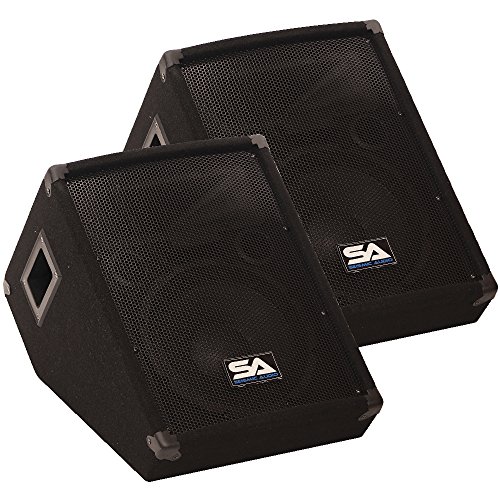


As an Amazon Associate we earn from qualifying purchases at no extra cost to you. Ratings are shown as listed on Amazon.
Active or passive: start with the system you already own
An active (powered) monitor has its amplifier built in. Connect a line-level mixer output, set the speaker’s level, and power it from an outlet. It is usually the simpler choice for a solo act, a small band, or anyone who needs to set up quickly. Many powered speakers also include basic EQ, limiter protection, and more than one input.
A passive monitor needs an external power amplifier, speaker cable, and often a separate crossover or system processor. It can make sense if a venue already owns compatible amps, if you are building a multi-speaker rig, or if your production team prefers centralized control. The tradeoff is extra equipment and the need to match the amplifier’s output and impedance to the speaker’s specifications.
Do not connect a powered speaker output to a monitor’s line input, or treat a passive speaker cable like a line-level signal cable. Check the labels: mixer-to-powered-speaker connections typically use balanced XLR or TRS cables; amplifier-to-passive-speaker connections use speaker cable.
Compare practical options
The figures below are representative published specifications for common versions of these models. Maximum SPL figures are manufacturer ratings, not a promise of clean sound at every frequency or in every room.
| Model | Design | Woofer | Coverage | Maximum SPL | Approx. weight |
|---|---|---|---|---|---|
| Yamaha DBR10 | Powered | 10 in | 90° × 60° | 132 dB | 10.5 kg / 23.2 lb |
| QSC K12.2 | Powered | 12 in | 75° conical | 132 dB | 17.7 kg / 39 lb |
| Electro-Voice ZLX-8P-G2 | Powered | 8 in | 90° × 60° | 126 dB | 10.6 kg / 23.4 lb |
| JBL JRX212 | Passive | 12 in | 90° × 50° | 128 dB | 19 kg / 42 lb |
Coverage describes the area the speaker is designed to project sound across; it is not a measure of how loud or bass-heavy the monitor sounds. A wider pattern may help several performers share a wedge, while a narrower pattern can reduce spill toward microphones when positioned carefully.
Choose by stage, source, and carrying limits
| Your situation | Good starting point | Why | Watch for |
|---|---|---|---|
| Solo singer, speech, or acoustic act on a small stage | Powered 8- or 10-inch wedge | Smaller footprint and straightforward setup; usually enough for vocals and modest accompaniment. | Deep bass and loud backing tracks may need a subwoofer or a larger cabinet. |
| Full band or a drummer-heavy stage | Powered 12-inch wedge, or a properly powered passive 12-inch model | More potential low-mid output and headroom than a small cabinet. | Wedge placement and mix discipline still matter; a bigger driver alone will not fix masking. |
| Frequent load-ins by one person | Lightweight powered 8- or 10-inch model | Fewer boxes and less lifting than a passive speaker plus amplifier. | Include the weight of stands, cables, and any separate mixer in the total load. |
| Venue with an existing amp rack and technician | Passive wedge matched to the installed system | Can integrate neatly with the venue’s amplification and processing. | Confirm impedance, amplifier power, connector type, and processing before connecting. |
What driver size actually changes
An 8-inch monitor is often easier to place near a performer and carry, but has less low-frequency reach than a comparable larger cabinet. A 10-inch model is a useful compromise for vocals and moderate instrument levels. A 12-inch monitor can provide more low-mid weight and headroom, which helps when the stage is loud, though it is typically bulkier and heavier. Driver size is only one part of performance: amplifier design, cabinet tuning, horn coverage, and limiting also affect usable output.
For vocals, a clear midrange and the ability to aim the monitor away from open microphones are often more valuable than extra bass. For bass guitar, electronic drums, or tracks, confirm the speaker’s low-frequency response and consider whether the band’s system already includes a subwoofer.
Set the monitor up before turning it up
- Place it close. Put the wedge on the floor, aimed at the performer’s ears, rather than trying to fill the whole room with it. A closer listening position can reduce the level needed onstage.
- Choose the right microphone angle. Position the loudspeaker outside the microphone’s most sensitive direction where possible. The microphone’s pickup pattern determines the best placement, so check its documentation rather than assuming every mic rejects sound from the same side.
- Build the mix around essentials. Start with the vocal or instrument the performer needs to hear, then add only what helps timing or pitch. Excessive instruments in every wedge raise stage volume and make feedback more likely.
- Set gain in stages. Keep the mixer and speaker inputs out of clipping, then raise the monitor send gradually. If feedback starts, lower the offending channel or adjust placement before applying broad EQ cuts.
- Use separate mixes when needed. One wedge mix may work for a small act; multiple performers with different needs usually benefit from separate monitor sends. Confirm how many independent outputs your mixer supports.
Ownership costs and common failure points
Powered monitors reduce the number of components, but add electronics that need protection from moisture, dust, and impact. Passive cabinets have simpler speaker enclosures, yet the amplifier and processor still need space, cables, and transport. In both designs, the first problems are often mundane: damaged connectors, frayed cables, loose grille hardware, or a cabinet dropped during load-in.
Use a padded cover for transport, keep drinks away from the cabinet and connectors, and let equipment dry before powering it if it has been exposed to rain or condensation. Avoid storing cables tightly kinked, and inspect speaker cables and XLR leads periodically. Do not push a monitor into audible distortion to compensate for a poor mix; clipping and excessive level can damage drivers and make the sound less clear.
Prices vary by region and sales, but a basic passive wedge is generally the lower-cost speaker purchase; a complete passive setup costs more once you include amplification and processing. Powered models usually cost more per cabinet but need fewer supporting components. Compare the complete system and the weight you will actually carry, not just the speaker’s sticker price.