Key takeaways
- Power: USB-powered models can stay connected indefinitely. Rechargeable models commonly provide about 12 to 20 hours per charge.
- Calls: A model with a dedicated microphone is preferable to one hidden inside a small receiver plugged into the dashboard.
- Controls: Play/pause, track navigation, and a physical call button are safer than reaching for a phone.
- Noise control: If you hear a high-pitched whine that changes with engine speed, use a ground-loop isolator or power the receiver from a different USB source.
The best Bluetooth car adapters for older cars are AUX receivers for the cleanest sound, cassette adapters for cars with a working tape deck, and FM transmitters when the stereo has neither an AUX input nor a cassette player.
Our top picks


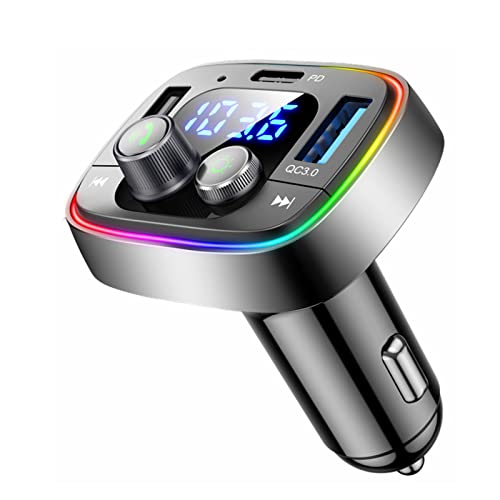
As an Amazon Associate we earn from qualifying purchases at no extra cost to you. Ratings are shown as listed on Amazon.
Quick picks by situation
| Your car and priority | Best adapter type | Why it fits | Main compromise |
|---|---|---|---|
| 3.5mm AUX input, frequent driving | Bluetooth AUX receiver | Usually the cleanest connection and simplest controls | Needs a USB or 12V power source unless it has a rechargeable battery |
| Working cassette deck, no AUX input | Bluetooth cassette adapter | Uses the original stereo without occupying an FM frequency | Tape mechanisms can introduce hiss, clicking, or ejection problems |
| No AUX input and no cassette deck | Bluetooth FM transmitter | Works with almost any FM radio and usually includes USB charging | Sound quality and call clarity depend on local radio interference |
| Occasional use and limited budget | Rechargeable AUX receiver or cassette adapter | Low installation effort and no permanent wiring | Requires charging every few days or weeks |
| Frequent calls while driving | AUX receiver with a separate microphone | Positions the microphone closer to your voice | More cable to route and keep away from the gear shifter |
AUX receivers: the best sound when your car supports them
A Bluetooth AUX receiver converts a phone’s wireless audio into the analog signal your older stereo expects through its 3.5mm input. This is normally the best choice because the signal does not have to be compressed into an FM broadcast or pass through a cassette head.
Connection quality is usually strongest with a short, well-shielded AUX cable and a receiver that supports Bluetooth 5.0 or newer. Bluetooth version alone does not guarantee better sound, but newer hardware commonly offers more reliable reconnection and lower power consumption. Look for support for the AAC codec if you use an Apple device; standard SBC support is sufficient for basic music and podcasts.
What to look for
- Power: USB-powered models can stay connected indefinitely. Rechargeable models commonly provide about 12 to 20 hours per charge.
- Calls: A model with a dedicated microphone is preferable to one hidden inside a small receiver plugged into the dashboard.
- Controls: Play/pause, track navigation, and a physical call button are safer than reaching for a phone.
- Noise control: If you hear a high-pitched whine that changes with engine speed, use a ground-loop isolator or power the receiver from a different USB source.
Common examples include compact AUX receivers from Anker, Belkin, Logitech, and UGREEN, although exact features vary by model and production year. A simple receiver is usually better than a multi-function unit if your priority is music quality rather than hands-free calling.
Cassette adapters: practical, but dependent on the tape mechanism
A Bluetooth cassette adapter places a small playback head inside the tape-shaped housing and sends audio wirelessly from your phone. It is a useful middle ground: the car’s original radio remains untouched, and you avoid FM interference.
Audio quality can be surprisingly good when the deck is clean and correctly aligned. However, a cassette adapter cannot overcome a worn transport. Weak rollers, a stretched belt, or a dirty tape head may cause warbling, repeated ejection, one-channel audio, or mechanical clicking. Some older decks also require the cassette side with the cable or controls to face a particular direction.
Bluetooth cassette adapters generally include an internal battery lasting roughly 6 to 12 hours. Charging may take around 1.5 to 2.5 hours, usually over Micro-USB or USB-C depending on the model. Arsvita is a recognizable example of this product category, but check the exact connector and button layout before buying.
How to keep a cassette adapter working
- Clean the car’s tape head and pinch roller before diagnosing the adapter.
- Do not force the adapter if the deck immediately ejects it; resistance can damage the transport.
- Keep the cable clear of the cassette door and gear selector.
- Store the adapter away from heat. A hot dashboard can shorten battery life and soften plastic parts.
- Expect the internal battery to be the first major consumable. After repeated charging cycles, runtime may fall substantially.
FM transmitters: the universal fallback
An FM transmitter receives Bluetooth audio and broadcasts it over a short-range FM frequency. You tune the car radio to that frequency, allowing the adapter to work even with a very old stereo that has no AUX input or cassette slot.
Its biggest weakness is the radio environment. A frequency that sounds clear on a rural road may become noisy near a city transmitter. The best models scan for open frequencies, remember the selected channel, and let you change frequency with physical buttons. Models such as the Nulaxy KM18 and GOgroove FlexSMART products represent the familiar dashboard-mounted FM-transmitter format, while current alternatives vary in display, microphone, and charging features.
| Adapter type | Typical audio path | Typical power arrangement | Call microphone position | Common weak point |
|---|---|---|---|---|
| AUX receiver | Bluetooth to analog AUX | USB, 12V, or 12–20 hour battery | Built-in or remote microphone | Ground-loop noise or a loose AUX socket |
| Bluetooth cassette adapter | Bluetooth to tape head | Usually 6–12 hour battery | Built into cassette housing | Dirty or worn tape mechanism |
| FM transmitter | Bluetooth to low-power FM signal | Usually powered from a 12V socket or USB | Dashboard unit or flexible boom | Interference and weaker call audio |
Charging and compatibility details
FM transmitters are often the most convenient charging hubs. A basic unit may provide one USB-A port at 5V and approximately 1A, while newer models may include USB-C Power Delivery or a second port. Do not assume that a USB port supports fast charging: check the listed output, especially if you use a large phone or navigation device at the same time.
Check the car’s 12V socket before choosing one. Some older vehicles cut power when the ignition is off; others leave the socket live, which can slowly drain the battery if the transmitter remains plugged in. A transmitter that displays vehicle voltage can be useful, but its reading is an estimate rather than a replacement for a proper battery test.
Connection quality and call clarity compared
For music, the usual order is AUX receiver first, cassette adapter second, and FM transmitter third. AUX avoids an extra radio broadcast step. Cassette playback can preserve a stable connection but is limited by the condition of the deck. FM is adequate for spoken audio and casual listening, yet hiss, static, and neighboring stations can appear without warning.
For calls, microphone placement matters more than Bluetooth version. A receiver near the center console may pick up road and HVAC noise, while a transmitter mounted near the instrument panel generally places its microphone closer to the driver. A remote microphone clipped near the steering column can improve voice pickup, but it should never obstruct an airbag, steering movement, or the driver’s view.
Setup that prevents most problems
- Pair the adapter while parked. Remove old pairings from the phone if it keeps reconnecting to the wrong device.
- Set the phone volume to about 70–80%. Then adjust the car stereo. Excessively low phone volume can encourage hiss, while maximum volume may cause distortion.
- For AUX, select the correct input. Push the plug fully into both sockets and avoid sharply bending the cable at the connector.
- For FM, choose a genuinely empty frequency. Tune both devices manually, then test it in several nearby locations.
- Make a short test call. Confirm that the other person can hear you and that the car’s speakers do not create echo.
- Label the charger and adapter. This reduces the chance of leaving a battery-powered unit uncharged or using an unsuitable cable.
How much does rechargeable convenience matter?
Suppose a battery-powered cassette adapter runs for 8 hours and you drive for 45 minutes per day. Its theoretical runtime is about 10.6 driving days, calculated as 8 divided by 0.75. In practice, allow fewer days because standby power, calls, and temperature reduce runtime. If you drive daily, a USB-powered AUX receiver is usually less troublesome than remembering to charge a cassette adapter. If you drive only twice a week, the battery model may be more convenient because it avoids a permanently occupied power socket.
Final buying advice
Choose an AUX receiver if your stereo has a reliable 3.5mm input and sound quality is the priority. Choose a Bluetooth cassette adapter if the tape deck works smoothly and you want to avoid FM interference. Choose an FM transmitter when compatibility matters more than maximum audio quality, particularly in a car with only an FM radio.
Before ordering, verify the stereo’s input type, the adapter’s charging connector, microphone arrangement, automatic reconnection behavior, and whether your car’s power socket stays live after shutdown. Those details usually determine day-to-day satisfaction more than the Bluetooth number printed on the package.