Key takeaways
- Mesh-front tower: Use two or three 120 or 140 mm intake fans and one rear exhaust. Airflow-focused models work well, although a pressure-oriented fan helps if the front has a fine dust filter.
- Solid or restrictive front panel: Choose pressure-oriented fans such as the Arctic P12, Noctua NF-A12x25, or Phanteks T30. Expect higher RPM and noise than in an open-mesh case.
- Top-mounted radiator: Use fans rated for static pressure. Exhausting through the top usually prevents radiator heat from entering the case, but compare CPU temperature with GPU temperature for your particular workload.
- Small-form-factor case: Check the exact fan thickness, connector clearance, and mounting pattern. A 120 x 120 x 30 mm T30 may not fit where a standard 25 mm fan does.
- Negative-pressure layout: More exhaust than intake can pull air through unfiltered gaps, increasing dust. If using this arrangement, make sure the intake path is deliberate and filtered.
- Positive-pressure layout: Slightly more filtered intake than exhaust can reduce unfiltered ingress. Avoid excessive intake, however, because recirculation and turbulence can offset the benefit.
The best case fans for most PCs are Arctic P12 PWM PST fans for value, Phanteks T30-120 fans for maximum cooling, and Noctua NF-A12x25 or be quiet! Silent Wings Pro 4 fans when low noise and refined control matter more than price.
Our top picks
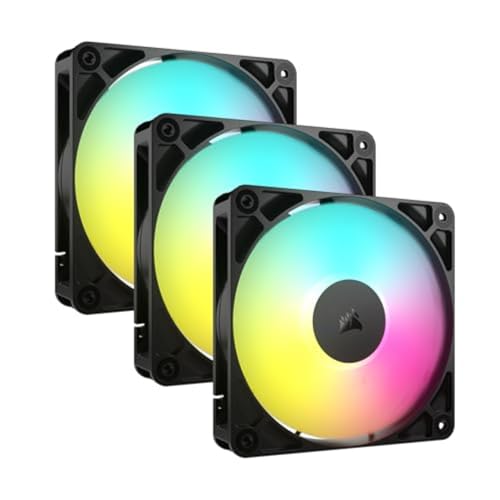

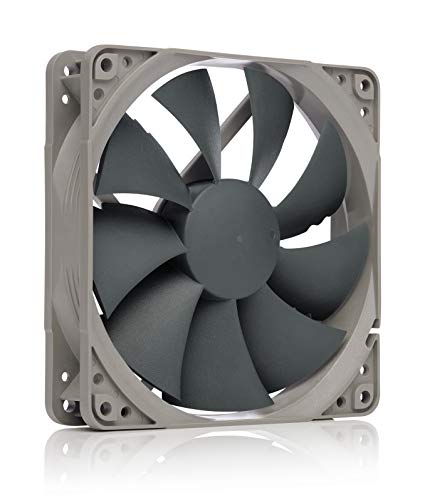

As an Amazon Associate we earn from qualifying purchases at no extra cost to you. Ratings are shown as listed on Amazon.
Best case fans by situation
| Situation | Best choice | Why | Typical market price |
|---|---|---|---|
| Low-cost airflow upgrade | Arctic P12 PWM PST | Strong pressure for dust filters and radiators, PWM sharing, inexpensive | About $8–$15 per fan |
| High-end CPU or GPU cooling | Phanteks T30-120 | Thicker 30 mm frame and very high airflow and static pressure | About $25–$35 per fan |
| Quiet premium build | Noctua NF-A12x25 PWM | Excellent motor control, smooth acoustics, and a strong all-purpose balance | About $30–$40 per fan |
| Premium modular RGB setup | Lian Li Uni Fan SL-Infinity 120 | Interlocking design reduces cable clutter and provides software-controlled lighting | About $25–$35 per fan |
| Quiet case ventilation | be quiet! Silent Wings 4 | Low-noise operation, anti-vibration mounting, and replaceable mounting options | About $20–$30 per fan |
What matters when choosing a case fan
Airflow versus static pressure
Airflow, measured in cubic feet per minute (CFM), describes how much air a fan can move in an unrestricted test. It is most useful for open mesh panels and unobstructed exhaust positions. Static pressure, usually measured in mmH2O, describes how well a fan maintains airflow against resistance from a radiator, heatsink, dust filter, tight front panel, or drive cage.
These figures are not interchangeable. A high-airflow “airflow” fan can perform poorly behind a restrictive front panel, while a pressure-oriented fan may be unnecessarily loud when mounted as unrestricted rear exhaust. For a filtered intake or radiator, prioritize static pressure. For a spacious mesh top or rear exhaust position, airflow and noise are usually more important.
Noise and speed range
Maximum RPM is a poor way to compare everyday noise. A 3,000 RPM fan can cool exceptionally well, but it may be audible at normal desktop distances. A fan that reaches only 1,200–1,500 RPM can be quieter, but may leave less thermal headroom during sustained rendering or gaming.
PWM fans use a four-pin connector and can be controlled by the motherboard. Look for a low minimum speed as well as a high maximum speed. A fan that can run near 300–400 RPM is easier to silence at idle than one that stops only at a higher threshold. PWM control also lets you create separate curves for CPU temperature, GPU temperature, or motherboard temperature.
Bearing type and service life
Fluid dynamic bearings and high-quality self-lubricating bearings are generally preferable for a PC that runs every day. They tend to produce less roughness than inexpensive sleeve bearings and tolerate horizontal or vertical mounting more consistently. Sleeve-bearing fans can be good value, but their lubricant may migrate or dry out sooner, particularly in warm cases.
Magnetic levitation and other premium bearing designs can reduce friction, but bearing quality is only one part of the result. Motor clicking, blade turbulence, mounting vibration, and the fan controller can be more noticeable than the bearing itself. A long warranty is useful because the bearing or motor is usually the first major component to fail; plastic blades and frames rarely wear out under normal use.
Head-to-head: the leading fan types
Arctic P12 PWM PST: best value for restrictive layouts
The Arctic P12 is a 120 mm, 25 mm-thick fan designed around a pressure-oriented blade profile. Its maximum speed is about 1,800 RPM, and the PWM PST version can pass the control signal through to additional fans. That makes it particularly convenient for a front intake group connected to one motherboard header.
It is a strong choice for a dust-filtered front panel, a 120 or 240 mm radiator, or a budget build needing several fans. The compromises are less refined acoustics at higher speed and simpler construction than premium alternatives. A five-fan setup can cost roughly $40–$75, leaving money for a better CPU cooler or larger SSD.
Phanteks T30-120: best for maximum cooling
The T30-120 uses a 30 mm-thick frame rather than the usual 25 mm. The extra thickness gives its blades more working area and helps it maintain pressure through radiators, filters, and dense heatsink fins. It offers selectable speed modes, reaching approximately 1,200, 2,000, or 3,000 RPM depending on the setting.
At its highest mode it is designed for serious thermal loads, but it can also become clearly audible. It is an excellent front-intake or radiator fan for a powerful CPU or graphics card, provided the case has clearance for the deeper frame. Check that the radiator, fan bracket, and side panel leave room for 30 mm fans; a standard 25 mm mounting space is not always sufficient.
Noctua NF-A12x25 PWM: best balanced premium fan
The NF-A12x25 PWM is a conventional 120 x 120 x 25 mm fan with a maximum speed around 2,000 RPM. Its design emphasizes tight blade-to-frame clearance, stable control, and smooth acoustic behavior across a broad speed range. It works well as a case intake, exhaust, heatsink fan, or radiator fan.
Its major disadvantage is price, and the brown-and-beige color scheme will not suit every build. Noctua also sells a chromax.black version with the same general focus in a darker finish. Choose it when you want one fan model that performs predictably in several positions and expect to keep the PC for many years.
be quiet! Silent Wings 4: best for restrained acoustics
Silent Wings 4 fans are available in airflow-oriented and high-speed variants. They use anti-vibration mounting and interchangeable mounting approaches, which is useful when switching between a case panel, radiator, and heatsink. The standard version is a sensible choice for quiet front, bottom, or rear ventilation; the Pro version adds more speed and control flexibility for demanding systems.
Do not select the lowest-noise model automatically for a radiator. A quiet case fan with modest pressure may lose much of its airflow through a dense radiator or restrictive panel. Match the version to the resistance it must overcome.
Lian Li Uni Fan SL-Infinity 120: best for RGB cable management
The Uni Fan SL-Infinity 120 uses side connectors so multiple fans can link together, reducing the number of individual power and lighting cables. Its addressable RGB lighting is controlled through a hub and software ecosystem. This is valuable in a showcase build where clean routing matters as much as cooling.
Its added hub and lighting hardware increase cost and complexity. RGB also does not improve thermal performance, so a non-RGB pressure fan is usually the better purchase when the budget is limited. Confirm motherboard software and hub compatibility before buying, especially if mixing brands.
Choosing fans for common case layouts
- Mesh-front tower: Use two or three 120 or 140 mm intake fans and one rear exhaust. Airflow-focused models work well, although a pressure-oriented fan helps if the front has a fine dust filter.
- Solid or restrictive front panel: Choose pressure-oriented fans such as the Arctic P12, Noctua NF-A12x25, or Phanteks T30. Expect higher RPM and noise than in an open-mesh case.
- Top-mounted radiator: Use fans rated for static pressure. Exhausting through the top usually prevents radiator heat from entering the case, but compare CPU temperature with GPU temperature for your particular workload.
- Small-form-factor case: Check the exact fan thickness, connector clearance, and mounting pattern. A 120 x 120 x 30 mm T30 may not fit where a standard 25 mm fan does.
- Negative-pressure layout: More exhaust than intake can pull air through unfiltered gaps, increasing dust. If using this arrangement, make sure the intake path is deliberate and filtered.
- Positive-pressure layout: Slightly more filtered intake than exhaust can reduce unfiltered ingress. Avoid excessive intake, however, because recirculation and turbulence can offset the benefit.
A practical fan-sizing calculation
Suppose a case has three front 120 mm intake positions and one rear 120 mm exhaust position. Installing three 70 CFM fans does not produce 210 CFM through the case. Filters, grilles, cable clutter, and exhaust resistance reduce the effective flow, and the exhaust fan limits the air leaving the enclosure.
A more useful starting point is to install three matched intake fans and one exhaust fan, then set the intake group to roughly 700–900 RPM and the exhaust slightly lower. If the case has a top radiator, its radiator fans become additional exhaust capacity. Check temperatures after 10–15 minutes of a repeatable workload, then raise fan speed in small steps rather than running every fan at maximum.
Installation and ownership realities
Install intake fans so the open side generally faces the incoming air and the frame-support side faces the exhaust direction. The small arrows molded into many fan frames show airflow and blade rotation. Secure screws evenly; overtightening can deform rubber corners or transmit vibration into the case.
Clean filters every few months in a dusty room and more often if pets, smoking, or floor-level intake openings are involved. Hold fan blades still while using compressed air, because overspinning a disconnected fan can damage its electronics or generate an unpleasant bearing noise. Do not use household oil unless the manufacturer specifically provides a service procedure.
Common mistakes include connecting too many fans to a motherboard header beyond its rated current, mixing RGB standards, placing all fans as exhaust, and choosing a 140 mm fan for a bracket that supports only 120 mm. Before ordering, verify the mounting size, thickness, connector type, header load, radiator clearance, and whether a hub is included.
Final recommendation
Buy the Arctic P12 PWM PST when you need several capable fans at a sensible cost. Choose the Phanteks T30-120 for a high-power system with radiators or restrictive panels and enough clearance for a 30 mm frame. Pick the Noctua NF-A12x25 or be quiet! Silent Wings 4 for a quieter premium build, and choose Lian Li Uni Fan SL-Infinity 120 when integrated RGB and fewer cables are central to the build. The right fan is determined less by its headline CFM than by the resistance, available space, control method, and noise target of the position where it will operate.