Key takeaways
- Fabric quietness: A brushed or knit face (like Sitka’s polyester fleece or First Lite’s merino-blend Silent Series-style fabrics) produces roughly half the audible noise of a stiff woven nylon shell when brushing against brush. For spot-and-stalk work inside 40 yards, quiet fabric is non-negotiable; for stand hunting it matters far less.
- Waterproofing: Rated in millimeters of water column. 10,000mm handles light rain and wet grass; 20,000mm+ (Gore-Tex, proprietary membranes like those in Kuiu and Sitka shells) survives all-day downpours and wet snow. Breathability (measured in g/m²/24h) matters equally for active hunting — look for 15,000+ if you’ll hike in them.
- Insulation weight: Synthetic fill measured in grams. 0–40g is a shell pant for warm weather; 60–80g suits cool falls; 100–200g is for stationary sits below freezing where you generate almost no body heat.
The best hunting pants match three variables — fabric quietness, waterproofing, and insulation weight — to the season and style of your hunt, and for most hunters that means owning either a quiet soft-shell for early-season stalking or a waterproof insulated bib for late-season sits, not one pant trying to do both.
Our top picks


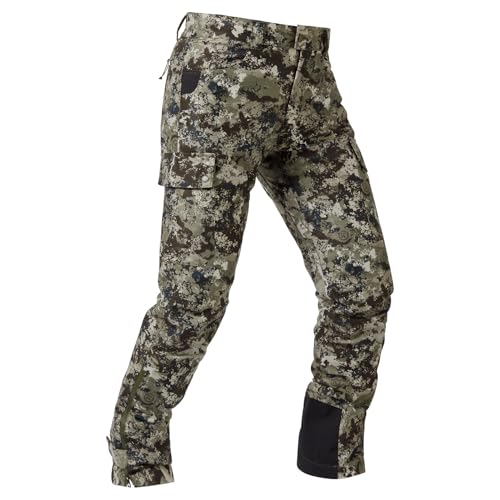

As an Amazon Associate we earn from qualifying purchases at no extra cost to you. Ratings are shown as listed on Amazon.
The Three Specs That Actually Matter
Product pages list dozens of features, but field performance comes down to measurable numbers:
- Fabric quietness: A brushed or knit face (like Sitka’s polyester fleece or First Lite’s merino-blend Silent Series-style fabrics) produces roughly half the audible noise of a stiff woven nylon shell when brushing against brush. For spot-and-stalk work inside 40 yards, quiet fabric is non-negotiable; for stand hunting it matters far less.
- Waterproofing: Rated in millimeters of water column. 10,000mm handles light rain and wet grass; 20,000mm+ (Gore-Tex, proprietary membranes like those in Kuiu and Sitka shells) survives all-day downpours and wet snow. Breathability (measured in g/m²/24h) matters equally for active hunting — look for 15,000+ if you’ll hike in them.
- Insulation weight: Synthetic fill measured in grams. 0–40g is a shell pant for warm weather; 60–80g suits cool falls; 100–200g is for stationary sits below freezing where you generate almost no body heat.
Quick Picks by Season and Situation
| Season / Hunt Style | Insulation | Waterproofing | Priority | Example Products |
|---|---|---|---|---|
| Early season stalks (Aug–Oct, 50–90°F) | 0g, uninsulated | 10,000mm or DWR only | Quiet face fabric, breathability | First Lite Corrugate, Kuiu Tiburon |
| Mid-season mixed use | 40–80g or shell + layers | 10,000–20,000mm | Versatility, hip vents | Sitka Timberline, Kryptek Dalibor |
| Late-season sits (below 32°F) | 100–200g | 20,000mm+ | Warmth, windproof membrane, side zips | Sitka Incinerator bib, Drake Non-Typical |
| Wet climates / rain hunts | 0–40g | 20,000mm+, fully taped | Membrane quality, packability | Kuiu Yukon, First Lite Vapor Stormlight |
| Budget all-around | 60g or shell + layers | 10,000mm | Durability per dollar | Browning, Nomad, Magellan-type mid-range lines |
Early Season: Quiet Beats Everything
From September through early October, the limiting factor isn’t weather — it’s the deer’s ears. A stalk into bow range means kneeling, crawling, and drawing on an animal that can hear fabric swish at 30 yards. Choose a brushed-face soft-shell pant with zero insulation and a DWR coating rather than a membrane; membranes add crinkle noise even when “quiet-faced.”
Fit detail most listings skip: early-season pants should have articulated knees and a gusseted crotch, because a binding knee is what forces you to stand up mid-stalk. Mesh-backed hip vents (like those on the First Lite Corrugate) let you dump heat on uphill pushes without removing a layer.
Late Season: Insulation Math for Stationary Sits
A sitting hunter produces roughly 100 watts of metabolic heat versus 300+ watts walking. That gap is why your mid-season pants fail in December. For sits at 20°F with wind, you need 133–200g of synthetic insulation in the legs plus a windproof membrane — wind strips insulation value faster than cold air does.
Worked example for sizing the base layer under insulated pants: at 20°F stationary, a 100g-insulated pant over a 200-weight merino base keeps most hunters comfortable for a 4-hour sit; below 10°F, step to a 150–200g pant or add a bib-style upper overlap to eliminate the cold gap at the waist. Sizing tip: buy insulated pants one size up to preserve the dead-air space the insulation needs — a tight insulated pant insulates worse, not better.
Decision Matrix
| Your Situation | Recommended Setup |
|---|---|
| Budget under $150, hunts 5–10 days/year | One 60g-insulated waterproof pant, add/remove base layers to adapt |
| Hunts Sep–Jan, mixed terrain | Two-pant system: quiet early-season soft-shell + insulated waterproof bib |
| Western spot-and-stalk, high exertion | Uninsulated breathable pant (15,000+ MVTR), carry a puffy pant for glassing stops |
| Whitetail stand hunter, Midwest cold | 150g+ insulated bib with full-length leg zips for on/off over boots |
Durability and Ownership Realities
What wears first: the seat and inner thighs (friction from climbing into saddles and stands), followed by cuff edges that rub on boots. Reinforced knee and seat panels — Cordura or similar — are worth paying for if you stalk. DWR coatings degrade noticeably after 15–25 washes; renew with a wash-in treatment (Nikwax or Grangers) once the fabric wets out instead of beading — a wetted-out face fabric kills membrane breathability even when the pant isn’t leaking.
Common mistakes: washing in scented detergent (use scent-free or technical wash), storing compressed (crushes synthetic loft), and drying on high heat (delaminates taped seams — tumble low or air dry). Expect a quality hunting pant to last 4–7 seasons of regular use; membrane failure at the knees is the usual end-of-life point.
FAQ
Do I need waterproof pants for whitetail hunting?
Only if you sit through rain, wet snow, or frost-covered walks in. A quiet DWR-treated soft-shell is more comfortable and quieter for dry cold; membranes add stiffness and noise.
Bibs or pants?
Bibs for stationary cold-weather hunting — they seal the waist gap and keep kidneys warm. Pants for active hunting, where bib uppers trap heat and restrict layering.
Is merino worth it over synthetic?
As a base layer under pants, yes for odor control on multi-day hunts. As the pant itself, wool blends are exceptionally quiet but dry slower than synthetics — a stalker’s fabric, not a rain fabric.