Key takeaways
- Halo Collar 4 hardware typically ranges from $699 to $799. With a $7/month mid-tier plan ($84/year), 3-year total = ~$749 + $252 = ~$1,001.
- SpotOn GPS Fence hardware typically ranges from $999 to $1,499 (AT&T or non-cellular version). With no required plan, 3-year total = ~$1,249. With optional $9.95/month tracking ($119/year), 3-year total = ~$1,606.
- PetSafe Guardian GPS hardware typically $599-$699 with one year of service included, then ~$120/year. 3-year total = ~$649 + $240 = ~$889.
The best premium GPS smart dog fence systems in 2026 are the Halo Collar 4 for the most customizable boundaries and training integration, the SpotOn GPS Fence for the most accurate containment without a subscription, and the PetSafe Guardian GPS for the best value in a cellular-connected system.
Premium GPS fences have moved well beyond simple circular boundaries. The current generation uses multi-constellation GNSS, Bluetooth and Wi-Fi assist, and app-based mapping to create fully custom fences that work anywhere you have GPS signal, with no buried wire or base station required. Choosing the right one comes down to how accurate you need the boundary to be, how long the collar needs to last between charges, and whether you want to pay a monthly fee or a higher upfront cost.
Our top picks
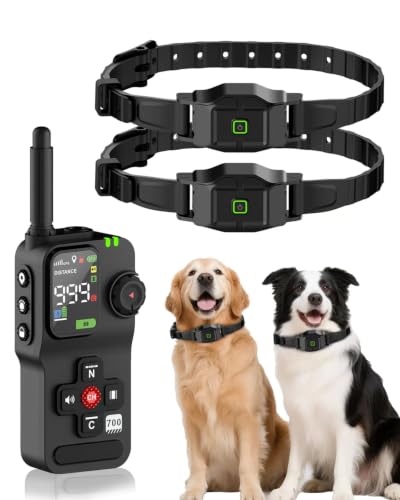

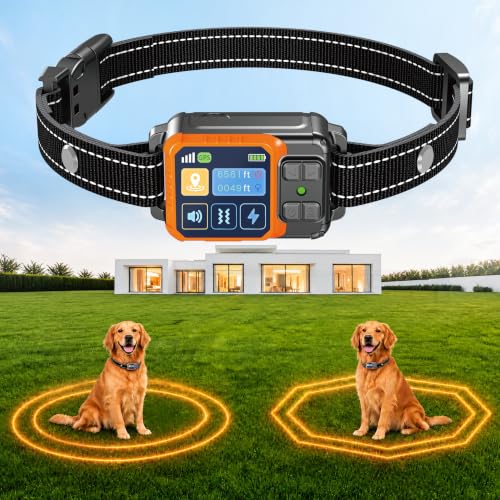

As an Amazon Associate we earn from qualifying purchases at no extra cost to you. Ratings are shown as listed on Amazon.
Top Premium GPS Smart Dog Fences Compared
These four systems represent the established premium tier in 2026. All offer fully wireless, app-created fences and real-time tracking, but they differ significantly on accuracy, battery strategy, and ongoing costs.
| System | GPS Technology & Accuracy | Battery Life (Containment Mode) | Collar Weight & Fit | Boundary Customization | Correction Modes | Subscription Required |
|---|---|---|---|---|---|---|
| Halo Collar 4 | GPS + Galileo + Bluetooth + Wi-Fi, ~3-7 ft accuracy with PrecisionGPS | 20-24 hours active, 36+ hours sleep mode | ~135g module, fits neck sizes 11-30.5 inches (20-50 lb+ dogs) | Unlimited fences, 20+ fences stored on collar, supports property, park, and portable fences | Tone, vibration, 15 levels static feedback, voice guidance via Cesar Millan prompts | Yes, $4.99-$9.99/month per collar for cellular + data |
| SpotOn GPS Fence | 128-satellite GNSS (GPS, GLONASS, Galileo, BeiDou), ~3 ft accuracy, True Location with forest/hilly terrain optimization | 22-36 hours containment, 60+ hours tracking only | ~170g module, fits neck sizes 12-26 inches (small AT&T module adds bulk) | Unlimited fences, up to 1,500 custom fences stored offline, no cell signal needed for containment | Tone, vibration, 30 levels static, optional tone/vibration only | No, optional $9.95/month cell tracking plan |
| PetSafe Guardian GPS Connected Customizable Fence | GPS + AccuGuard dynamic correction, ~9-10 ft accuracy | ~24-48 hours depending on fence size and tracking interval | ~110g collar, fits neck sizes 8-26 inches (10 lb+ dogs, smallest fit in class) | Unlimited custom fences, radius + polygon fences, requires cellular/Wi-Fi for fence sync | Tone, vibration, 10 levels static + tone-only mode | Yes, ~$9.99/month after first year included |
| Wagz Freedom Smart Collar | GPS + LTE-M, ~10-12 ft accuracy, geofence via app | 24-48 hours active, 72 hours standby | ~85g collar unit, fits neck sizes 11-25 inches | Up to 5 geofences, polygon and circular shapes | Tone, vibration, 3 levels static + humane containment alerts | Yes, ~$29.99/month or $199/year for wellness + fence plan |
Accuracy numbers above reflect manufacturer-stated performance in open sky. Under heavy tree cover, near buildings, or in steep ravines, all GPS fences will see drift of 5-15 feet. SpotOn and Halo mitigate this best because they listen to more satellite constellations and use assisted positioning.
What Actually Determines Reliability
1. GPS Accuracy and Boundary Buffer
For containment, stated accuracy is less important than how the system handles drift. Premium systems use two methods: boundary buffers and warning zones. You draw an exclusion or containment fence in the app, and the collar creates an inner warning zone (typically 10-15 feet wide) and an outer correction zone. If GPS accuracy is 10 feet, a 30-foot wide yard will feel tight and produce false corrections. For suburban lots under 0.5 acres, prioritize systems with 3-5 ft accuracy like Halo Collar 4 or SpotOn. For 1+ acre rural properties, even 10 ft accuracy is workable if you set a 15-foot setback from roads or hazards.
2. Boundary Customization
All four allow you to walk or draw boundaries on a satellite map, but implementation differs. Halo and SpotOn let you create truly portable fences – you can save a beach house, campsite, and home property as separate fences that work automatically without re-syncing. PetSafe and Wagz require cellular connection to sync new fences, so they are better for one primary property with occasional travel fences. If you need overlapping exclusion zones (e.g., keep dogs out of a pool or garden inside a larger containment area), Halo and SpotOn both support exclusion fences; PetSafe supports keep-out zones but they are circular only.
3. Battery Life Reality
Advertised battery life assumes moderate correction use and 1-2 minute tracking intervals. Constant GPS polling at 5-10 second intervals, cold weather below 32°F, and frequent boundary challenges drain batteries 30-40% faster. As a rule, expect 18-24 hours of real containment use from any premium collar. That means daily charging for most dogs. SpotOn is the only system that provides two swappable battery modules in the box, so you can charge one while the other is on the dog – a major advantage for dogs that stay outside all day. For all others, plan a nightly charging routine; a dead battery equals no containment.
4. Correction Modes and Training
Premium fences are not plug-and-play deterrents. All include tone and vibration as warning cues, followed by static feedback if the dog continues. The difference is granularity and philosophy. Halo integrates professional training content from Cesar Millan with customizable feedback levels and returns-to-home guidance tones that guide the dog back rather than just punishing exit. SpotOn offers the widest range of 30 static levels, allowing very fine tuning for sensitive vs. stubborn dogs, and can be set to tone/vibration only for positive-reinforcement programs. PetSafe and Wagz are more limited in levels but include automatic safety shutoffs that stop correction after 15-30 seconds to prevent over-correction if a dog is stuck outside the boundary.
5. Subscription Costs and Total Ownership
Subscription is the hidden divider. Use this worked calculation for a 3-year ownership period:
Example: Halo Collar 4 vs. SpotOn GPS Fence
- Halo Collar 4 hardware typically ranges from $699 to $799. With a $7/month mid-tier plan ($84/year), 3-year total = ~$749 + $252 = ~$1,001.
- SpotOn GPS Fence hardware typically ranges from $999 to $1,499 (AT&T or non-cellular version). With no required plan, 3-year total = ~$1,249. With optional $9.95/month tracking ($119/year), 3-year total = ~$1,606.
- PetSafe Guardian GPS hardware typically $599-$699 with one year of service included, then ~$120/year. 3-year total = ~$649 + $240 = ~$889.
If you need cellular live tracking every day, Halo and PetSafe are cheaper overall despite the subscription. If you primarily need containment at home with offline reliability and want to avoid ongoing fees, SpotOn’s higher upfront cost saves money after year two.
Decision Matrix: Which System Fits Your Situation
| Your Situation | Best Match | Why |
|---|---|---|
| Suburban yard under 0.75 acre or need tight boundaries near roads | SpotOn or Halo Collar 4 | 3-7 ft accuracy and narrow warning zones prevent false corrections on small lots |
| Large rural property, farm, or off-grid use with weak cell signal | SpotOn GPS Fence | True offline containment stores fences on collar; no cellular needed to enforce |
| Multiple homes, travel, camping, need 5+ portable fences | Halo Collar 4 | 20+ fences on collar + automatic fence switching + feedback guidance to return |
| Small dog under 25 lbs or sensitive temperament | PetSafe Guardian GPS or Wagz Freedom | Lighter collar weight, lower-profile static levels, tone-only options |
| Want lowest long-term cost with occasional tracking | PetSafe Guardian GPS | Lowest hardware cost in premium tier, no fee first year |
| Want zero subscription, avoid monthly fees entirely | SpotOn (without cell plan) | Only premium system where subscription is fully optional for containment |
Durability and Ownership Realities
Premium collars are water resistant (IP67 or better) and designed for daily outdoor use, but three parts wear first. First, charging contacts corrode from saliva, mud, and salt water – rinse and dry the collar after wet days and clean contacts weekly with a dry cloth. Second, the strap itself stretches and traps odor; Halo and SpotOn use coated woven straps that resist chewing but still need replacement every 12-18 months with heavy use. Third, GPS antennas degrade if the collar is routinely slammed against kennel doors or bitten by another dog.
Common mistakes that cause failures: creating a boundary that touches your property line instead of setting a 10-15 foot buffer inside it, fitting the collar too loosely so contact points do not touch skin consistently (you should be able to fit one finger under the strap, no more), and skipping the training phase. Every system requires 1-3 weeks of leashed boundary training using tone/vibration before static is introduced; dogs that are simply fitted with a GPS collar and left alone will blow through the boundary when chasing wildlife.
Consumables to budget for: replacement straps ($25-$45), extra battery modules for SpotOn (~$65), and contact point extensions for long or thick-coated breeds. All systems require periodic firmware updates via Wi-Fi or cellular – keep the collar connected overnight at least once a month.
Setup Steps That Improve Accuracy
To get the best performance on day one, follow this sequence:
- Charge fully, then update firmware in the app before creating any fence. Outdated firmware is the leading cause of boundary drift.
- Create fences in the app on satellite view during daylight, zoomed to maximum. Walk the boundary with your phone afterward to verify it sits 10-15 feet inside any hazard like roads.
- Set a fence shape with gentle curves and right angles; sharp inward points under 30 feet wide confuse GPS interpolation.
- Enable the warning tone and vibration only for the first 7-10 days and use leash-guided training along the boundary 2-3 times daily.
- Test under leaf cover and bad weather. If alerts trigger inconsistently in dense trees, enlarge the buffer by 5 feet rather than increasing correction strength.
Frequently Asked Questions
Do GPS fences work without cell service?
Containment itself works on GPS satellites, but most collars need cellular or Wi-Fi to download or switch fences and to show live tracking in your phone. SpotOn is the exception – it stores all fences locally on the collar and enforces them with no cell signal at all. For Halo, PetSafe, and Wagz, the collar will hold its last synced fence if cell service drops, but you cannot create a new fence until you have signal.
How accurate are premium GPS fences compared to buried wire?
Buried wire is accurate to ~1 foot because it creates a physical radio field. GPS fences vary from 3 to 12 feet depending on signal conditions. For properties over an acre, GPS accuracy is sufficient and far more flexible. For very small or oddly shaped urban lots under 0.25 acre with fences close to sidewalks, buried wire still provides tighter containment.
Will GPS fences work for multiple dogs?
Yes, but each dog needs its own collar and, for subscription models, its own data plan. You can draw one shared boundary and assign it to all collars in the app. Training must be done individually, as each dog learns boundary cues at a different pace.