Key takeaways
- Wide or high-volume feet: look for a brand and last with a suitable width option rather than simply sizing up. A longer skate can leave the heel loose.
- Narrow heels: prioritize heel lock. Excess movement can cause blisters and reduce control.
- Dance and artistic skating: favor a structured boot with a defined heel and secure lacing.
- Casual cruising: moderate padding and a less rigid boot may be more comfortable than a competition-style fit.
The best roller skates for women depend less on the label “women’s” than on boot shape, wheel hardness, ankle support, plate construction, and accurate sizing: choose soft 78A outdoor wheels for rough streets, firmer 85A–95A wheels for rink speed and slides, and a supportive high-top boot for beginners or dance practice.
Our top picks


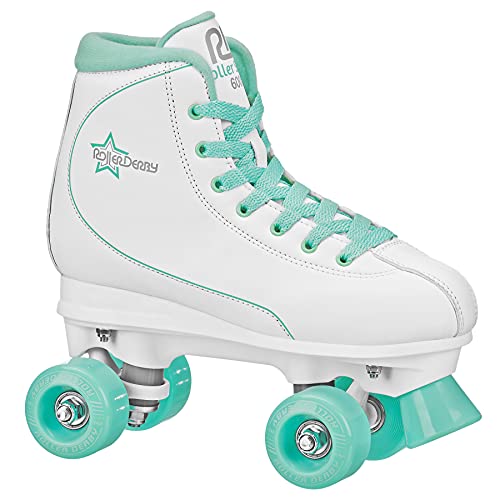

As an Amazon Associate we earn from qualifying purchases at no extra cost to you. Ratings are shown as listed on Amazon.
Best roller skates for women at a glance
| Best for | Model or skate type | Boot and support | Plate material | Typical wheel setup | Approximate price range |
|---|---|---|---|---|---|
| Outdoor beginners | Moxi Beach Bunny | Structured vinyl high-top | Aluminum Marvel plate | 65 mm, 78A outdoor wheels | $150–$200 |
| Comfortable cruising | Sure-Grip Boardwalk | Suede high-top with moderate padding | Nylon plate | 65 mm, approximately 78A outdoor wheels | $170–$230 |
| Rink and general learning | Riedell 120-style recreational skate | Vinyl high-top with firm ankle structure | Nylon plate | Usually 62–65 mm, medium-hard indoor wheels | $130–$200 |
| Dance and artistic practice | Riedell 220-style leather boot | Leather boot with stronger heel and ankle hold | Aluminum plate options are common | Smaller, harder dance or artistic wheels | $300–$500+ |
| Outdoor comfort with a suede boot | Chaya Melrose Deluxe | Suede high-top with padded lining | Shari composite plate | 65 mm, 78A outdoor wheels | $180–$250 |
Specifications can change between colors, bundles, and production years, so confirm the included wheels and size chart before ordering. The most useful comparison is not simply price: it is whether the complete setup suits your surface and skating style.
Our top picks by skating situation
Best first pair for outdoor beginners: Moxi Beach Bunny
The Moxi Beach Bunny is a practical starting point for someone learning on sidewalks, smooth asphalt, or outdoor paths. Its high-top vinyl boot gives more structure than a soft sneaker-style skate, while the aluminum plate is more substantial than the nylon plates found on many entry-level models. The included 78A outdoor wheels are soft enough to roll over small cracks and imperfect pavement.
Its limitation is flexibility. The vinyl boot can feel stiff at first, and the factory outdoor wheels are not ideal for a busy indoor rink. If you later move indoors, you may need a second wheel set rather than replacing the entire skate.
Best value for outdoor cruising: Sure-Grip Boardwalk
The Sure-Grip Boardwalk is a strong choice for frequent recreational skating because its suede boot generally becomes more comfortable as it breaks in. It offers a supportive high-top shape without feeling as rigid as a performance artistic boot. The standard outdoor setup is designed for smooth cruising rather than quick dance footwork.
Choose it over a cheaper vinyl skate if you expect to skate several times a month and value a softer, more forgiving fit. Suede does require more care: keep it dry, brush away dirt, and avoid storing it in a sealed damp bag.
Best budget-oriented rink option: a Riedell 120-style recreational skate
A Riedell 120-type setup makes sense when most of your skating happens on polished rink flooring. The boot is supportive enough for learning stops, crossovers, and basic transitions, while the nylon plate helps keep the overall price and weight down. Indoor packages commonly use medium-hard wheels that roll efficiently on a clean rink.
Do not use the default indoor wheels as your only outdoor setup. Harder rink wheels transmit pavement vibration, lose grip on dusty surfaces, and can make small cracks feel much more abrupt. A separate outdoor wheel set is usually a better investment than trying to make one wheel do everything.
Best for dance progression: a Riedell 220-style leather skate
Dance skating rewards a boot that holds the heel securely while allowing controlled knee and ankle movement. A leather artistic boot, such as the Riedell 220 style, offers more precise support than a casual recreational boot and is a sensible upgrade for toe manuals, spins, grapevines, and repeated footwork.
This category costs more because the boot, plate, and mounting options are more performance-oriented. It can be excessive for occasional outdoor laps, and a firm boot may feel uncomfortable if the size or width is wrong. Dance skates should be selected with particular attention to heel lift and forefoot pressure.
Best padded suede alternative: Chaya Melrose Deluxe
The Chaya Melrose Deluxe combines a relatively comfortable suede high-top with a composite plate and soft outdoor wheels. It suits beginners who want cushioning and casual cruising without immediately buying a specialized artistic setup. The main trade-off is that composite plates are not automatically inferior, but they are generally chosen for recreational use rather than maximum customization or aggressive skating.
How the key specifications change your choice
Boot fit and ankle support
A good boot should hold your heel in place when you bend your knees, with toes able to lie flat rather than curl. High-top roller skates provide more ankle coverage, but ankle height alone does not determine support. A padded boot with a firm heel counter can feel more stable than a tall, flexible boot.
- Wide or high-volume feet: look for a brand and last with a suitable width option rather than simply sizing up. A longer skate can leave the heel loose.
- Narrow heels: prioritize heel lock. Excess movement can cause blisters and reduce control.
- Dance and artistic skating: favor a structured boot with a defined heel and secure lacing.
- Casual cruising: moderate padding and a less rigid boot may be more comfortable than a competition-style fit.
Wheel hardness
Wheel hardness is usually expressed on the durometer scale. Softer wheels, commonly around 78A, absorb more vibration and grip better outdoors. Harder wheels, often around 88A–97A, roll and slide more easily on smooth indoor floors but feel harsh on rough pavement.
| Surface or goal | Useful hardness range | Typical diameter | What to expect |
|---|---|---|---|
| Cracked sidewalks and asphalt | 78A–82A | 62–65 mm | More comfort and grip; less quick sliding |
| Smooth outdoor paths | 80A–85A | 58–65 mm | Balanced speed, grip, and maneuverability |
| Polished rink cruising | 88A–95A | 57–62 mm | Faster response and easier controlled slides |
| Dance footwork | 93A–101A | Small to medium | Quick edges and pivots, with less forgiveness |
These are starting ranges, not rules. Rink finishes differ, and a heavier skater may prefer a different combination of hardness and width than a lighter skater.
Plate material
Nylon plates are usually affordable and light, making them suitable for recreational learning. Aluminum plates tend to feel more precise and resistant to flex, which is useful for frequent skating, heavier loads, or dance progression. Composite plates occupy the middle ground: they can be comfortable and durable for cruising while offering less performance-oriented customization than many metal setups.
Sizing without guesswork
Measure both feet in the socks you expect to wear, standing with your heel against a wall. Use the larger foot, then compare its measurement with the skate maker’s chart. Do not assume your women’s shoe size will transfer directly; roller skate sizing may run smaller or use a different width.
- Measure heel to longest toe in millimeters or inches.
- Measure the widest part of the forefoot.
- Compare both measurements with the manufacturer’s chart.
- Lace firmly around the ankle but leave enough room for natural toe position.
- Walk and bend your knees. Your heel should not lift substantially, and your toes should not press the front.
For example, if a foot measures 245 mm and the chart places 245–250 mm in one skate size, select that chart size rather than adding a full size for thick socks. A small amount of toe clearance is useful; a loose heel is harder to correct.
Ownership costs and maintenance
The wheels are usually the first major consumable. Outdoor wheels wear faster on abrasive pavement, while rink wheels can develop flat spots if you repeatedly brake in the same way. Bearings eventually collect dust and may slow down, and toe stops wear from repeated T-stops or toe-stop drags.
- Rotate wheels periodically so wear is distributed evenly.
- Wipe outdoor wheels and plates after dusty sessions.
- Keep bearings away from water; dry the skates fully after damp conditions.
- Check axle nuts and toe-stop bolts regularly, without overtightening them.
- Replace a worn toe stop before the stem becomes difficult to remove.
- Use a breathable skate bag rather than storing damp skates in sealed plastic.
As a simple ownership calculation, a $180 pair used twice weekly for one year provides about 100 sessions, or roughly $1.80 per session before replacement wheels and maintenance. A more expensive leather skate can be better value for frequent use if its fit remains comfortable and replacement parts are available, while an inexpensive skate is not necessarily economical if its boot causes you to stop using it.
Final buying recommendation
Choose the Moxi Beach Bunny or Chaya Melrose Deluxe for supported outdoor learning, the Sure-Grip Boardwalk for comfortable regular cruising, and a Riedell 120-style setup for mainly indoor recreational skating. Move to a structured leather artistic skate such as the Riedell 220 style when dance technique, precise edge control, and long-term customization matter more than low initial cost. Whatever the model, prioritize heel lock, correct width, and wheels matched to your actual surface before choosing color or brand.