Key takeaways
- For most buyers who prioritize verifiable nutrition data and fresh flavor, the Atlas Organic 1-liter Moroccan high-polyphenol oil is the top pick — it balances quality transparency, manageable size, and reasonable pricing without forcing bulk-commitment decisions. If budget is the primary constraint, the 365 by…
Buying extra virgin olive oil used to mean grabbing whichever green-tinted bottle looked fancy enough at the supermarket. The problem now is that shelves are packed with options that differ dramatically in polyphenol content, origin transparency, packaging quality, and price per ounce. A buyer in 2026 needs to figure out whether paying extra for a Moroccan high-polyphenol oil actually delivers measurably better nutrition, whether a three-liter tin makes economic sense for their kitchen, or whether a squeeze bottle from Graza is a gimmick or a genuine convenience win.
We compared every product on this list using published specifications, current pricing, and recurring themes in owner feedback — no lab work, no blind tastings, just what the numbers and the people tell us. What separates a strong EVOO purchase from a weak one comes down to three things: verifiable origin, packaging that survives months of kitchen light and heat, and a polyphenol claim backed by a producer who actually publishes the data. Use this roundup to match your cooking habits to the bottle that earns its spot on your counter.
Our top picks



As an Amazon Associate we earn from qualifying purchases at no extra cost to you. Ratings are shown as listed on Amazon.
Quick Picks
| Product | Best For | Price |
|---|---|---|
| Atlas Organic 1 L | Daily cooking with verified high polyphenols | $27.94 |
| Pompeian Smooth 2 L | Everyday drizzling and light sautés | $21.48 |
| Atlas Organic 500 mL | Sampling a high-polyphenol oil before committing | $20.42 |
| Partanna Robust 3 L Tin | High-volume cooking with bold, peppery flavor | $71.69 |
| Graza Sizzle 750 mL | Hands-free cooking convenience | $13.49 |
| Atlas Organic 750 mL | Frequent home cooks wanting the middle size | $22.94 |
| Atlas Organic 3 L Tin | Maximum polyphenol value per ounce | $66.95 |
| 365 by Whole Foods 33.8 Fl Oz | Budget organic with a Mediterranean profile | $16.98 |
How We Picked
We filtered these eight oils against four criteria that matter most in the EVOO category. First, origin specificity: single-country or single-cooperative sourcing signals traceability, while vague “blend of EU and non-EU oils” labels often mask older harvests. Second, packaging integrity: tins and dark glass with narrow openings protect against oxidation far better than clear plastic or wide-mouth bottles that sit under fluorescent store lights. Third, polyphenol transparency: producers who publish their mill analysis numbers give buyers a way to verify freshness, since polyphenols degrade rapidly after pressing. Fourth, owner-reported consistency: recurring complaints about flat taste, rancid smell after opening, or misleading labels helped us flag products that look strong on paper but disappoint in regular use.
The 8 Best Evoo Olive Oil in 2026
Atlas Organic Extra Virgin Olive Oil, Moroccan, High Polyphenol, 1 L
This bottle is for the buyer who reads polyphenol labels before checking price. Atlas publishes its Moroccan mill data, and the 1-liter size fits standard home-kitchen consumption cycles without risking oxidation before you finish it. Pros: verifiable polyphenol claims tied to a named origin; dark glass bottle with a pour spout that limits air contact. Con: at $27.94 per liter, it costs more per ounce than bulk tin options. Skip it if you cook with olive oil daily in large volumes — the per-ounce economics favor the 3-liter tin from the same producer.
Pompeian Smooth Extra Virgin Olive Oil – 68 fl oz (2 L)
Pompeian targets the cook who wants a reliable, mild oil for everything from roasting vegetables to salad dressing without a peppery finish interfering with delicate flavors. At $21.48 for two liters, it undercuts most single-origin alternatives on a cost-per-use basis. Pros: smooth profile pairs well with butter-forward dishes where olive flavor should not dominate; widely available at major grocers. Con: no published polyphenol data and no single-origin specificity, so you cannot verify freshness claims. Skip it if health-driven polyphenol content is your primary reason for choosing EVOO over a neutral oil.
Atlas Organic Extra Virgin Olive Oil, Moroccan, High Polyphenol, 500 mL
This is the entry point for anyone curious about high-polyphenol oils but unwilling to commit to a full liter or tin. The 500-milliliter bottle lets you finish it within a few weeks, keeping oxidation low and flavor intact. Pros: same Moroccan sourcing and polyphenol transparency as the larger Atlas formats; easy to store in a refrigerator door for maximum freshness. Con: at $20.42 per half-liter, it is the most expensive per-ounce option in this roundup. Skip it if you have already confirmed the Atlas profile suits your palate — the 1-liter or 3-liter tin offers dramatically better value.
Partanna Robust Extra Virgin Olive Oil, 101 fl oz (3 L) Tin
Partanna is a Sicilian cooperative that produces a genuinely robust, peppery oil in a light-blocking tin. This is for the cook who treats EVOO as a primary cooking fat and wants bold flavor that stands up to garlic, chili, and high heat. Pros: opaque 3-liter tin eliminates light exposure entirely; single-cooperative origin with a distinctive, assertive profile. Con: $71.69 is the highest upfront cost here, and the robust flavor overpowers delicate dishes like raw fish preparations or sweet baking. Skip it if you prefer a neutral or buttery olive oil character in your cooking.
Graza Sizzle Extra Virgin Olive Oil, Cooking Oil – High Polyphenol Peak Harvest EVOO Cooking Oil in a Squeeze Bottle – Single Origin Olive Oils from Spain – 25.3 Fl Oz (750ml)
Graza solved the most annoying problem in olive oil cooking: the drip-and-mess pour. The squeeze bottle lets you control oil flow with one hand while stirring with the other, and the Spanish single-origin sourcing with a peak-harvest polyphenol claim gives it nutritional credibility. Pros: squeeze format is genuinely faster for pan-searing and roasting; published harvest window signals freshness. Con: $13.49 for 750 milliliters looks cheap until you realize the bottle shape is optimized for convenience, not shelf life — once opened, it oxidizes faster than a tin. Skip it if you use oil slowly and want the longest possible flavor retention after opening.
Atlas Organic Extra Virgin Olive Oil, Moroccan, High Polyphenol, 750 mL
For frequent cooks who go through a liter in about three weeks, the 750-milliliter Atlas hits a practical middle ground between the entry-size 500 mL and the larger 1-liter bottle. Pros: same verifiable polyphenol data and Moroccan origin as all Atlas formats; fits standard oil dispensers and pantry door racks. Con: pricing at $22.94 makes it the second-most-expensive-per-ounce Atlas option, sitting awkwardly between the budget 500 mL sampler and the better-value 1-liter. Skip it if your household uses less than a quarter-liter per week — the 500 mL reduces waste risk.
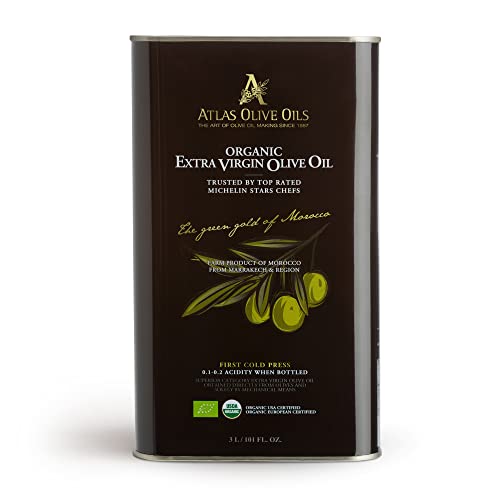
Atlas Organic Extra Virgin Olive Oil, Moroccan, High Polyphenol, 3 L Tin
This is the best value play in the entire high-polyphenol category for households that burn through oil quickly. The tin blocks all light, and the $66.95 price for three liters brings the per-ounce cost well below any other Atlas format. Pros: lowest cost per fluid ounce among all Atlas products; opaque packaging keeps polyphenols stable longer than glass. Con: three liters is a lot of oil to finish before quality degrades unless you cook with EVOO daily — the tin has no convenient pour spout, so decanting into a smaller bottle adds a step. Skip it if your household uses under half a liter per month.
365 by Whole Foods Market, Organic Extra Virgin Mediterranean Olive Oil, 33.8 Fl Oz
At $16.98 for a full liter of certified organic EVOO, this store-brand option delivers the lowest upfront price among organic oils on the list. It is for budget-focused shoppers who want organic certification without paying specialty-producer margins. Pros: organic certification at a price that undercuts most competitors; widely available in Whole Foods locations for easy in-person inspection before purchase. Con: “Mediterranean” blend language means no single-origin specificity, and no published polyphenol data exists to verify freshness or health claims. Skip it if traceable sourcing and polyphenol transparency are non-negotiable priorities for you.
Buying Guide
Reading Polyphenol Claims Without Getting Fooled
Polyphenols are the compounds responsible for the peppery throat catch in fresh EVOO, and they degrade steadily after pressing. A producer that publishes a specific mill date and a numerical polyphenol result (measured in milligrams per kilogram) is giving you verifiable data. A label that says “high polyphenol” without a number is a marketing claim, not a spec. When comparing oils, look for the harvest or milling date rather than the “best by” date, since a long shelf life is only guaranteed from the pressing date, not the bottling date.
Packaging Is Part of the Product
Light and heat are the two primary accelerators of olive oil oxidation. A clear glass or plastic bottle sitting on a lit grocery shelf is already degrading before you buy it. Tins and dark amber or green glass bottles offer meaningful protection, but only if the opening design also limits air contact during use. Wide pour spouts expose more surface area to oxygen with each use. If you buy in bulk format like a 3-liter tin, decant into a smaller dark bottle for daily use to slow oxidation in the main container.
Matching Flavor Profile to Your Actual Cooking
A robust, peppery oil shines when roasting potatoes or finishing a soup, but it can make a delicate fish sauce taste harsh. A smooth or mild oil like Pompeian blends into baked goods and vinaigrettes where olive character is optional. The right question is not “which oil tastes best” but “which oil stays in the background when I want it gone and comes forward when I want a finish.” Many households keep two bottles: one assertive for cooking and one neutral for raw applications.
Our Verdict
For most buyers who prioritize verifiable nutrition data and fresh flavor, the Atlas Organic 1-liter Moroccan high-polyphenol oil is the top pick — it balances quality transparency, manageable size, and reasonable pricing without forcing bulk-commitment decisions. If budget is the primary constraint, the 365 by Whole Foods organic EVOO at $16.98 offers the lowest entry price for a certified-organic oil, though you sacrifice origin traceability. If your household cooks with olive oil as a daily staple fat, the Partanna 3-liter tin wins on flavor boldness and packaging integrity at a per-ounce cost that rivals even the cheapest options here.
FAQ
Does a higher polyphenol number mean healthier oil?
Higher polyphenol content correlates with greater anti-inflammatory activity and better oxidative stability, meaning the oil resists going rancid longer. However, polyphenol levels are a freshness indicator first and a health claim second — an oil with high polyphenols at pressing will lose most of them within twelve months regardless of storage.
Can I cook with high-polyphenol EVOO at high heat?
Yes, within reason. Refined seed oils still handle deep-frying temperatures better, but quality EVOO with high polyphenols has demonstrated good thermal stability up to typical pan-searing and roasting temperatures. The polyphenols protect the fatty acids from oxidative breakdown more effectively than a neutral oil at the same heat.
Why do some Atlas products cost more per ounce than others?
Smaller formats carry higher packaging and shipping costs relative to volume, so the 500-milliliter and 750-milliliter bottles are the least economical per-ounce options in the Atlas line. The 3-liter tin and 1-liter bottle deliver the best value because packaging overhead spreads across more product.
Is a squeeze bottle worse for oil quality than a regular bottle?
A squeeze bottle introduces more mechanical flexing and can allow small amounts of air back in when released. For an oil consumed within two to three weeks of opening, this effect is minimal. For someone who uses oil slowly over several months, a narrow-opening dark bottle or tin will preserve flavor noticeably longer.