Key takeaways
- A 75-inch screen is the point where a television stops being furniture and starts being the room.
A 75-inch screen is the point where a television stops being furniture and starts being the room. It is also where the price gap between a sensible buy and an overbuilt one gets widest. Asking for the best 75-inch TV for the money means you want the biggest practical picture without paying for features you will never use. The real question is which upgrades are worth buying at this size: a better backlight, a faster panel, gaming features, or simply a smarter built-in platform that makes the TV easier to live with every day.
This guide is for shoppers in 2026 who have measured the wall, picked a seating distance, and want to compare seven current options across budget, mid-range, and premium tiers. Each pick is judged only on what its listing title states, such as the panel type, processor, smart platform, and gaming support. The goal is to help you see which TV earns its place at this size and which one asks you to pay for a label.
Quick Picks
Our top picks
 INSIGNIA 75" Class F50 Series LED 4K
- 4K Ultra HD (2160p resolution): Enjoy breathtaking HDR10…
- High Dynamic Range: Provides a wide range of…
- Alexa voice control: The Alexa Voice Remote lets…
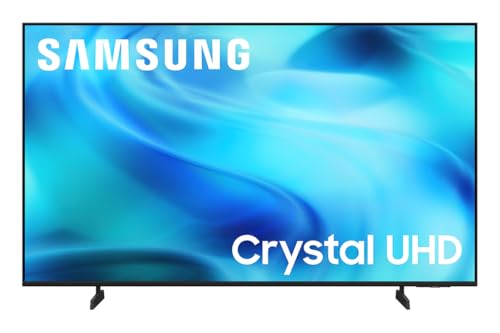 Samsung 75-Inch Class U8000H Series Crystal UHD
- Powerful processor enhances colors and sharpens details for…
- Watch 2,700+ free streaming options, including 750+ subscription-free…
- Experience clear picture and smooth motion in games…

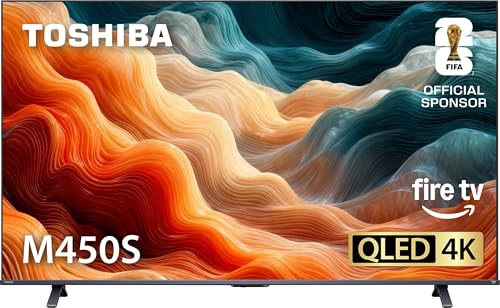 TOSHIBA 75" Class M450 Series QLED 4K
- REGZA Engine ZR: The new REGZA AI Engine…
- REGZA QLED Color: Experience rich, lifelike color with…
- REGZA Power Audio: REGZA Power Audio enables you…


As an Amazon Associate we earn from qualifying purchases at no extra cost to you.
| Product | Best for | Key spec from the title |
|---|---|---|
| INSIGNIA 75″ F50 Fire TV | Lowest-tier entry to 75 inches | LED 4K UHD, Fire TV, Alexa voice remote |
| Samsung U8000H Crystal UHD | Budget Samsung with AI features | Crystal UHD 4K, Crystal Processor 4K, Vision AI Companion |
| Samsung M70H Mini LED | Mid-range upgrade in backlighting | Mini LED, Mini LED Processor 4K, Pure Spectrum Color |
| TOSHIBA 75″ M450 QLED | Budget QLED with Fire TV | QLED 4K UHD, Fire TV, Alexa voice remote |
| Hisense 75″ E6SR Hi-QLED | Console gamers on a budget | Hi-QLED, Dolby Vision, VRR, ALLM, Roku TV |
| Sony 75″ BRAVIA 3 | PlayStation owners | Google TV, Dolby Vision/Atmos, X1 4K processor |
| LG 75″ UR9000 | Plain, reliable everyday viewing | 4K, 60Hz refresh rate, Alexa built-in |
How to Choose
Match panel technology to your room
Standard LED panels are the budget baseline and look fine in dim to moderate rooms. QLED adds a quantum dot layer for richer color and usually better brightness, which helps in a room with big windows. Mini LED uses a denser backlight for improved contrast and highlights, and it is the step to consider if you watch a lot of movies. At 75 inches, backlight quality becomes more visible than at smaller sizes, so it is worth paying for when you can.
Check the refresh rate and gaming features
A 60Hz panel is enough for broadcast, streaming, and casual console use. If you play on a console and want smoother motion, look for 120Hz or at least gaming features such as VRR and ALLM, which reduce lag and tearing. Several titles here mention these terms, while others list only a 60Hz refresh rate. Be honest about how much you play: a gamer should prioritize those specs, and a movie watcher can skip them.
Pick the smart platform you will actually like
The interface is the part you touch every day. Fire TV and Roku TV are known for simple menus and wide app support, Google TV leans on recommendations and Google ecosystem integration, and Samsung and LG each run their own platforms. Voice control through Alexa or built-in AI assistants is useful, but only if you already use that assistant at home. A familiar interface often matters more than a marginal difference in picture.
Know what 4K labels leave out
Every TV here is 4K, but that label says nothing about contrast, brightness, or motion handling. Ignore processor marketing names unless they come with a clear benefit, and give more weight to the panel type and gaming features. Budget models cut corners on local dimming and peak brightness, so HDR content often looks flatter on them than the format name suggests. Also confirm the HDMI port count if you connect a soundbar, console, and streaming box.
The 7 Best Options
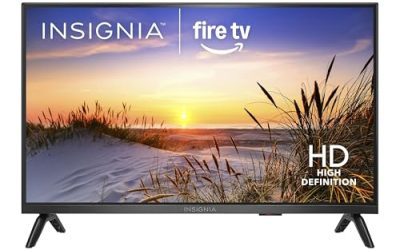
INSIGNIA 75″ Class F50 Fire TV
The title describes a 75-inch LED 4K UHD smart TV running Fire TV, with an Alexa voice remote and live TV streaming without cable. It is the most basic entry in the group and fits households that want a very large screen without caring about picture-quality extras.
- Strength: the Fire TV platform and Alexa remote make it easy to find content by voice.
- Strength: the lowest-tier positioning makes a 75-inch screen reachable.
- Trade-off: the title mentions no QLED, Mini LED, or gaming features, so picture quality is the baseline.
Skip it if you watch many movies in a dark room or play fast console games. Households that mostly stream sitcoms and sports in a lit room, however, will likely find the baseline picture perfectly adequate for the size.
Samsung 75-Inch Class U8000H Crystal UHD
The title lists a Crystal UHD 4K panel, a Crystal Processor 4K, a Vision AI Companion, and a focus on free content. It is a straightforward Samsung entry for buyers who want brand reliability and a modern interface without stepping into Mini LED pricing.
- Strength: Samsung’s smart platform and free content access make it ready to use out of the box.
- Strength: a named Crystal Processor 4K signals dedicated picture processing rather than a bare panel.
- Trade-off: Crystal UHD is a standard LED category, so contrast will not match Mini LED or QLED.
Skip it if a bright living room demands a richer panel. Anyone sensitive to washed-out blacks in movie scenes should step up a tier within the same brand family.
Samsung 75-Inch Class M70H Mini LED
This Samsung moves up to Mini LED with a Mini LED Processor 4K, Vision AI Companion, and Pure Spectrum Color in the title. Mini LED backlighting is the headline upgrade, since it targets contrast and highlight control, which are the areas where large budget TVs usually fall short.
- Strength: Mini LED backlighting is a meaningful step up for movies and HDR.
- Strength: the dedicated Mini LED processor is designed to manage the denser backlight.
- Trade-off: it sits in the mid-range tier, so it costs more than the LED and QLED budget options.
Skip it if you mostly watch news and sports in a bright room where subtle contrast gains disappear. If you plan to keep the set for many years, the denser backlight is also the feature most likely to still feel current later.
TOSHIBA 75″ Class M450 QLED Fire TV
The title shows a 75-inch QLED 4K UHD display with Fire TV, an Alexa voice remote, and live TV streaming without cable. QLED at this size is attractive because it adds color and brightness over plain LED while keeping the Fire TV interface that many households already know.
- Strength: QLED technology improves color compared with standard LED panels.
- Strength: Fire TV with Alexa voice control keeps navigation simple.
- Trade-off: the title lists no gaming features, so console players get less here than on the Hisense.
Skip it if you want Dolby Vision or variable refresh listed on the spec sheet. For everyday viewing, though, QLED color on a 75-inch screen is a visible improvement over the plainest LED sets.
Hisense 75″ Class E6SR Hi-QLED Roku TV
This is the most gamer-friendly of the budget picks. The title lists Hi-QLED, Dolby Vision, Game Mode Plus, VRR, ALLM, DTS Virtual:X, and Apple AirPlay support on a Roku TV platform. It packs more specific features into the title than the other low-tier sets.
- Strength: VRR and ALLM are useful features for console gaming.
- Strength: Dolby Vision support brings improved HDR on compatible content.
- Trade-off: the title does not specify a 120Hz panel, so check the refresh rate before pairing it with a high-end console.
Skip it if you want a premium-brand image processor. Anyone planning to hook up a soundbar should also note the DTS Virtual:X listing, which hints at built-in virtual surround handling.
Sony 75 Inch BRAVIA 3 Google TV (K-75S30)
The title lists an LED 4K HDR panel with Google TV, Dolby Vision and Dolby Atmos support, a 4K Processor X1, Triluminos Pro color, and exclusive features for PlayStation 5. Sony is a premium-leaning name in the group, and the PlayStation tie-in is a clear reason to choose it.
- Strength: PlayStation 5 features make it the natural pairing for Sony console owners.
- Strength: Dolby Vision and Atmos support cover both picture and sound formats.
- Trade-off: it is an LED panel, so it competes on processing and brand rather than backlight type.
Skip it if you do not own a PlayStation and want the most picture technology for the size. Buyers who value processing polish and a recognizable brand, though, may find the premium tier easier to justify here than on a spec-for-spec basis.
LG 75-Inch Class UR9000
The title lists a 3840 x 2160 4K display with Alexa built in, Bluetooth, Wi-Fi, USB, Ethernet, HDMI, a 60Hz refresh rate, and AI-powered 4K processing. It is a no-frills option from a major brand, and the 60Hz label is honest about what it offers.
- Strength: a full connectivity list, including Ethernet and Bluetooth, covers common home setups.
- Strength: the AI-powered 4K processing named in the title suits a household that mixes streaming with older content.
- Trade-off: a 60Hz refresh rate is a clear limit for fast-paced console games.
Skip it if you want gaming-oriented features or a richer panel type. Shoppers who simply want a large, familiar screen for a guest room or basement den can treat it as a low-drama choice.
Which One Fits Your Situation
You want the lowest cost for 75 inches
The INSIGNIA F50 is the entry choice, and the TOSHIBA M450 is the step up if you want QLED color while staying in the budget tier.
You game on a console
The Hisense E6SR lists VRR, ALLM, and Game Mode Plus, which makes it the most gaming-focused budget TV here. PlayStation owners with a larger spending limit should look at the Sony BRAVIA 3.
You watch movies in a dim room
The Samsung M70H Mini LED is the strongest fit, since backlight control matters most for dark scenes. It is the mid-range pick worth stretching for.
You want something simple that works
The LG UR9000 and Samsung U8000H both offer dependable brand platforms without chasing extras. Choose the one whose interface you prefer.
Common Mistakes
- Assuming every 4K label means the same picture quality.
- Paying for gaming features you will never use, or skipping them when you own a console.
- Ignoring the smart platform and then disliking the menus every day.
- Forgetting to measure the wall, stand, and doorway before ordering a 75-inch screen.
- Buying in a bright room without considering panel brightness or anti-glare behavior.
Sizing and Placement Checklist
A 75-inch diagonal is about 65 inches wide and 37 inches tall for a standard widescreen set. Work through these checks before ordering, because returning a screen this size is a hassle.
- Measure the wall or stand. The stand feet of many sets sit near the screen edges, so the furniture needs to be nearly as wide as the TV, or the TV needs to be wall mounted.
- Measure your seating distance. A common guideline for 4K at this size is somewhere around six to nine feet; closer than that, upscaled streaming may look soft, and farther away you lose the benefit of the extra inches.
- Check the route into the house. A boxed 75-inch set is wide and awkward on stairs and in narrow hallways.
- If you plan to mount it, confirm the mount’s weight limit and its VESA pattern match the TV, and find a stud-supported wall.
- Look at the number of HDMI ports and which of them support the features you want. Not every port on a TV supports the highest gaming modes.
Setup and Picture Tips
Out of the box, most TVs ship in a vivid shop-floor picture mode that oversaturates color. Switch to a movie, cinema, or filmmaker mode for films and shows, and turn off motion smoothing unless you like the soap-opera look. Enable game mode for consoles, which cuts processing delay. Plug the console into the HDMI port labeled for the highest bandwidth, and use an Ultra High Speed HDMI cable, since older cables cannot carry 4K at 120 hertz. Place the TV so windows do not reflect on the screen; at this size, glare is more distracting than on a small set.
Who Should Skip a 75-Inch Set
If your seating is closer than about six feet, a 65-inch panel will likely feel more comfortable and cost less to place. Skip the size entirely in a small bedroom or rental where moving it would be a chore. If you mainly watch standard-definition cable or older shows, extra size mostly magnifies the softness of the source. And if your budget is tight, a better 65-inch screen often looks superior to a basic 75-inch one, since backlight quality and contrast do not scale with size.
Care and Longevity
Dust the screen with a dry microfiber cloth, and skip glass cleaner, which can strip coatings. Leave a few inches of space behind and above the set for ventilation. A surge protector is a low-effort guard against power spikes. Finally, keep the software updated, since smart platforms receive fixes for apps that otherwise slow down or stop working over time.
Related guides
- Sony Wh-1000Xm5 Vs Bose Quietcomfort Ultra Headphones
- Bose Quietcomfort Ultra Vs Bose 700 Headphones
- Carbon Fiber Folding Electric Wheelchairs
Frequently Asked Questions
Is a 75-inch TV too big for a living room?
It depends on seating distance. As a rule of thumb, sit roughly nine to ten feet away for comfortable viewing of a 4K 75-inch screen. In a small room, a smaller size may feel more comfortable.
Is QLED worth paying more for?
For most buyers, yes if the room is bright. QLED improves color and brightness over standard LED, and the gap is easier to see at 75 inches. In a dark room, Mini LED gives more visible gains.
Do I need 120Hz for gaming?
Not for casual play, but fast-paced console games benefit from it. If the title only lists a 60Hz refresh rate, as the LG does, expect less smooth motion. Look for VRR and ALLM as a minimum gaming feature set.
Which smart platform is best?
The one you find easiest to use. Fire TV and Roku TV are simple, Google TV is recommendation-driven, and Samsung and LG platforms are polished in their own ways. Voice control matters mainly if you already use Alexa or a similar assistant.
More from Amazon
Programs that pair well with the guide above. Offers and eligibility are set by Amazon and may change.
Free shipping on eligible items, Prime Video and more. Eligible new members can start with a free trial.
Start a Prime free trialAudiobooks and podcasts to listen to on the go. Eligible new members can start with a free trial.
Try Audible freeAd-free music streaming. Eligible new subscribers can start with a free trial.
Try Music Unlimited freeA free business account with business pricing and bulk-buying tools for work, shop or home office.
Create a business accountAs an Amazon Associate we earn from qualifying purchases.