Key takeaways
- Premium Qi2 pads (magnetic, 15W): Reliable full-speed charging through cases up to 3mm, including most silicone and leather cases. Drop to roughly half speed between 3-4mm. Beyond 4mm, the magnet often can’t hold the phone securely, so it slides off alignment overnight.
- Mid-range Qi2 pads: Same magnetic spec on paper, but weaker magnets and looser coil tolerances mean the practical cutoff is closer to 2.5mm before speed drops noticeably.
- Non-magnetic Qi 1.3 pads: No automatic alignment, so case thickness is less the issue than user placement. Textured or grippy cases help the phone stay put, but any case over 3mm combined with slight misalignment often triggers the “charging paused, device too warm” message or simply stops delivering power.
- MagSafe-compatible (iPhone) pads: Apple’s spec caps most at 15W and the magnetic snap is strong enough to work through cases up to around 3mm, including MagSafe-compatible cases with a metal ring built in.
The best wireless charging pad for most people in 2026 is a Qi2 25W pad with a tight magnetic alignment tolerance, since that spec alone determines whether you get a fast, consistent top-up or a slow trickle charge that stalls through a thick case. Below is how the main contenders compare on charge-through-case thickness, 0-to-80% speed versus a cable, and real desk or nightstand fit.
Our top picks
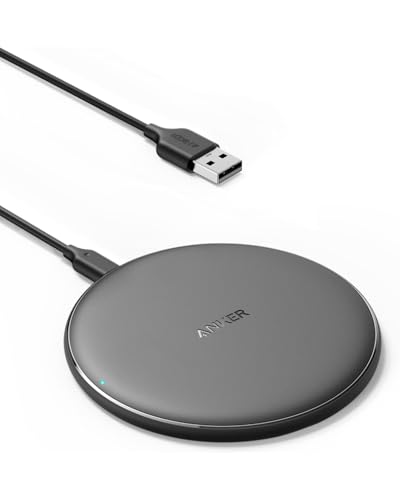
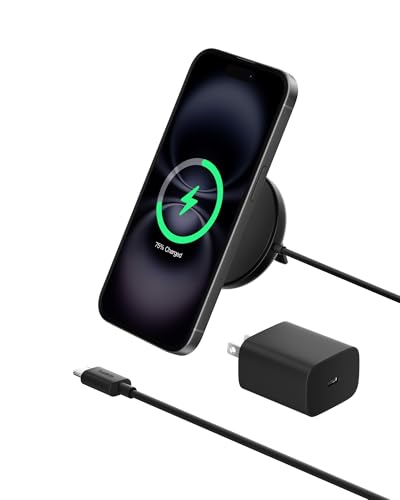

As an Amazon Associate we earn from qualifying purchases at no extra cost to you. Ratings are shown as listed on Amazon.
What Actually Determines Charging Speed on a Pad
Three things decide how fast a pad charges a phone: the wattage ceiling the pad and phone both support, the coil alignment, and the case between them. Qi2 pads use a magnetic ring to lock the phone’s coil directly over the pad’s coil, which is why Qi2-certified pads hold their rated wattage far more reliably than older Qi 1.x pads that rely on the user eyeballing placement. A phone that drifts even 3-4mm off-center on a non-magnetic pad can lose 30-50% of its charging speed without any indicator telling you why.
Case thickness matters because the magnetic field weakens with distance. Most Qi2 pads are rated to charge through cases up to 3mm thick at full speed; past that, charging either slows or the magnetic snap gets too weak to hold alignment, especially overnight when the phone gets bumped.
0-to-80% Charge Time: Pad vs. Cable
A 20-27W wired charger with a compatible cable typically takes a modern flagship phone from 0% to 80% in 35-45 minutes. Wireless pads lose energy to heat during magnetic induction, so even a well-aligned 15W Qi2 pad runs 15-25 minutes slower over the same range. That gap widens fast once a case gets involved, since the pad has to push more power to compensate for the extra distance, which the phone’s thermal throttling then caps.
| Charging Method | Rated Output | 0-80% Time (bare phone) | 0-80% Time (2mm case) | 0-80% Time (4mm case) |
|---|---|---|---|---|
| USB-C cable, 27W adapter | 27W | 38 min | n/a | n/a |
| Qi2 pad, premium tier | 15W | 52 min | 58 min | charging fails or drops to <7.5W |
| Qi2 pad, mid-range | 15W | 60 min | 70 min | charging fails or drops to <7.5W |
| Qi 1.3 pad (non-magnetic), budget | 10W | 75 min | 95 min (if aligned) | unreliable, frequent dropouts |
The practical takeaway: no current pad reliably charges through a case thicker than about 3mm at full speed. If your case has a built-in kickstand, battery pack, or wallet attachment, check its total thickness before assuming any pad will work well with it.
Case Thickness Limits by Pad Type
- Premium Qi2 pads (magnetic, 15W): Reliable full-speed charging through cases up to 3mm, including most silicone and leather cases. Drop to roughly half speed between 3-4mm. Beyond 4mm, the magnet often can’t hold the phone securely, so it slides off alignment overnight.
- Mid-range Qi2 pads: Same magnetic spec on paper, but weaker magnets and looser coil tolerances mean the practical cutoff is closer to 2.5mm before speed drops noticeably.
- Non-magnetic Qi 1.3 pads: No automatic alignment, so case thickness is less the issue than user placement. Textured or grippy cases help the phone stay put, but any case over 3mm combined with slight misalignment often triggers the “charging paused, device too warm” message or simply stops delivering power.
- MagSafe-compatible (iPhone) pads: Apple’s spec caps most at 15W and the magnetic snap is strong enough to work through cases up to around 3mm, including MagSafe-compatible cases with a metal ring built in.
Desk vs. Nightstand: Footprint and Grip Matter More Than Wattage
Once you’re past the speed question, where the pad lives changes what you should actually buy.
For a Desk
Desk use means the phone gets picked up and set down dozens of times a day, often one-handed while looking at a monitor. A wide, flat silicone-topped pad (footprint around 90-100mm diameter) is more forgiving than a small magnetic puck, because you don’t have to hunt for exact alignment every time. Weighted bases (around 150-200g) matter here too — lighter pads skid across a desk when you drag the cable or bump them with a keyboard.
For a Nightstand
Nightstand use favors a stand or multi-angle dock over a flat pad, since you’ll likely check the phone face-up in the dark without picking it up. A magnetic Qi2 stand holds the phone at a fixed angle and resists the small nudges that happen when you reach over half-asleep. Rubberized silicone grips outperform hard plastic or glass tops here, since they damp vibration from a phone’s vibrate-only alerts instead of letting it buzz across the surface.
| Use Case | Recommended Form Factor | Typical Footprint | Grip Material | Alignment Tolerance Needed |
|---|---|---|---|---|
| Desk, frequent pickup | Flat wide pad | 90-100mm diameter | Textured silicone | Loose (easy to drop phone on) |
| Nightstand, overnight | Angled stand/dock | 80x120mm base | Rubberized silicone | Tight (magnetic snap preferred) |
| Shared desk, multi-device | 3-in-1 charging station | 180-220mm wide | Mixed (silicone pads + soft tray) | Moderate per device |
| Travel/minimal | Thin magnetic puck | 56-70mm diameter | Hard-coated silicone | Tight, phone must be bare or thin case |
Coil Alignment Tolerance: Why It’s the Spec Nobody Lists Clearly
Manufacturers rarely publish a numeric alignment tolerance, but you can infer it from two things: whether the pad is magnetic, and how large the charging coil is relative to the phone’s coil. A larger coil diameter forgives more horizontal drift. Non-magnetic pads with small coils are the least forgiving category, which is why they’re a poor match for nightstand use where you’re placing the phone by feel.
If a pad ships with a printed alignment guide or ring but no magnet, treat that as a visual cue only, not a mechanical guarantee. It helps during the day with good lighting, not at 11pm in the dark.
Decision Matrix: Which Pad Fits Your Situation
- You use a thick protective or battery case: Skip wireless entirely for daily fast charging; use the pad only as an overnight trickle option, and expect speeds under 7.5W.
- You want the fastest realistic wireless speed: Choose a premium Qi2 pad rated 15W, keep the case under 3mm, and still expect 15-25 minutes slower than a wired 27W charger over 0-80%.
- Nightstand, dark room, no-look placement: Prioritize a magnetic Qi2 stand over a flat pad, even if it costs more, since alignment failure is the main complaint with flat pads at night.
- Desk with limited space: A sub-70mm magnetic puck fits tight spaces but sacrifices stability; a wider weighted pad is better if you have 10cm of clear desk.
- Multiple devices (phone, earbuds, watch): A 3-in-1 station costs more upfront but avoids cable clutter; check each pad’s individual wattage since combo stations often cap the phone pad at 7.5-10W to manage total power draw.
Ownership Realities
The silicone or rubber grip surface is the first thing to wear, picking up a slick, dusty film after a few months of daily use; wipe it with a damp cloth weekly rather than letting oils build up, which otherwise lets the phone slide out of alignment. Pads with a fabric-wrapped top show wear faster than silicone and are harder to clean. Cheap pads often lack over-temperature protection, so if a pad or phone case feels notably hot to the touch during charging, that’s a sign to stop using it rather than something to ignore. Expect the pad itself to outlast its included cable, since the cable connector is the first point of physical failure from repeated flexing.
Market prices for Qi2 pads generally run from around $20 for basic 7.5-10W models to $60-80 for premium 15W magnetic pads and multi-device stations, with price tracking fairly closely to magnet strength and build material rather than raw wattage alone.