Key takeaways
- Citra: lime, grapefruit, mango, passion fruit, and a soft tropical character.
- Mosaic: blueberry-like fruit, mango, citrus, and sometimes a herbal or dank edge.
- Galaxy: intense passion fruit, peach, and citrus; often highly aromatic when fresh.
- Nelson Sauvin: white grape, gooseberry, melon, and a wine-like fruit note.
- Simcoe: pine, grapefruit, resin, and stone fruit; useful when you want more structure.
- Strata: passion fruit, cannabis-like dankness, grapefruit, and strawberry.
- Idaho 7: peach, apricot, tropical fruit, and resin.
The best hazy IPA for most drinkers is a fresh, moderately bitter beer around 6–7% ABV, with a soft body, a stable white haze, and hop aromas that match your preferred fruit profile.
What “hazy IPA” actually means
A hazy IPA, also called a New England IPA or NEIPA, is an unfiltered or lightly filtered India pale ale designed to emphasize saturated hop aroma, a rounded mouthfeel, and relatively low perceived bitterness. Its cloudiness usually comes from a combination of yeast, proteins, polyphenols, and hop compounds remaining in suspension.
Our top picks
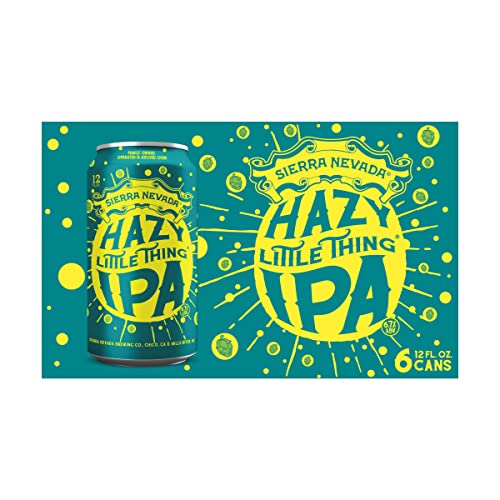


As an Amazon Associate we earn from qualifying purchases at no extra cost to you. Ratings are shown as listed on Amazon.
Haze is not a quality score by itself. A well-made beer can be pale and opaque, but it can also be bright and only lightly cloudy. The important buying signals are freshness, aroma intensity, balance, and whether the beer tastes clean rather than sweet, dull, or harsh.
Hazy IPA buying criteria at a glance
| Specification | Typical range | What it means when choosing |
|---|---|---|
| ABV | 4.5–8.5% | Lower ABV is easier to drink; higher ABV brings more body and alcohol warmth. |
| Bitterness | 20–60 IBU | Many hazy IPAs taste less bitter than a clear IPA with the same IBU because chloride, sweetness, and hop oils soften the impression. |
| Serving temperature | 7–12°C / 45–54°F | Colder suppresses aroma; warmer than this can make alcohol and sweetness more prominent. |
| Best freshness window | 3–8 weeks after packaging | Peak aroma varies, but most hop-forward hazy IPAs decline faster than malt-led beers. |
| Common package sizes | 355 ml, 473 ml, 500 ml, 568 ml | A 355 ml can is easier to finish before warming; larger cans suit sharing or a full serving. |
| Color | Straw to deep gold | Color alone does not predict bitterness, haze quality, or hop freshness. |
How to read the label: ABV, IBU, and body
ABV
ABV is the alcohol-by-volume percentage. A 473 ml can at 6.5% ABV contains approximately 30.7 ml of pure alcohol:
473 ml × 0.065 = 30.7 ml of alcohol
That is useful when comparing a session hazy IPA with a double IPA. Beers at 4.5–5.5% ABV are often better for a longer session. Beers at 6–7.5% ABV tend to deliver more concentrated aroma and texture without becoming as heavy as an imperial version. Above roughly 8%, expect stronger alcohol warmth, a fuller finish, and a greater need to drink slowly.
IBU and perceived bitterness
International Bitterness Units measure certain bittering compounds, but they do not perfectly predict how bitter a hazy IPA tastes. Residual sweetness, wheat or oat proteins, carbonation, hop oils, and water chemistry all affect perception.
For a softer profile, look for descriptions such as “juicy,” “smooth,” or “low bitterness,” usually paired with an IBU around 20–40. If you prefer a sharper, drier finish, choose a beer closer to 40–60 IBU or one described as “resinous,” “piney,” or “west coast-inspired.” Very high bitterness can clash with the soft, rounded structure that defines many hazy IPAs.
Hop varieties: choose by flavor, not just haze
The hop blend often tells you more about flavor than the beer’s name. These are common patterns:
- Citra: lime, grapefruit, mango, passion fruit, and a soft tropical character.
- Mosaic: blueberry-like fruit, mango, citrus, and sometimes a herbal or dank edge.
- Galaxy: intense passion fruit, peach, and citrus; often highly aromatic when fresh.
- Nelson Sauvin: white grape, gooseberry, melon, and a wine-like fruit note.
- Simcoe: pine, grapefruit, resin, and stone fruit; useful when you want more structure.
- Strata: passion fruit, cannabis-like dankness, grapefruit, and strawberry.
- Idaho 7: peach, apricot, tropical fruit, and resin.
For bright citrus and tropical fruit, start with Citra, Galaxy, or Mosaic. For a more unusual, wine-like profile, choose Nelson Sauvin. If you dislike dank or resinous flavors, be cautious with blends prominently featuring Strata, Simcoe, or Idaho 7.
Decision matrix: which hazy IPA fits your situation?
| Your situation | Look for | Avoid or reconsider |
|---|---|---|
| New to craft IPA | 5–6.5% ABV, 20–40 IBU, citrus-forward hops | Double IPA, very dry finish, strongly resinous blends |
| Long drinking session | 4.5–5.5% ABV, 355 ml cans, moderate carbonation | 8%+ ABV beers and large cans that encourage overpouring |
| Maximum fruit aroma | Fresh packaging date, Galaxy, Citra, Mosaic, or Strata | Old cans, warm storage, or vague “IPA” labeling with no date |
| Prefer crisp and bitter | 30–60 IBU, lower sweetness, Simcoe or pine-forward blends | Very thick, sweet, oat-heavy beers |
| Sharing one can | 473–568 ml package, 6–7% ABV, balanced hop blend | Highly aromatic beer if it will sit open for a long time |
| Limited refrigerator space | 355 ml cans and a small quantity bought frequently | Large mixed packs that may remain warm or age before use |
Freshness is the most important buying variable
Hazy IPA aroma depends heavily on volatile hop compounds. Over time, oxygen and heat can flatten tropical notes and create flavors reminiscent of paper, sweet tea, honey, or stale fruit. Haze may remain visible even after the aroma has deteriorated, so appearance is not proof of freshness.
Check the packaging date rather than relying only on a best-before date. As a practical rule, buy the freshest can available and aim to drink hop-saturated hazy IPA within about three to eight weeks of packaging. Some beers hold up longer, but the peak period is brewery- and recipe-dependent.
Cold storage matters from the moment the beer is packaged. Choose cans that have been kept refrigerated when possible. A brief trip home is not usually a problem, but repeated warming and cooling is less desirable than consistently cold storage. Keep cans upright in a refrigerator, away from light, and avoid storing them in the door where temperature changes are greater.
Serving temperature and pouring technique
Serve a hazy IPA at about 7–12°C. At refrigerator temperature near 3–4°C, bitterness and carbonation can dominate while aroma appears muted. Let the can rest for 10–20 minutes after removal, depending on room temperature.
- Use a clean, aroma-friendly glass with enough room for a head.
- Pour at an angle until the glass is about two-thirds full.
- Straighten the glass and finish with a controlled pour to release aroma.
- If the can contains visible sediment, gently invert it once before opening only when the brewery recommends doing so.
Do not aggressively shake a carbonated can. It can cause excessive foam and may strip aroma through a messy pour. A clean glass is important because grease or detergent residue can collapse the head and make the beer seem flatter.
What to expect from haze, sediment, and shelf life
A stable haze should look integrated rather than separated into thick layers. Small amounts of sediment are normal in some unfiltered beers. They are not automatically a defect, but a sour, harsh, metallic, or heavily oxidized flavor is a reason to stop drinking and contact the brewery with the package details.
Once opened, drink a hazy IPA promptly. Oxygen enters as soon as the can or bottle is opened, and the aroma can fade noticeably over several hours. Resealing helps only marginally. A half-finished 473 ml can is unlikely to taste as vibrant the next day.
Common mistakes when choosing and storing hazy IPA
- Buying by color alone: a pale beer can be bitter, while a darker gold beer can be soft and fruity.
- Ignoring the date: freshness usually matters more than a fashionable hop name.
- Assuming more haze means more flavor: haze is a visual and textural feature, not a guarantee of aroma.
- Keeping it warm: heat accelerates aroma loss and oxidation.
- Serving too cold: this suppresses the tropical and citrus notes you paid for.
- Buying too much at once: a small, fresh supply is often better than a large pack that sits for months.
Food pairings that work
The citrus and tropical character of hazy IPA pairs well with spicy fried chicken, tacos, grilled prawns, pizza, and rich cheeses. Bitterness can refresh the palate after fatty food, while the beer’s fruit character complements chili, lime, and aromatic herbs. For delicate fish or lightly seasoned dishes, choose a lower-bitterness hazy IPA so the hops do not overwhelm the food.
For the most reliable choice, prioritize a recent packaging date, 5–7% ABV, moderate bitterness, and hop varieties whose flavor you already enjoy. Store the beer cold, serve it slightly warmer than standard refrigerator temperature, and finish the can soon after opening. Those decisions will usually improve the drinking experience more than choosing the cloudiest label or the highest listed IBU.