Key takeaways
- Five dehumidifiers compared for basements, bedrooms and big open floors, from a compact 22-pint Wi-Fi unit to a 120-pint model, plus sizing advice.
A portable dehumidifier earns its floor space in a few specific moments: the basement that smells musty every July, the bathroom mirror that stays fogged for an hour, the bedroom where laundry dries indoors and the walls feel damp. Every model below does the same basic job of pulling water out of the air with a compressor and a cold coil, yet the right choice depends far more on room size and drainage than on brand. This guide sorts five current models by the spaces they actually suit, from a compact 22-pint machine for one bedroom to a 120-pint unit for open-plan floors and very wet basements.
As an Amazon Associate, we earn from qualifying purchases.
Quick Answer
For most basements and large living areas, the Frigidaire 50-pint model is the safest all-round pick, with a large bucket and a continuous drain option. The Vellgoo DryTank suits buyers who prioritize energy efficiency, the Waykar 120-pint covers the biggest and dampest spaces, the hOmeLabs 22-pint adds Wi-Fi control for medium rooms, and the Amazon Basics 22-pint is the straightforward budget choice for one small room.
First, Decode the Pint Rating
Pint numbers cause more confusion in this category than any other spec, because two different rating systems appear side by side in listings. The current Department of Energy test procedure measures moisture removal at cooler, drier conditions, so a machine sold today as a 50-pint model would have carried a 70-pint label under the older procedure. Neither number is dishonest, but they are not interchangeable, and comparing a new 50-pint unit against an old 70-pint one is a common buying mistake.
A second trap is the maximum rating. Several brands headline the water a unit removes at 95 degrees Fahrenheit and 90 percent relative humidity, close to a steam room and far from a real basement. The same machine may remove barely half that at the federal test conditions. Use the standard rating where one is published, treat maximum figures as a ceiling rather than a promise, and size the machine to the room: roughly 22 pints for one damp room, 50 pints for a basement or large open space, and more only for very wet, very large areas.
The Five Picks
Frigidaire 50-Pint Dehumidifier (FFAD5033W1): The Basement Standard
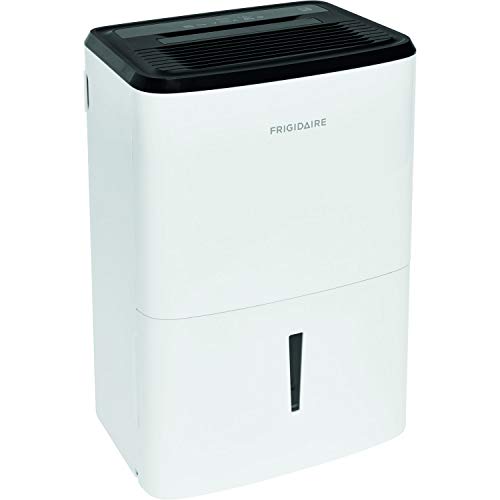
Frigidaire has sold versions of this machine for years, and the current FFAD5033W1 remains the default recommendation for a damp basement or a large living level. Its 50-pint daily rating under the current test procedure is honest capacity for spaces the maker rates at up to 4,500 square feet, and custom humidity control lets you set a target level rather than running the fan until the bucket fills. The 1.7-gallon bucket is larger than most, stretching the interval between emptying trips down the stairs.
Drainage flexibility is the other strength. A continuous drain option lets you run a hose to a floor drain so the machine never pauses for a full bucket, and auto shut-off protects against overflow when you do rely on the bucket. The washable filter keeps maintenance to a rinse rather than a replacement purchase. At roughly 44 pounds, it is a set-it-in-place appliance rather than something carried between rooms daily.
Specs:
– Capacity: 50 pints per day (current DOE rating)
– Coverage: up to 4,500 square feet
– Tank volume: 1.7 gallons
– Dimensions: 15.96 x 12.19 x 24.25 inches
– Drainage: bucket or continuous hose drain
– Extras: custom humidity control, washable filter, auto shut-off
Vellgoo DryTank 70-Pint Dehumidifier (VGE033A3BS): The Efficiency Pick

Vellgoo built its DryTank line around energy efficiency, and this model carries an Energy Star Most Efficient 2025 designation, the stricter tier of the federal program. The headline figure is a maximum of 70 pints per day in hot, saturated air, with 56 pints per day under the standard conditions the maker publishes, still ahead of most 50-pint rivals for large rooms and basements up to 4,500 square feet.
The 5.5-liter tank is mid-sized, so the included drain hose matters: park the unit near a drain and it runs unattended, which is how a high-capacity machine should be used. Intelligent humidity control holds a set level by cycling the compressor instead of running flat out, which is where the efficiency rating is earned in daily use.
Specs:
– Capacity: 70 pints per day maximum, 56 pints per day standard conditions
– Coverage: up to 4,500 square feet
– Tank volume: 5.5 liters
– Certification: Energy Star Most Efficient 2025
– Drainage: bucket or included drain hose
– Extras: intelligent humidity control, auto defrost, auto restart
Waykar 120-Pint Dehumidifier (CTH120A): For the Biggest, Wettest Spaces
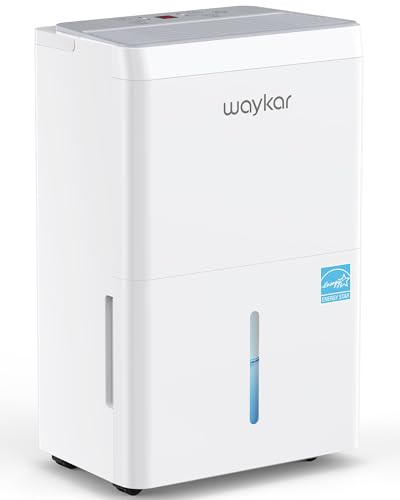
Most home dehumidifiers stop at 50 or 70 pints. The Waykar CTH120A doubles that ceiling, with a maximum rating of 120 pints per day and coverage the maker puts at 6,000 square feet. That is more machine than a bedroom needs, but it fits open-plan ground floors, finished basements spanning the whole footprint of the house, and humid climates where a smaller unit never catches up after rainy weeks.
An automatic comfort mode holds a comfortable humidity band without constant manual changes, and the maker quotes noise as low as 40 decibels in its quietest operation, which matters if the space doubles as a living area. A drain hose is included for continuous drainage, the only sensible way to run a unit pulling this much water.
Specs:
– Capacity: up to 120 pints per day (maximum rating)
– Coverage: up to 6,000 square feet
– Drainage: bucket or included drain hose
– Noise: maker-rated from 40 decibels
– Extras: automatic comfort mode, 24-hour timer, auto defrost
hOmeLabs 22-Pint Wi-Fi Dehumidifier (HME1001): The Smart Pick for Medium Rooms

The hOmeLabs HME1001 is the connected option in this lineup. Its standard rating is 22 pints per day, sized for medium spaces the maker rates up to 3,000 square feet, with a maximum figure of 56 pints per day in hot, saturated air. Wi-Fi control through the companion app lets you check current humidity, change the target level, and get a full-tank alert from another room or another building, which suits second homes and rental properties.
App control also makes scheduling practical: run the machine harder overnight, or only while the house is empty. The compact body fits a bedroom or bathroom corner more easily than the 50-pint machines above. The trade-off is bucket size and raw capacity, so this is a one-space solution rather than a whole-floor one, and very damp basements will overwhelm it.
Specs:
– Capacity: 22 pints per day (current DOE rating), 56 pints maximum
– Coverage: up to 3,000 square feet
– Controls: Wi-Fi app control, onboard humidity setting
– Drainage: bucket or continuous drain outlet
– Extras: full-tank alert through the app, auto shut-off
Amazon Basics 22-Pint Dehumidifier (MDUDP-22AEN1-BA6): The No-Frills Budget Pick

The Amazon Basics 22-pint model strips the category back to the essentials: a compressor, a fan, a bucket, and a humidity range from 35 to 85 percent. It is rated for smaller spaces up to 1,000 square feet, which makes it a single-room machine for a damp bedroom, home office, or dressing area. The 0.79-gallon tank is small, so expect to empty it daily in humid weather unless you use the continuous drain outlet.
At 33 pounds and under 20 inches tall, it is the easiest unit here to carry upstairs or store in a closet over winter. Manufacturer documentation lists noise up to about 55 decibels, so it is audible in a quiet bedroom, a fair trade at this size. Energy Star certification keeps running costs reasonable. There is no app or smart scheduling, but for one damp room it covers the fundamentals without paying for unused features.
Specs:
– Capacity: 22 pints per day
– Coverage: up to 1,000 square feet
– Tank volume: 0.79 gallons (3 liters)
– Dimensions: 15.2 x 10.2 x 19.7 inches
– Weight: 33 pounds
– Humidity range: 35 to 85 percent
How to Choose
Start with the room, not the product page. Measure the space and be honest about how wet it is: a basement with visible condensation and a musty smell needs roughly double the capacity of a room that merely feels clammy in August. Use the standard pint rating for comparisons and ignore maximum figures unless every model you compare publishes both.
Drainage decides how much attention the machine demands. A bucket-only setup in a humid basement can mean two trips a day, so if a floor drain or sump pit is nearby, choose a model with a hose outlet and use it. If the only drain sits higher than the unit, you need a built-in pump, which none of these five includes, so check placement before ordering.
Finally, think about where the noise lands. Compressor dehumidifiers are never silent, and published figures here range from about 40 decibels for the quietest modes to the mid-50s for the budget unit. Bedrooms argue for the quieter end of that range or for a timer that runs the machine while the room is empty. Energy Star certification is worth requiring in any model that runs daily, since a dehumidifier can operate for thousands of hours a year.
Who Should Skip a Portable Dehumidifier
Skip the portable route if your damp problem is structural. Water entering through foundation cracks, a failed gutter, or a plumbing leak will defeat any machine in this guide; fix the source first and let a dehumidifier handle the residual humidity afterward. A whole-house system tied into ductwork also makes more sense when every room is damp year-round.
Small, occasional dampness may not justify a compressor machine at all. A single closet or small bathroom often does fine with a compact desiccant unit, and a properly vented exhaust fan solves most bathroom moisture at the source. Renters who cannot run a drain hose should also weigh how often they are willing to empty a small bucket before choosing a high-capacity model.
Frequently Asked Questions
What size dehumidifier does a basement need?
A typical damp basement of 1,000 to 1,500 square feet is well served by a 50-pint model under the current rating system, such as the Frigidaire in this guide. Very wet basements, or larger spaces, justify stepping up to a high-capacity model like the Vellgoo or Waykar.
Can a dehumidifier run continuously with a hose?
Yes, every model here supports continuous gravity drainage via a hose outlet or included hose. The drain must sit lower than the unit, since these machines do not pump water upward. Check the hose connection before the first run to avoid a slow leak.
Why does the same model show two different pint ratings?
Listings often show both the current federal test rating and a maximum figure measured in hotter, wetter air, or an older rating from the previous test procedure. The lower standard rating is the one to compare across brands, because it uses the same conditions for every manufacturer.
How often should the filter and bucket be cleaned?
Rinse or wash the air filter about once a month during heavy use, since a clogged filter cuts airflow and capacity. The bucket benefits from a wash with mild soap every few weeks to prevent the slime and odor that standing water encourages.
Final Verdict
Match capacity to the room and drainage to your patience, and any of these five will do its job. The Frigidaire 50-pint is the balanced default for basements and large rooms, the Vellgoo DryTank rewards heavy users with top-tier efficiency, the Waykar 120-pint covers the largest and wettest homes, the hOmeLabs adds app control for medium rooms, and the Amazon Basics keeps one small room dry without extras. Buy the size your space actually needs, connect the hose if you possibly can, and the machine will mostly disappear into the background of a drier house.
More from Amazon
Programs that pair well with the guide above. Offers and eligibility are set by Amazon and may change.
Free shipping on eligible items, Prime Video and more. Eligible new members can start with a free trial.
Start a Prime free trialAudiobooks and podcasts to listen to on the go. Eligible new members can start with a free trial.
Try Audible freeAd-free music streaming. Eligible new subscribers can start with a free trial.
Try Music Unlimited freeA free business account with business pricing and bulk-buying tools for work, shop or home office.
Create a business accountAs an Amazon Associate we earn from qualifying purchases.