Key takeaways
- For the broadest app selection and a tablet to keep for years: Pick the iPad (A16). It costs more than the cheapest Android options, but its strong app ecosystem and established software-support record make it a safer choice for school apps, creative tools, and everyday productivity.
- For streaming, split-screen use, and Android flexibility: The Galaxy Tab A9+ offers a large 90 Hz display and four speakers. Its smoother refresh rate is noticeable when scrolling, though it does not make the LCD itself sharper than a standard 60 Hz panel.
- For the lowest-cost video and reading device: Choose the Fire HD 10 if the apps you need are available through Amazon’s app ecosystem. It is not a full Google Play tablet, which can be a deal-breaker for some school platforms, games, or productivity apps.
- For handwritten notes on a tight budget: Consider the Lenovo Tab M11, particularly when a compatible pen is included in the package. Confirm what comes in the box: bundles differ, and a tablet’s advertised pen support does not guarantee that a stylus is included.
Best Budget Tablets for Streaming, Work, and Study
The best budget tablet for most people is the Apple iPad (A16) if you can spend more for longer software support; for the lowest-cost Android option, choose the Samsung Galaxy Tab A9+; and for reading, video, and basic schoolwork, the Amazon Fire HD 10 is a sensible pick if its app-store limits suit you.
Entry-level tablets make different compromises: one may have a sharper screen, another better speakers or a more flexible app library. The comparison below focuses on the details that shape daily use—screen size and resolution, multitasking, battery expectations, accessories, and how well each device fits its price. Prices are broad U.S. market ranges and can vary by configuration and sale.
Our top picks

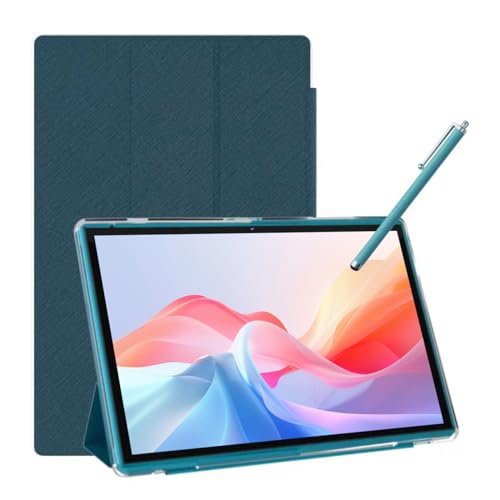
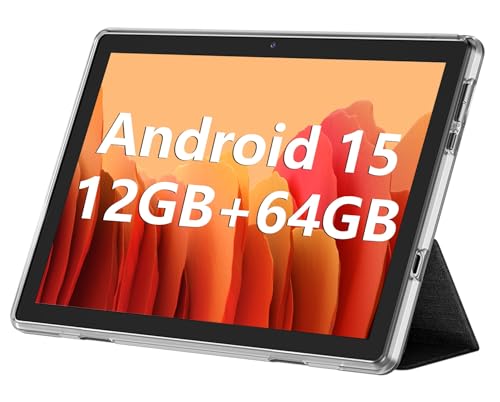

As an Amazon Associate we earn from qualifying purchases at no extra cost to you. Ratings are shown as listed on Amazon.
Quick comparison
| Tablet | Display | Weight | Battery claim | Best fit | Typical price range |
|---|---|---|---|---|---|
| Apple iPad (A16, 11-inch) | 11-inch, 2360 × 1640 LCD | About 477 g, Wi-Fi | Up to 10 hours of web or video use | Study, general work, and long-term app support | About $300–$450 |
| Samsung Galaxy Tab A9+ | 11-inch, 1920 × 1200 LCD, up to 90 Hz | About 480 g | Battery capacity: 7,040 mAh | Android multitasking and streaming on a budget | About $150–$250 |
| Amazon Fire HD 10 (2023) | 10.1-inch, 1920 × 1200 LCD | About 434 g | Up to 13 hours, according to Amazon | Video, reading, and light household use | About $100–$180 |
| Lenovo Tab M11 | 11-inch, 1920 × 1200 LCD, up to 90 Hz | About 465 g | Battery capacity: 7,040 mAh | Note-taking and study, especially in a bundle | About $150–$250 |
Figures vary by model, region, and connectivity option. Battery capacities and manufacturer runtime estimates are not directly comparable: screen brightness, Wi-Fi, apps, and speaker volume all affect real use. Check the exact configuration before buying, especially for memory and included accessories.
Which budget tablet fits your situation?
- For the broadest app selection and a tablet to keep for years: Pick the iPad (A16). It costs more than the cheapest Android options, but its strong app ecosystem and established software-support record make it a safer choice for school apps, creative tools, and everyday productivity.
- For streaming, split-screen use, and Android flexibility: The Galaxy Tab A9+ offers a large 90 Hz display and four speakers. Its smoother refresh rate is noticeable when scrolling, though it does not make the LCD itself sharper than a standard 60 Hz panel.
- For the lowest-cost video and reading device: Choose the Fire HD 10 if the apps you need are available through Amazon’s app ecosystem. It is not a full Google Play tablet, which can be a deal-breaker for some school platforms, games, or productivity apps.
- For handwritten notes on a tight budget: Consider the Lenovo Tab M11, particularly when a compatible pen is included in the package. Confirm what comes in the box: bundles differ, and a tablet’s advertised pen support does not guarantee that a stylus is included.
What the specifications mean in daily use
Screen quality: size is not the whole story
At around 10 to 11 inches, all four tablets are comfortable for video and web pages. Their 1920 × 1200-class screens are adequate for typical streaming, documents, and textbooks, while the iPad’s higher pixel count gives it finer detail. A higher refresh rate on the Samsung or Lenovo can make menus and scrolling look smoother, but it does not improve movie resolution. None of these budget LCDs should be mistaken for a high-end OLED screen: expect less dramatic contrast, particularly in a dark room.
For study, also consider glare and viewing angle. A reflective display can be more distracting than a small resolution difference under classroom lights. If possible, look at the tablet beside a window or bright overhead light before deciding, and budget for a matte screen protector only if you accept some added grain or reduced clarity.
Apps, memory, and work
The iPad is the easiest recommendation for people who rely on a specific tablet app, especially if they already use Apple devices. Samsung and Lenovo run Android and provide Google services, making them flexible for common school and office apps. Fire OS is simpler and often inexpensive, but its more limited app catalogue deserves a check before purchase.
For basic tasks such as browsing, email, video calls, and documents, entry-level hardware is usually sufficient. Keeping many browser tabs or demanding apps open at once is more likely to expose limited memory. If a model is sold in several RAM or storage configurations, favor more memory when the price difference is modest; storage matters too if you download films, textbooks, or offline files. A microSD slot on supported Android and Fire models can expand file storage, but it does not necessarily expand the space available to every app.
Battery, speakers, and accessories
Manufacturer battery figures are best treated as upper-bound estimates under particular conditions. For a realistic day, reduce the claim if you stream at high brightness, use video calls, or keep Wi-Fi and Bluetooth active. Before relying on a tablet for a full day of classes or travel, check its charging time and whether a power adapter is included; some packages provide only a cable.
Speaker count is not a guarantee of rich sound, but the Galaxy Tab A9+’s quad-speaker arrangement is a useful advantage for shared video watching. The other models can handle dialogue and casual viewing, while headphones remain the better choice for a noisy room or private listening. For typing, a Bluetooth keyboard works across most tablets, but confirm the layout and case fit. A keyboard cover, pen, or stand can materially change the total cost—compare the complete setup, not just the tablet price.
Ownership costs and durability
At this price level, a thin protective case is often a more valuable first accessory than a premium keyboard. Tablets are frequently carried loose in bags, where grit, keys, and pressure can scratch a screen or damage a corner. Keep the charging port free of lint; remove debris gently rather than pushing a metal object inside. Clean the display with a soft, lightly dampened microfiber cloth, and avoid spraying cleaner directly onto the device.
Common wear points include the charging cable, port, case hinges, and screen surface. A case can protect against everyday bumps, but it cannot make a glass screen drop-proof. Avoid leaving a tablet in a hot car, and do not use a bent or frayed charging cable. Before buying, check the manufacturer’s stated software-update policy for the exact model and region. Android and Fire update schedules can differ by device; Apple typically supports iPads for many years, but no tablet has an unlimited support guarantee.
For a keyboard-and-stand setup, the tablet’s weight is only part of the carrying load. Add the case and accessories before deciding whether an 11-inch tablet is comfortable for daily commuting. A lighter, smaller tablet may be preferable if it will mostly be held one-handed for reading; a larger screen is more useful when documents and split-screen apps are frequent.
Bottom line
Choose the iPad (A16) for the most versatile app selection and a stronger long-term bet, the Galaxy Tab A9+ for affordable Android streaming and multitasking, the Fire HD 10 for low-cost entertainment within Amazon’s app ecosystem, or the Lenovo Tab M11 for budget study use when the right pen bundle is available. The best budget tablets are not simply the ones with the lowest sticker price: weigh app compatibility, memory, update expectations, and the cost of the case or keyboard you will actually need.