Key takeaways
- iPhone 15 / 16 / 17 series: 20W to 27W peak for best usb c fast charger performance, full charge in about 90 to 110 minutes
- Samsung Galaxy S24 / S25 series: 25W to 45W peak with PPS, 50 percent in about 20 to 30 minutes
- iPad Pro / iPad Air: 30W to 45W peak
- MacBook Air 13 / 15-inch: 35W to 70W sustained, ships with 35W dual-port or 70W single-port Apple adapters
- MacBook Pro 14-inch: 67W to 96W sustained
- MacBook Pro 16-inch: 96W to 140W sustained with MagSafe 3 or USB-C PD 3.1
The best USB C charger for most people in 2026 is a 65W to 100W GaN wall charger with at least two USB-C ports, because it can fast-charge a phone at full speed while still powering a MacBook Air, tablet, or earbuds at the same time. If you only charge phones overnight, a compact 30W to 45W single-port charger is smaller, cooler, and cheaper, while travelers with a 14-inch or 16-inch MacBook Pro should step up to a 140W to 200W multi-port desktop brick.
GaN (gallium nitride) is now standard for the best usb c wall charger and best usb wall charger models. Compared to old silicon chargers, GaN runs 15 to 25 percent smaller for the same wattage and stays noticeably cooler under load, which is why almost every major brand including Anker, Ugreen, Belkin, Satechi, and Samsung has switched entirely to GaN for chargers above 30W.
Our top picks


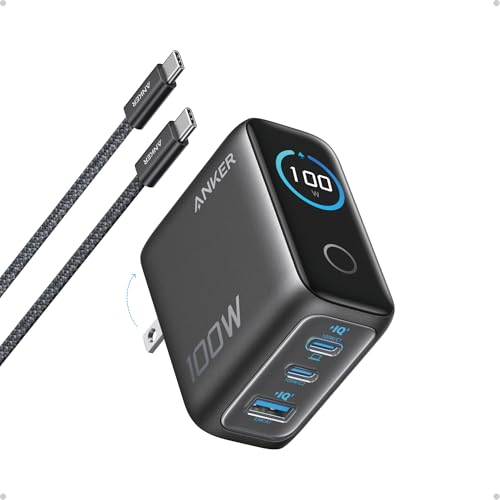
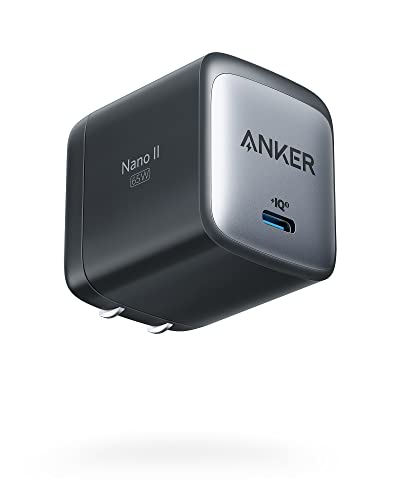
As an Amazon Associate we earn from qualifying purchases at no extra cost to you. Ratings are shown as listed on Amazon.
How to choose wattage without overbuying
The biggest mistake is buying wattage you will never use. USB-C Power Delivery negotiates power automatically, so a 100W charger will not damage a phone, but you pay more for size and heat if you do not need it.
Use these real device requirements as your baseline:
- iPhone 15 / 16 / 17 series: 20W to 27W peak for best usb c fast charger performance, full charge in about 90 to 110 minutes
- Samsung Galaxy S24 / S25 series: 25W to 45W peak with PPS, 50 percent in about 20 to 30 minutes
- iPad Pro / iPad Air: 30W to 45W peak
- MacBook Air 13 / 15-inch: 35W to 70W sustained, ships with 35W dual-port or 70W single-port Apple adapters
- MacBook Pro 14-inch: 67W to 96W sustained
- MacBook Pro 16-inch: 96W to 140W sustained with MagSafe 3 or USB-C PD 3.1
For a best multi usb charger, do not look only at the total watts on the box. Look at the per-port split. A charger labeled 100W may only deliver 65W + 30W when two ports are used, or 45W + 30W + 20W with three ports. That is still enough for a laptop plus phone, but a 65W total charger often drops to 45W + 20W with two devices, which will slow-charge a MacBook Pro.
Best USB C charger picks by situation in 2026
| Type / Example class | Total power | Ports | Size / Weight approx. | Best for |
|---|---|---|---|---|
| Compact 30W GaN wall – Anker Nano, Belkin BoostCharge 30W class | 30W | 1x USB-C | 38 x 35 x 40 mm, 60-80 g | Phones, tablets, overnight bag |
| Dual-port 45-65W GaN wall – Ugreen Nexode 65W, Anker 735 class | 45-65W | 2x USB-C or 1C + 1A | 50 x 45 x 30 mm, 120-140 g | Phone + MacBook Air, best usb c wall charger for most travelers |
| Best 100W USB C charger – Anker 737, Ugreen Nexode 100-140W class | 100-140W | 2x USB-C + 1x USB-A | 68 x 60 x 32 mm, 220-300 g | MacBook Pro 14-inch + phone + tablet together |
| Desktop 165-200W GaN station – Satechi, Ugreen Nexode desktop class | 165-200W | 3x USB-C + 1x USB-A | 105 x 80 x 32 mm, 450-550 g | Desk setup, 2 laptops + accessories |
| Best USB C car charger – Belkin BoostCharge Pro 65W, Anker 67W car class | 45-67W | 2x USB-C or 1C + 1A | 70 x 32 mm cylinder, 40-60 g | Best car usb charger for phones + small laptops |
| Best USB C portable charger – Anker 737 Power Bank, Samsung 45W battery class | 65-140W output, 12,000-27,650 mAh | 2x USB-C + 1x USB-A | 155 x 55 x 50 mm, 350-600 g | Flights, power outages, no outlet |
Best for most people: 65W dual-port GaN wall charger
A 65W GaN wall unit is the sweet spot for the best usb c fast charger category. With one device plugged in, you get the full 65W for a MacBook Air at full speed. With two devices, most split to around 45W for the laptop and 20W for the phone, which still gives you iPhone or Galaxy fast charging (0 to 50 percent in about 25 to 30 minutes).
These models typically sit in the 25 to 45 dollar range, fold flat for travel, and run warm but not hot at 45 to 52C on the case after 30 minutes. If you carry one charger for phone, tablet, and light laptop work, stop here.
Best 100W USB C charger for MacBook Pro and multi-device travel
If you travel with a 14-inch MacBook Pro, camera batteries, and a phone, get a 100W to 140W three-port GaN charger. When only the laptop is connected, it delivers 100W to 140W. When fully loaded, a typical layout is 65W + 30W + 20W or 100W + 20W + 20W depending on brand.
Expect a larger brick at 220 to 300 grams and 1.1 to 1.4 inches thick, and general market pricing from 55 to 90 dollars. The key advantage over 65W is headroom: your laptop does not drop to trickle-charge when you plug in a second device. For PD 3.1 models rated 140W, you also get 28V output needed for full-speed 16-inch MacBook Pro charging over USB-C.
Best multi USB charger for desk: 165W to 200W station
A desktop GaN station is not pocketable, but it replaces three separate bricks. With four ports you can run, for example, 100W to a MacBook Pro, 45W to an iPad, and 20W to a phone simultaneously. Total draw stays under typical 200W limits and heat is spread across a larger case with better airflow.
Choose this if you charge in the same spot daily and hate swapping cables. Look for per-port displays or app monitoring found on newer Ugreen Nexode and Anker Prime class units, which help you confirm you are actually getting fast-charge voltages (9V, 15V, 20V) and not stuck at 5V slow charge due to a bad cable.
Car and portable: different rules
Best USB C car charger and best car USB charger
Car charging is limited by your 12V socket, usually fused at 10A to 15A, or about 120W to 180W max. For the best usb c car charger, a 45W to 67W dual-port model is ideal. It can fast-charge two phones at 25W to 30W each, or sustain a MacBook Air at 45W while the passenger charges a phone.
Avoid ultra-cheap no-brand car adapters without PPS and PD certification. In a car, voltage fluctuates when you start the engine, and poor adapters can reset charging or overheat. Established Belkin, Anker, Spigen, and Samsung car chargers in the 20 to 35 dollar range include over-temperature and 12V to 24V compatibility for trucks.
If your car has built-in USB-C ports, test them first. Most built-in car ports only deliver 7.5W to 15W for CarPlay and music, not fast charging. A dedicated plug-in adapter is 3 to 4 times faster.
Best USB C portable charger (power banks)
A portable USB-C battery is not a wall charger, but readers searching best usb c portable charger usually mean a high-wattage power bank. For phones only, a 10,000 to 12,000 mAh bank with 30W output weighs about 210 to 250 grams and gives 1.8 to 2.2 full phone charges.
For laptops, you need 65W or higher continuous output and at least 20,000 mAh. A 24,000 to 27,650 mAh bank (the FAA flight limit is 100Wh, about 27,000 mAh at 3.7V) can recharge a MacBook Air to about 70 to 90 percent once, or an iPhone 4 to 5 times. Expect 400 to 600 grams and pricing from 60 to 120 dollars depending on 65W versus 140W output.
Heat, size, and cable math that listings hide
Wattage alone does not tell you how hot or large a charger will be. As a rule in 2026:
- 30W GaN: pocketable, stays under 45C, no fan needed
- 65W GaN: warm to touch after 45 minutes at full load, about the size of a deck of cards cut in half
- 100W+ GaN: needs ventilation, can reach 55C to 65C on the case, do not cover with clothes or charge inside a bag
- 200W desktop: often has active cooling or large heatsink, best left on desk with 2 inches clearance
Cables matter as much as the brick. To get over 60W you need a 5A-rated USB-C to USB-C cable with E-Marker chip, usually thicker and rated 100W to 240W. A standard 3A 60W cable will cap a best 100w usb c charger at 60W even if the brick can do more. For Samsung 45W Super Fast Charging, you also need PPS support in both charger and cable.
Worked example: charging a MacBook Air (52Wh battery) + iPhone (about 12Wh) from a 100W 2-port charger splitting 65W + 30W. After efficiency losses of about 85 percent, laptop gets about 55W effective, phone about 25W effective. Laptop 0 to 80 percent takes about 52Wh x 0.8 / 55W = 0.76 hours, or about 45 minutes. Phone 0 to 50 percent takes about 6Wh / 25W = 0.24 hours, or about 15 minutes plus negotiation overhead. That is why a shared 100W brick still feels fast for both.
Durability and ownership realities
GaN chargers rarely fail in the GaN transistors themselves. What wears first is:
- Folding prongs getting loose after 1 to 2 years of daily travel. Avoid yanking sideways from the wall.
- USB-C ports loosening from heavy cables. Support the cable so weight does not hang on the port, especially with 200W desktop bricks.
- Heat discoloration and cable jacket cracking. Do not run 100W+ chargers on a bed or under a pillow. Heat shortens capacitor life from 5+ years to 2 to 3 years.
- Car charger contacts corroding. Wipe the metal tip and side springs every few months if you leave it plugged in, and unplug during extreme summer heat above 60C cabin temperature.
Clean wall chargers with a dry cloth only. Do not use water inside ports. Replace any cable that gets hot at one end, shows exposed shielding, or drops in and out of fast charge. For power banks, store at 50 to 70 percent charge if unused for months, and avoid full 0 to 100 percent cycles when possible to double cycle life from about 300 to 600 cycles.
Which one should you buy?
| If you have… | Buy this wattage | Why |
|---|---|---|
| Only iPhone / Galaxy + earbuds | 30W single-port wall | Smallest, coolest, cheapest, full fast-charge speed |
| Phone + iPad or MacBook Air, one bag | 65W dual-port GaN | Charges laptop + phone together without slowdown |
| MacBook Pro 14 / 16-inch + 2 devices | 100W to 140W 3-port GaN | Only option that sustains laptop under load with extras |
| Home office with 2 laptops | 165W to 200W desktop | Replaces multiple bricks, better heat management |
| Mostly driving / commuting | 45W to 67W car charger | Fastest safe option on 12V, powers laptop in passenger seat |
| Flights, campus, outages | 65W to 140W power bank 20,000 mAh+ | Only solution with no outlet, check 100Wh flight limit |
Bottom line: start with a quality 65W GaN dual-port wall charger and a 100W-rated 5A cable. Add a compact car adapter if you drive daily, and a high-output portable bank only if you work away from outlets. That three-piece kit covers phone, tablet, and laptop in 2026 without carrying excess weight or heat.