Key takeaways
- Capacity: at least six wine or cocktail glasses, or four larger balloon-style glasses.
- Stem spacing: approximately 2.5–3 inches per glass for ordinary wine glasses; 3.5 inches or more for oversized bowls.
- Clearance: at least 8 inches from the rack surface to the lowest overhead obstruction for most stemware.
- Drainage: a removable tray with a slight slope toward a defined collection area.
- Materials: stainless steel, powder-coated steel with sealed edges, or a sturdy plastic rack with no exposed metal hardware.
- Protection: rounded hooks, silicone or rubber contact points, and no sharp welds that can chip rims.
The best glass drying rack for a home bar is a rust-resistant rack with dedicated stemware spacing, a removable sloped drip tray, and enough clearance that glasses never touch one another; for most bars, a 12–18 inch countertop rack holding 6–8 glasses is the most practical balance.
Our top picks

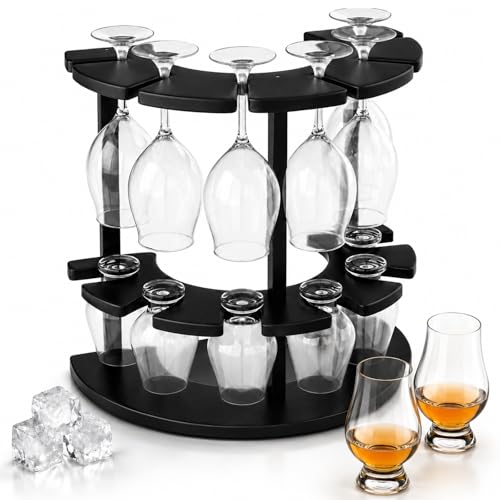
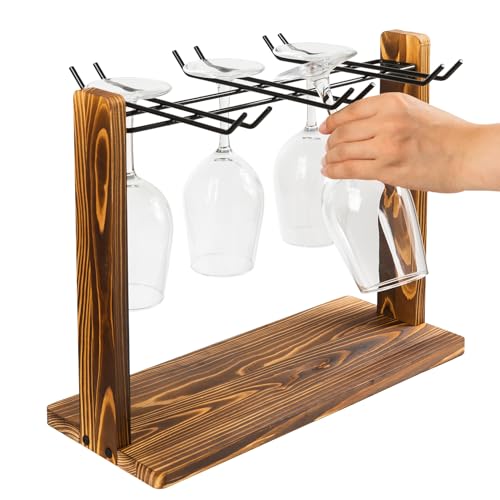
As an Amazon Associate we earn from qualifying purchases at no extra cost to you. Ratings are shown as listed on Amazon.
Best glass drying rack for a home bar: what to buy
Choose a freestanding countertop rack if you wash glasses beside the sink and want the flexibility to move or store it. Choose an under-cabinet stemware rack if counter space is scarce and you mainly dry wine glasses. A wall-mounted rack works best for a permanent bar, but it requires secure fastening and leaves less room for changing the layout.
For a typical home bar, prioritize these specifications:
- Capacity: at least six wine or cocktail glasses, or four larger balloon-style glasses.
- Stem spacing: approximately 2.5–3 inches per glass for ordinary wine glasses; 3.5 inches or more for oversized bowls.
- Clearance: at least 8 inches from the rack surface to the lowest overhead obstruction for most stemware.
- Drainage: a removable tray with a slight slope toward a defined collection area.
- Materials: stainless steel, powder-coated steel with sealed edges, or a sturdy plastic rack with no exposed metal hardware.
- Protection: rounded hooks, silicone or rubber contact points, and no sharp welds that can chip rims.
Head-to-head comparison of rack types
| Rack type | Typical capacity | Typical size | Best for | Main drawback |
|---|---|---|---|---|
| Countertop stemware rack | 6–12 glasses | 12–18 in. wide × 7–11 in. deep | Most home bars and renters | Uses valuable counter space |
| Under-cabinet hanging rack | 4–8 glasses | 10–16 in. wide × 8–12 in. projection | Small bars and frequent wine service | Needs suitable cabinet construction |
| Wall-mounted rack | 8–20 glasses | 16–30 in. wide × 4–8 in. deep | Dedicated bar areas | Permanent installation and visible hardware |
| Foldable dish-drying rack | 4–8 glasses plus small tools | 15–20 in. wide × 10–14 in. deep when open | Occasional entertaining and compact kitchens | Stemware may sit less securely |
Dimensions and capacity vary by design. Treat these as useful buying ranges rather than universal specifications. A rack advertised for ten glasses may only hold six large coupes or balloon gin glasses without contact between bowls.
How the leading criteria affect your choice
Capacity and spacing
Capacity is meaningful only when the rack supports the glass shapes you own. A narrow slot may fit standard 6-ounce wine stems but fail with thick-stemmed beer glasses. Measure the widest part of your glasses, then add roughly half an inch of clearance between neighboring bowls.
As a practical example, six glasses each requiring 3 inches of lateral space need approximately 18 inches of usable rack width. A product described as 18 inches wide may have only 16 inches of actual hanging space after accounting for side rails, so check the internal dimension rather than the outside measurement.
For delicate crystal or thin-rimmed glasses, lower capacity is preferable to tight packing. If bowls touch while being loaded or removed, the rack is too crowded even if every hook is technically occupied.
Drip-tray design
A drip tray is more than a convenience. Without one, water collects under the rack, damages wood finishes, encourages mildew, or leaves mineral rings on stone and laminate counters.
The most useful trays are removable, rigid, and slightly sloped. Look for a raised perimeter that contains runoff and a surface that does not flex when lifted. A tray that is completely flat can hold a shallow layer of water beneath the glasses; a tray with drainage channels is easier to empty and clean.
For a wooden home-bar top, use a fully contained tray rather than an open wire base. For a stainless-steel or stone surface, an open rack can be acceptable if you wipe the counter after every use.
Rust resistance
Home-bar racks are exposed to water, alcohol residue, citrus acids, and cleaning chemicals. Stainless steel is generally the safest material choice, but the grade and construction matter. A rack made from stainless steel wire with welded joints should have smooth, sealed welds; discoloration often starts at poorly finished joints.
Powder-coated steel can perform well, particularly when the coating is intact. Inspect the edges, screw holes, and cut ends because a small chip can expose ordinary steel to constant moisture. Chrome-plated racks are usually less appealing for a wet bar if the plating is thin or already damaged.
Do not leave a rack soaking in a sink. Rinse it, wipe it dry, and periodically clean the underside of the tray where trapped water and sugar from cocktails can accumulate.
Footprint and stability
A tall rack may hold more glasses without using much counter width, but it can become unstable when loaded with heavy beer glasses. For a countertop unit, a wide base, non-slip feet, and a low center of gravity are more valuable than maximum height.
Before buying, measure the space with cabinet doors and drawers fully open. Leave at least 1 inch of side clearance if you need to remove the tray. If the rack sits behind a bar counter, also account for the reach needed to lift glasses over the front edge.
Protection for delicate glasses
Glass damage usually occurs during loading and unloading rather than while the glass is stationary. Rounded hooks are safer than square-cut wire. Silicone sleeves or rubber feet reduce sliding, while soft separators prevent bowls from knocking together.
A rack should support stemware by the stem or foot, not press against the rim. Avoid designs that force the bowl through a narrow opening. The slot should be wide enough for the stem but narrow enough that the foot cannot slip through.
Decision matrix by home-bar situation
| Your situation | Recommended design | Target specification | Why it fits |
|---|---|---|---|
| Small apartment bar | Foldable countertop rack | 6 glasses, under 14 in. deep, removable tray | Stores away between uses and avoids permanent installation |
| Frequent wine drinker | Under-cabinet stemware rack | 6–8 glasses, 3 in. spacing, sealed mounting hardware | Preserves counter space and keeps glasses ready to use |
| Weekend cocktail host | Large countertop rack | 8–12 glasses, 18 in. width, rigid sloped tray | Handles several glasses after one washing session |
| Dedicated wet bar | Wall-mounted rack | 12–20 glasses, stainless or sealed powder-coated steel | Provides high capacity without occupying the work surface |
| Expensive or thin crystal | Low-capacity protective rack | 4–6 glasses, padded supports, generous spacing | Reduces contact and loading pressure |
Setup and maintenance that prevent damage
- Place the rack on a level surface. A tilted or rocking base increases the chance that a tall glass will fall while another glass is being added.
- Rinse heavy residue first. Sugar, citrus pulp, and cocktail syrups can dry onto the tray and become difficult to remove.
- Load the largest glasses first. This shows whether the spacing is adequate before smaller glasses fill the available room.
- Leave a gap between bowls. Do not use every slot if neighboring glasses touch.
- Empty the tray after each washing session. Standing water is the main contributor to odor, scale, and corrosion.
- Clean weekly. Wash the rack and tray with mild dish soap, rinse thoroughly, and dry all joints and feet.
Never balance a glass upside down on a narrow wire if its rim is the most fragile part. For thin-rimmed stemware, a rack that hangs the glass by its foot is generally safer than a flat dish rack, provided the stem slot is smooth and properly sized.
What wears out first
On inexpensive racks, the first failures are usually peeling coating, loose plastic feet, bent hooks, and trays that warp enough to spill water. Hinges on foldable models can also loosen after repeated opening. These problems matter more than cosmetic scratches because movement transfers stress to the glasses.
Replacement feet and trays are uncommon, so inspect the rack before purchase for standard fasteners, removable components, and a tray that can be lifted independently. If the rack will be used daily, spending toward the general market range for a well-finished stainless-steel model is usually more sensible than replacing a coated rack every year or two. Compact basic racks commonly cost about $15–$35, sturdier stainless countertop models about $35–$80, and larger mounted systems roughly $40–$120, depending on capacity and hardware.
Final recommendation
For most people, the best glass drying rack for a home bar is a freestanding stainless-steel countertop model holding six to eight glasses, with approximately 3 inches of stemware spacing, a removable sloped drip tray, non-slip feet, and smooth rounded supports. Choose a mounted rack only when counter space is the limiting factor, and choose lower capacity with wider spacing when protecting delicate crystal matters more than drying every glass at once.