Key takeaways
- A camera budget of under 200 dollars forces a choice that more expensive shoppers get to dodge: what kind of picture-taking do you actually want?
A camera budget of under 200 dollars forces a choice that more expensive shoppers get to dodge: what kind of picture-taking do you actually want? For that money you are not buying a mirrorless body with a kit lens. You are choosing between a pocketable digital compact, an instant camera that prints on the spot, or a one-time-use film camera that you hand to a lab. Each delivers a very different experience, and the right pick depends more on the occasion than on any spec sheet.
This guide is for people who want to stop shooting everything on a phone, whether that means a teenager getting a first dedicated camera, a traveler who wants a zoom lens without carrying a bulky kit, or a host who wants party snapshots that exist as physical prints. The pool here is five cameras: two Kodak point-and-shoots, two instant cameras, and one disposable. Security cameras, document cameras, and other devices that share the word camera in a listing are left out because they solve a different problem entirely. Looking ahead to 2026 gift and travel seasons, these are the formats that make sense at this price.
Quick Picks
Our top picks



As an Amazon Associate we earn from qualifying purchases at no extra cost to you.
| Product | Best for | Key spec from the title |
|---|---|---|
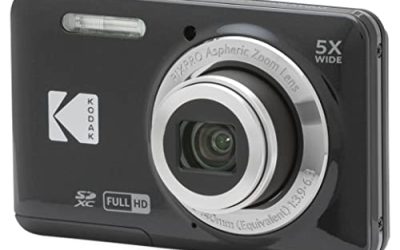
| Kodak Pixpro FZ55 | Travel snapshots with more zoom reach | 16MP, 5X optical zoom, 28mm wide angle, 1080p video |
| Kodak Pixpro FZ45 | Simple, low-cost point-and-shoot use | 16MP, 4X optical zoom, 27mm wide angle, AA batteries |
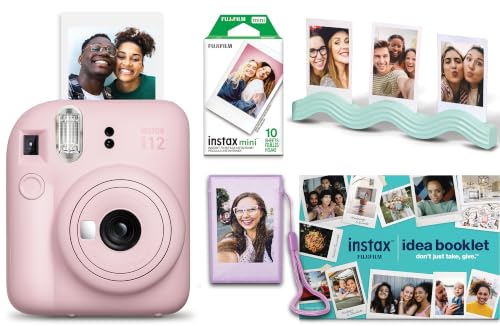
| Fujifilm Instax Mini 12 | Selfies and party prints | Selfie mirror, close-up mode, automatic exposure |
| Fujifilm QuickSnap Flash 400 | Disposable film fun with no setup | 27 exposures, 400-speed 35mm film, built-in flash |
| Polaroid Now 3rd Gen | Instant prints with a ready film supply | I-Type film, bundled with 16 color photos |
How to Choose
Pick the format before the brand
Digital compacts store files on a memory card, let you delete misses, and cost almost nothing per shot after the purchase. Instant cameras print a physical photo within moments, but each press of the shutter uses a sheet of film that costs money. A one-time-use camera has a fixed number of exposures, which in this pool is 27, and you pay for development later. If you plan to take hundreds of pictures a month, a digital compact is the economical route. If you want a keepsake object at an event, instant film wins.
It also helps to picture the moment you will use the camera. A compact slips into a jacket pocket and lives in a bag for months. An instant camera tends to come out at birthdays, weddings, and holidays, then sit on a shelf. A disposable is a one-weekend tool. Matching the format to how often you will actually pick it up prevents the most common regret in this price range, which is a device that looked fun in the cart and never left the drawer.
Zoom and lens width on compacts
Both Kodak models list a wide-angle lens, 27mm on the FZ45 and 28mm on the FZ55, which is helpful for group shots and indoor rooms. The FZ55 lists 5X optical zoom versus 4X on the FZ45, and the optical figure is the one to trust because it uses glass rather than cropping. Ignore megapixel counts as a tiebreaker, since both are listed at 16MP and sensor size matters far more than the number. Expect budget compacts to struggle in dim light, where noise and soft detail appear quickly. A practical test for any compact is whether the zoom range covers the scenes you shoot most. If your subjects are mostly people at arm’s length, the wide end matters more than the long end; if you are photographing a child on a sports field or a monument from a distance, every extra step of optical zoom earns its place.
Power, storage, and video
The FZ45 title mentions AA power, which means you can swap in drugstore batteries on a trip instead of hunting for a proprietary charger. Check whether the camera you choose uses a rechargeable pack or standard cells, and plan for a memory card because digital compacts rarely include one. Both Kodak listings advertise 1080p Full HD video and a 2.7 inch LCD, which is fine for casual clips but not a substitute for a phone with stabilization. Treat video as a bonus, not the reason to buy. Also consider how you will move photos off the camera: card readers and USB cables are cheap, but a camera with no wireless sharing means a few extra steps before a picture reaches a group chat. Buyers who post often may find that step annoying, while those who print or archive photos will barely notice it.
Hidden costs of instant and film
Instant cameras are cheap to buy and costly to feed. Ask how many prints come with the kit, since the Polaroid bundle here includes 16 color photos and the Instax listing is a holiday bundle whose film count the title does not state. Disposable cameras add developing and scanning fees, and a flash with limited range makes daytime outdoor use the best case. Think about the total per-photo cost, not only the sticker figure on the box. A kit that looks like a bargain can become the priciest option once you add refills, so budget for a few extra packs of film if you intend to use an instant camera more than a handful of times. It is also worth remembering that instant prints cannot be duplicated, so a lost or damaged print is gone for good.
The 5 Best Options
Kodak Pixpro FZ55
The Pixpro FZ55 is the more capable of the two Kodak compacts, with a 16MP sensor, 5X optical zoom, a 28mm wide-angle lens, a 2.7 inch LCD, and 1080p Full HD video. The title also frames it for vlogging, though a screen on the back and no listed flip design makes that a casual claim. It suits someone who wants a real zoom lens in a small body.
- Strength: 5X optical zoom gives more reach than the FZ45 for the same size class.
- Strength: 28mm wide angle handles groups, rooms, and landscapes.
- Trade-off: the 2.7 inch LCD is small for framing and reviewing shots.
Skip it if you want prints in your hand right away or demand strong low-light performance.
Kodak Pixpro FZ45
The FZ45 is the simpler, lower-tier sibling, listing 16MP, 4X optical zoom, a 27mm wide-angle lens, and AA battery power. The AA detail is the standout, because dead batteries are easy to replace on a road trip. It is a straightforward point-and-shoot for people who do not want menus to learn.
- Strength: AA power means batteries are available almost anywhere.
- Strength: 27mm wide angle is slightly wider than the FZ55 figure.
- Trade-off: 4X zoom reaches less far than the 5X on the step-up model.
Skip it if you want the longest zoom in this group or a rechargeable battery that avoids ongoing cell costs.
Fujifilm Instax Mini 12
This instant camera lists a selfie mirror, a close-up mode, and automatic exposure, which makes it nearly point-and-press. The title shows it as a holiday bundle in Blossom Pink, so the color and accessories lean toward gifts. It is built for friends, parties, and decoration rather than serious photography.
- Strength: the selfie mirror makes self-portraits easy without guessing the frame.
- Strength: close-up mode covers small subjects such as food or accessories.
- Trade-off: every print uses film, so shooting a lot gets expensive.
Skip it if you want digital files to edit or share online without scanning.
Fujifilm QuickSnap Flash 400
The QuickSnap is a 35mm disposable with 27 exposures, 400-speed film, and a built-in flash. There is nothing to charge or configure, so you simply shoot until the roll is finished and hand it in for processing. It appeals to people who like the delayed surprise of film.
- Strength: no setup, no charging, and nothing to break beyond the shutter.
- Strength: 400-speed film is flexible for bright or moderately lit scenes.
- Trade-off: only 27 exposures, plus separate developing costs.
Skip it if you need to see results immediately or plan to shoot often, since the single-use design adds up.
Polaroid Now 3rd Generation
The Polaroid Now uses I-Type film and ships in a bundle with 16 color photos, so you can start shooting straight away. It is the classic square-print look in a black body, aimed at people who want instant results with a recognizable brand. It sits in the same format as the Instax but with a different film standard.
- Strength: the bundle includes 16 photos, so you are not buying film on day one.
- Strength: I-Type film is a distinct format with its own look.
- Trade-off: the title gives few control details, so assume point-and-shoot simplicity.
Skip it if you want a small zoom lens or low per-shot costs.
Which One Fits Your Situation
You are taking a first trip abroad
The Kodak Pixpro FZ55 gives a wide lens for street scenes and enough zoom to pick out details across a plaza. Pair it with a spare memory card and a basic case, and keep it in a daypack rather than loose where the lens or screen can get scratched. The 1080p video mode is enough for short clips of a market or a street performer.
You want something cheap and easy for a kid or teen
The Kodak Pixpro FZ45 is a sensible starter because AA batteries are simple to replace and the controls stay basic. A young photographer can learn composition and zoom without worrying about charging a proprietary battery pack before every outing, and a parent will not mourn an accessory if it gets dropped on the playground.
You are hosting a party or wedding table
Hand guests the Fujifilm Instax Mini 12 or the Polaroid Now. Both produce instant prints, and the Polaroid bundle already has 16 sheets of film.
You want a no-fuss film souvenir
The Fujifilm QuickSnap Flash 400 suits a weekend away where you would rather not carry a charger or worry about breaking an expensive device. It also works as a shared camera for a group trip: pass it around, finish the roll, and enjoy the surprise when the prints come back.
Common Mistakes
- Counting only the camera price and forgetting that instant film and film developing are ongoing costs.
- Choosing a compact for megapixels instead of lens reach and wide-angle width.
- Buying a digital camera without a memory card in the plan.
- Expecting a disposable or basic compact to match phone quality in dim rooms.
- Assuming every item with the word camera in its title is a photography tool when many are security or document cameras.
Related guides
- Sony Wh-1000Xm5 Vs Bose Quietcomfort Ultra Headphones
- Outdoor Night Vision Home Security Cameras
- Carbon Fiber Folding Electric Wheelchairs
Frequently Asked Questions
Is a compact camera still worth buying instead of a phone?
For optical zoom, a physical shutter, and a dedicated device that is easy to hand to a child, yes. For general quality in tricky lighting, a modern phone often wins.
What is the difference between Instax and Polaroid film?
They are separate formats, so film is not interchangeable. The Instax Mini 12 listing here is a Fujifilm camera, while the Polaroid Now uses I-Type film.
Do the Kodak cameras shoot video?
Both list 1080p Full HD video. It is adequate for casual clips, though neither title mentions stabilization features.
How many photos does a disposable camera take?
The Fujifilm QuickSnap in this guide lists 27 exposures. Once the roll is finished you send it for developing.
More from Amazon
Programs that pair well with the guide above. Offers and eligibility are set by Amazon and may change.
Free shipping on eligible items, Prime Video and more. Eligible new members can start with a free trial.
Start a Prime free trialAudiobooks and podcasts to listen to on the go. Eligible new members can start with a free trial.
Try Audible freeAd-free music streaming. Eligible new subscribers can start with a free trial.
Try Music Unlimited freeA free business account with business pricing and bulk-buying tools for work, shop or home office.
Create a business accountAs an Amazon Associate we earn from qualifying purchases.