Key takeaways
- Hot, dry climates: choose a lidded model, place it out of intense afternoon sun if possible, and check moisture weekly. The contents should feel like a wrung-out sponge.
- Wet climates: use a roofed location or a bin with a rain-shedding lid. Add dry leaves, shredded cardboard, or untreated paper when food scraps become glossy or muddy.
- Cold climates: select a larger, dark-colored or insulated bin. A larger mass retains heat better than a small patio tumbler, but decomposition will still slow during freezing weather.
- Windy climates: look for a broad, stable base and secure the bin or frame according to the manufacturer’s instructions.
Best Composters for Backyards
The best composters for backyard use depend on four practical questions: how much food and yard waste you produce, how much space you have, whether pests are a concern, and how much turning and maintenance you are willing to do. For most small households, a dual-chamber tumbler is the easiest starting point; large gardens are better served by a ventilated bin system, while cold or wet climates benefit from an insulated, lidded design.
Quick picks by backyard situation
| Backyard situation | Best composter type | Why it fits | Typical capacity |
|---|---|---|---|
| Apartment patio or very small yard | Compact sealed tumbler | Small footprint, elevated from soil, relatively easy to turn | 18–37 gallons |
| Two to four people with kitchen scraps | Dual-chamber tumbler | One chamber can finish while the other receives fresh material | 37–80 gallons |
| Vegetable garden and regular leaves or grass | Large stationary bin system | Accepts bulky material and holds more finished compost | 80–160 gallons |
| Rural or pest-prone property | Locking, elevated tumbler or rodent-resistant bin | Harder for rodents, raccoons, and dogs to access | 37–80 gallons |
| Cold, wet, or windy climate | Heavy lidded bin with adjustable ventilation | Retains heat better and gives you more control over moisture | 60–120 gallons |
Best backyard composter types compared
Best for convenience: dual-chamber tumblers
A dual-chamber tumbler is the most balanced choice for many households. You add fresh scraps to one side while the other side rests and matures. Rotating the drum mixes the contents without requiring a pitchfork, and the elevated design discourages some ground-dwelling pests.
Our top picks
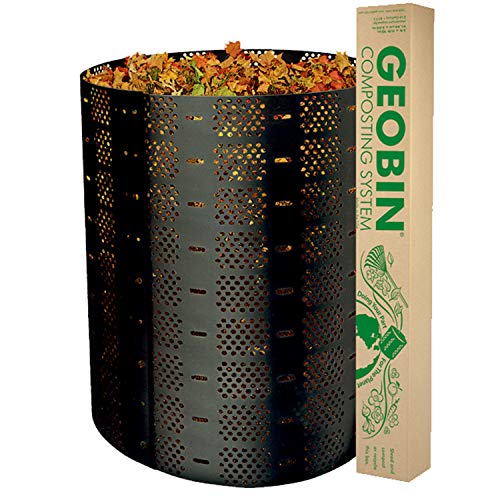
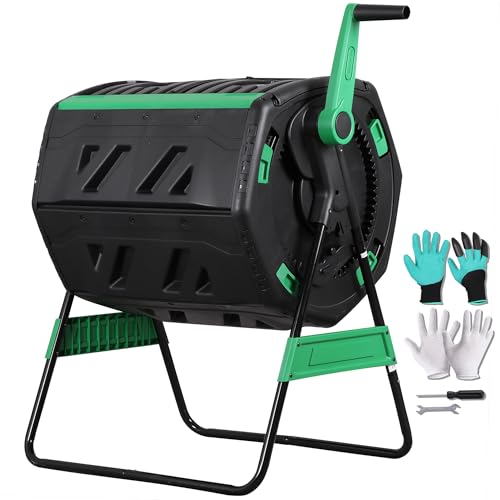

As an Amazon Associate we earn from qualifying purchases at no extra cost to you. Ratings are shown as listed on Amazon.
Examples include the FCMP Outdoor IM4000 Tumbling Composter, which has two chambers and a stated total capacity of about 37 gallons, and the Miracle-Gro Dual Chamber Tumbler, sold in several capacity configurations. These products generally use UV-resistant plastic panels on a metal or plastic frame.
The main limitation is volume. A 37-gallon tumbler fills quickly if you compost autumn leaves, grass clippings, and kitchen scraps together. Tumblers also need a suitable balance of material: wet food waste alone can become dense and anaerobic, even when the drum is turned.
Best for larger gardens: stationary compost bins
A stationary bin is the better choice when you have abundant leaves, weeds, hedge trimmings, or garden plants. It offers more usable volume per dollar than a tumbler and can accept long, awkward material that is difficult to load into a rotating drum.
Large plastic bins such as the Lifetime 60058 Compost Tumbler offer substantially more capacity than compact tumblers, while open-sided or modular bin systems provide even greater flexibility. Check whether the model has a removable lower door or access panel; without one, harvesting compost from the bottom can be awkward.
Stationary bins require more hands-on management. You may need to mix the pile with a fork, add dry carbon material when it becomes wet, and cover it during prolonged rain. They are also more vulnerable to rodents if the base is open and food scraps are buried shallowly.
Best for pest resistance: enclosed and elevated composters
If raccoons, rats, dogs, or neighborhood cats are a concern, prioritize a rigid lid, secure fasteners, and a fully enclosed body. An elevated tumbler is usually easier to protect than an open-bottom bin. A stationary bin can still work, but use a wire-mesh base with small openings and avoid adding meat, dairy, oily food, or cooked leftovers.
The word “pest-resistant” does not mean pest-proof. Rodents can exploit gaps, chew thin plastic, or follow spilled scraps. Keep the exterior clean, bury fresh scraps beneath a layer of leaves or shredded cardboard, and avoid placing the composter directly beside a fence or shed that provides a route for climbing animals.
Head-to-head: tumbler versus stationary bin
| Feature | Dual-chamber tumbler | Stationary bin |
|---|---|---|
| Typical footprint | About 2–4 square feet | About 4–12 square feet |
| Typical capacity | 37–80 gallons | 80–160 gallons or more |
| Turning effort | Low; rotate every few days | Moderate; fork or aeration tool may be needed |
| Leaf and yard-waste capacity | Limited by drum opening and volume | Much better for bulky material |
| Pest control | Usually better when elevated and latched | Depends heavily on base, lid, and placement |
| Assembly | Often several hours; frame alignment matters | Usually faster, but panels may need stakes or clips |
| Time to usable compost | Roughly 6–12 weeks in favorable conditions | Roughly 2–6 months, depending on management |
Capacity: choose for your actual waste stream
Compost volume shrinks as material breaks down, often by roughly 40–60%. A useful sizing estimate is to count your weekly scraps and yard waste, then multiply that volume by the number of weeks you want the composter to hold material before harvesting.
For example, suppose a household produces 1.5 gallons of kitchen scraps per week and 3 gallons of chopped leaves or garden waste. Over eight weeks:
(1.5 + 3) gallons × 8 weeks = 36 gallons of incoming material.
A 37-gallon composter would technically hold that amount, but it would leave little room for dry bulking material or turning. In practice, a 50–65 gallon model would be a more comfortable minimum. If the same household also adds grass clippings or unshredded leaves, a 90-gallon stationary bin is more suitable.
Do not fill a tumbler to its advertised maximum and expect efficient aeration. A drum needs air space and enough room for its contents to shift when rotated.
Climate, aeration, and moisture
Compost organisms need oxygen, moisture, and a mixture of carbon-rich and nitrogen-rich materials. Vent holes support airflow, but too many large openings can let rain saturate the pile or allow pests inside.
- Hot, dry climates: choose a lidded model, place it out of intense afternoon sun if possible, and check moisture weekly. The contents should feel like a wrung-out sponge.
- Wet climates: use a roofed location or a bin with a rain-shedding lid. Add dry leaves, shredded cardboard, or untreated paper when food scraps become glossy or muddy.
- Cold climates: select a larger, dark-colored or insulated bin. A larger mass retains heat better than a small patio tumbler, but decomposition will still slow during freezing weather.
- Windy climates: look for a broad, stable base and secure the bin or frame according to the manufacturer’s instructions.
Turning is not a substitute for correct moisture. If the contents are slimy, add dry carbon material before rotating. If they are dry and unchanged, add a small amount of water while mixing rather than soaking the entire pile.
Assembly and ownership realities
Tumblers often take longer to assemble than their simple shape suggests. The most failure-prone points are misaligned panels, loose fasteners, and a frame that is not level. Tighten hardware after the first week because repeated turning can settle the frame.
Stationary bins are usually easier to assemble, but lightweight models may shift or lift in strong wind. A removable access panel is valuable because finished compost is best taken from the bottom while newer material remains at the top.
The parts most likely to wear first are hinges, door latches, frame bolts, and thin plastic panels exposed to sunlight. Avoid placing a plastic composter on a hot paved surface if the manufacturer specifies soil or a shaded location. Rinse the exterior with water, remove compacted material from vents, and do not use harsh solvents that can damage plastic.
Most backyard composters do not require special consumables, but you may want a compost thermometer, a hand aerator, dry shredded cardboard, and a supply of autumn leaves. A thermometer is optional; texture and smell are often more useful indicators for beginners. A healthy pile smells earthy. A strong rotten-egg or sewage odor usually means excess moisture, insufficient air, or too much nitrogen-rich material in one layer.
How to set up a backyard composter
- Choose a practical location. Use level ground with drainage, convenient access to the kitchen, and enough clearance to open the lid or rotate the drum.
- Start with coarse carbon material. Add dry leaves, small twigs, or shredded cardboard to improve airflow at the base.
- Alternate wet and dry inputs. Mix food scraps with approximately two to three volumes of dry carbon material, adjusting for moisture.
- Cut large pieces smaller. Chopped leaves, stems, and vegetable scraps decompose faster than whole material.
- Aerate regularly. Rotate a tumbler every few days, or mix a stationary bin whenever it becomes compacted.
- Let the compost finish. Finished compost is dark, crumbly, and mostly unrecognizable. Letting it rest for another two to four weeks improves consistency.
Bottom line
Choose the FCMP Outdoor IM4000 or a similar dual-chamber tumbler if you want a compact, low-effort solution for a small household. Choose a larger stationary bin if your main material is leaves and garden waste. Choose a locking, elevated model when pests are the deciding factor, and prioritize a large, well-lidded bin in cold or wet climates. The best composters for backyard use are not simply the largest or cheapest models; they are the ones that match your weekly waste volume, available space, climate, and willingness to manage moisture and aeration.