Our Top Picks
 Ulefone Armor 34 Pro Plus 5G Rugged Smartphone6.95-inch FHD+7.21 x 3.41 x 1.29 inches1.8 poundsCheck on Amazon


The best rugged smartphone for most US buyers is the Samsung Galaxy XCover7 Pro, because it pairs IP68 and MIL-STD-810H protection with a removable battery, seven promised years of updates and mainstream carrier support. Buyers who need an enormous battery and a flagship-class chip should look at the Ulefone Armor 29 Ultra, and buyers who want a slimmer-than-usual rugged body with satellite messaging should shortlist the CAT S75. Everything below is built to help you decide which of those trade-offs fits your work, your hobbies and your tolerance for weight.
Quick picks by use case
- Best overall for work and daily use: Samsung Galaxy XCover7 Pro.
- Best battery life: Ulefone Armor 29 Ultra (21,200 mAh) or Oukitel WP61 Ultra (20,000 mAh).
- Best for off-grid trips: CAT S75, thanks to two-way satellite messaging.
- Best performance per weight among the big-battery phones: 8849 Tank 4 Pro.
- Best entry-level rugged phone: Ulefone Armor X16 Pro.
- Best display among the extreme-battery group: 8849 Tank 5 (3K AMOLED).
How we chose
This guide is based on desk research, not first-hand evaluation. We compared manufacturer specification sheets, published 2026 roundups and spec aggregators, then kept only phones that are currently listed with a clear rating and chipset. Each phone was scored against five criteria that matter more in a rugged phone than in a normal one: certified protection, battery capacity, weight, software support and network compatibility. Where a spec could not be confirmed from a reliable source, we describe the phone by class instead of stating a number, and we flag it in the text.
What the ratings actually mean
Rugged phone marketing leans on three labels. Knowing what each one promises keeps you from paying for a sticker.
- IP68: dust-tight and protected against continuous immersion in water, usually to a stated depth and time (often 1.5 m for 30 minutes). It covers static immersion, not high-pressure jets.
- IP69K: protection against close-range, high-pressure, high-temperature water jets. It matters if you hose the phone off after a muddy or greasy job. Not every rugged phone carries it; the XCover7 Pro, for example, is listed as IP68 and MIL-STD-810H.
- MIL-STD-810H: a US military test framework. A phone “meets” it when the manufacturer ran selected methods such as drops, vibration, temperature shock or humidity. It is not a single pass-fail grade, and the drop height and method vary by brand, so treat it as a baseline rather than a guarantee.
Rugged ratings do not cover everything. Cracked screens, port damage from forcing a charger and long-term seal wear can all still happen. A screen protector and a gasket-friendly charging habit extend life more than any logo.
Spec comparison table
| Phone | Chipset | Display | Battery | Protection | Weight |
|---|---|---|---|---|---|
| Samsung Galaxy XCover7 Pro | Snapdragon 7s Gen 3 | 6.6 in FHD+ LCD, 120 Hz | 4,350 mAh, removable | IP68, MIL-STD-810H | about 240 g |
| Ulefone Armor 29 Ultra | Dimensity 9300+ | 6.67 in AMOLED, 120 Hz | 21,200 mAh | IP68/IP69K, MIL-STD-810H | 688 g |
| 8849 Tank 5 | Dimensity 9400e | 6.73 in 3K AMOLED, 120 Hz | 17,600 mAh | IP68, MIL-STD-810H | 715 g |
| 8849 Tank 4 Pro | Dimensity 8300 | 6.73 in 2K+ AMOLED, 120 Hz | 11,600 mAh | IP68/IP69K, MIL-STD-810H | 530-538 g |
| Oukitel WP61 Ultra | Dimensity 7025 | 6.78 in FHD+, 120 Hz | 20,000 mAh | IP68/IP69K, MIL-STD-810H | 634-651 g |
| Oukitel WP210 | Dimensity 8200 | 6.7 in AMOLED, 120 Hz | 8,800 mAh | IP68/IP69K, MIL-STD-810H | 311 g |
| Doogee S200 | Dimensity 7050 | 6.72 in FHD+ LCD, 120 Hz | 10,100 mAh | IP68/IP69K, MIL-STD-810H | 369 g |
| Ulefone Armor X16 Pro | Dimensity 6300 | 6.56 in HD+ LCD, 120 Hz | 10,360 mAh | IP68/IP69K, MIL-STD-810H | 395 g |
| CAT S75 | not verified | not verified | not verified | IP68, IP69K, MIL-STD-810H | not verified |
The 8 rugged phones worth shortlisting
1. Samsung Galaxy XCover7 Pro
Spec line: Snapdragon 7s Gen 3 · 6.6 in FHD+ 120 Hz · 4,350 mAh removable battery · IP68 · MIL-STD-810H · about 240 g · seven years of promised updates.
Best for: field staff, warehouse and healthcare workers, and anyone who wants rugged protection without carrying a brick. It is the only phone here with a user-replaceable battery, so a spare cell means a hot swap instead of a charging break.
Skip if: you want multi-day battery on a single charge or a flagship-class processor.
- Pros: lightest phone in the group, long update promise, Samsung enterprise management tools, strong US carrier support.
- Cons: small battery by rugged standards, mid-range chip, no IP69K listing.
As an Amazon Associate we earn from qualifying purchases at no extra cost to you.

2. Ulefone Armor 29 Ultra
Spec line: Dimensity 9300+ · 6.67 in AMOLED 120 Hz · 21,200 mAh · 16 GB RAM / 1 TB storage · IP68/IP69K · MIL-STD-810H · 688 g.
Best for: remote work sites, expeditions and heavy users who would rather charge twice a week than twice a day. It has the strongest chip and the biggest battery in this guide.
Skip if: you carry the phone in a pocket all day or need reliable updates and carrier certification; the brand has not detailed a long update policy.
- Pros: flagship-class performance, AMOLED panel, very large storage.
- Cons: close to 700 g, premium price tier, uncertain long-term software support.
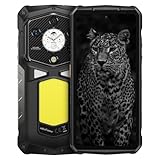
3. 8849 Tank 5
Spec line: Dimensity 9400e · 6.73 in 3K AMOLED 120 Hz · 17,600 mAh · IP68 · MIL-STD-810H · 715 g · five years of security updates.
Best for: buyers who want a sharp display and high-end chip with a stated five-year security update promise.
Skip if: weight or price matters, since it is the heaviest and among the most expensive here.
- Pros: sharpest screen in the group, big battery, security update promise.
- Cons: heaviest phone listed, IP69K not listed in the source we used, US network certification not confirmed.

4. 8849 Tank 4 Pro
Spec line: Dimensity 8300 · 6.73 in 2K+ AMOLED 120 Hz · 11,600 mAh · IP68/IP69K · MIL-STD-810H · 530-538 g.
Best for: people who want more battery than a mainstream rugged phone but less weight than the 20,000 mAh class. It lands in the middle on every axis.
Skip if: you need a promised update schedule; none is specified.
- Pros: good performance and display for the weight, full IP69K.
- Cons: still over 500 g, update policy unclear.

5. Oukitel WP61 Ultra
Spec line: Dimensity 7025 · 6.78 in FHD+ 120 Hz · 20,000 mAh · 16 GB RAM / 512 GB storage · IP68/IP69K · MIL-STD-810H · 634-651 g.
Best for: battery-first buyers who do not need high-end performance, such as camp hosts, surveyors or travelers who use the phone mostly for maps, messaging and photos.
Skip if: you play demanding games or want long software support.
- Pros: 20,000 mAh at a lower price tier than the flagship-chip models, big RAM and storage.
- Cons: modest processor, heavy, limited updates expected.
6. Oukitel WP210
Spec line: Dimensity 8200 · 6.7 in AMOLED 120 Hz · 8,800 mAh · 12 GB RAM / 512 GB storage · IP68/IP69K · MIL-STD-810H · 311 g.
Best for: people who want the lightest high-performance option with a strong chip and AMOLED screen, and who can accept a battery well below the extreme class.
Skip if: you need dependable updates; the source we used notes no update promise.
- Pros: about 311 g, capable chip, AMOLED panel.
- Cons: no update promise, 8,800 mAh is only mid-range for a rugged phone.

7. Doogee S200
Spec line: Dimensity 7050 · 6.72 in FHD+ LCD 120 Hz · 10,100 mAh · IP68/IP69K · MIL-STD-810H · 369 g.
Best for: mid-range buyers who want 10,000 mAh and a reasonable weight without paying for an AMOLED panel.
Skip if: you want a bright, high-contrast screen or a clear update path.
- Pros: balanced weight and battery, full ratings.
- Cons: LCD panel, RAM figure not confirmed, software support details thin.

8. Ulefone Armor X16 Pro
Spec line: Dimensity 6300 · 6.56 in HD+ LCD 120 Hz · 10,360 mAh · 8 GB RAM plus 8 GB virtual / 256 GB storage · IP68/IP69K · MIL-STD-810H · 395 g.
Best for: the entry-level pick: a durable second phone for the garage, job site or backpack.
Skip if: you want a sharp screen or fast app switching; the maker does not expect full Android version updates beyond Android 15.
- Pros: lowest price tier, 10,000 mAh class battery, full ratings.
- Cons: HD+ display, entry-level chip, short update outlook.

Also worth knowing: CAT S75
The CAT S75 is listed with IP68, IP69K and MIL-STD-810H protection and is the one phone in this group that offers two-way satellite messaging through a built-in service. If you hike or work beyond cell coverage, that feature may be worth more than any chip. We could not verify its chipset, screen or battery figures, so confirm those on the maker’s page before buying, and check what the satellite plan requires after any included period.
Group by buyer criteria
Battery thresholds
- Under 6,000 mAh: a normal day for most users; the XCover7 Pro relies on swappable cells here.
- 8,000 to 12,000 mAh: two days of mixed use; this is the best weight-to-endurance zone (WP210, S200, X16 Pro, Tank 4 Pro).
- 17,000 mAh and above: four or more days of light use; expect 650 g or more (Tank 5, WP61 Ultra, Armor 29 Ultra).
Weight thresholds
- Under 320 g: comfortable in a pocket (XCover7 Pro, WP210).
- 350 to 540 g: noticeable but workable on a belt clip (S200, X16 Pro, Tank 4 Pro).
- Over 630 g: bag or vehicle phone.
Software support thresholds
- Five years or more: only the XCover7 Pro (seven years) and Tank 5 (five years of security updates) state this.
- Two years or less or unspecified: most other rugged phones; plan to replace them sooner.
Worked example: how long will the battery last?
Battery capacity in milliamp-hours does not compare across voltages, so convert to watt-hours with a nominal 3.85 V cell: Wh = mAh x 3.85 / 1000.
- XCover7 Pro: 4,350 x 3.85 / 1000 = about 16.7 Wh.
- Tank 4 Pro: 11,600 x 3.85 / 1000 = about 44.7 Wh.
- Armor 29 Ultra: 21,200 x 3.85 / 1000 = about 81.6 Wh.
Assume a mixed-use day of 2.5 W average draw (a rough figure for screen-on browsing and background sync, not a measured number). Runtime is roughly Wh divided by watts: 16.7 / 2.5 = about 6.7 hours of equivalent heavy-use time for the XCover7 Pro, 44.7 / 2.5 = about 18 hours for the Tank 4 Pro, and 81.6 / 2.5 = about 33 hours for the Armor 29 Ultra. If you use the phone for 5 hours a day, the first lasts about one day, the second about three and a half, and the third more than six. Weight cost per watt-hour: the XCover7 Pro is about 14 g per Wh, the Armor 29 Ultra about 8 g per Wh, so you pay in grams for endurance but get better efficiency from the larger packs. Real life varies with brightness, cellular signal and cold weather.
Airline note: the Armor 29 Ultra’s calculated 81.6 Wh sits under the common 100 Wh per battery limit for carry-on lithium cells, but check your carrier’s rules, since some also limit the phone’s battery when switched off.
How to choose among all the rugged phones
With fourteen phones in play, start with three hard limits and let the rest fall out.
- Weight you can live with. Under 320 g: XCover7 Pro or WP210. Around 350 to 540 g: S200, X16 Pro, Tank 4 Pro. Above 600 g: the 17,000 mAh and larger group, which you will want in a bag or holster rather than a pocket.
- Battery you will really use. Charging every night: under 6,000 mAh is fine. Charging every second day: 8,000 to 12,000 mAh. Charging weekly or powering other devices: 17,000 mAh and above.
- A special feature that earns its price. Thermal camera for trades, projector for briefings, loud speaker for noisy sites, removable battery for shift work. If you will not use the feature weekly, skip the premium tier.
Finally, check three confirmations before paying: your carrier bands, the update policy, and the exact protection rating on the maker page, since several brands sell near-identical variants with different ratings.
Decision matrix
| If you are… | Choose | Why |
|---|---|---|
| Fleet manager or shift worker | Galaxy XCover7 Pro | Management tools, spare batteries, seven-year support |
| Backcountry hiker | CAT S75 or Armor 29 Ultra | Satellite messaging or multi-day battery |
| Mechanic or farmer | Doogee S200 or Tank 4 Pro | IP69K washdown and 10,000 mAh class battery |
| Budget second phone | Armor X16 Pro | Lowest tier with full ratings |
| Wants flagship performance | Armor 29 Ultra or Tank 5 | Top chips and AMOLED, with weight cost |
Buying checklist
- Confirm US bands. Some roundups note certain big-battery models work mainly on one carrier. Check the band list against your carrier’s required bands, especially for LTE and 5G on your network.
- Check update policy. If you keep phones for four years or more, the XCover7 Pro stands apart.
- Check the warranty route. Smaller brands may route repairs overseas; look for a US support page.
- Add a screen protector. Glass is often the weak link in a drop.
- Check weight against use. A 700 g phone in a back pocket is a daily annoyance.
More rugged phones worth a look
The shortlist above covers the main trade-offs, but several other models come up repeatedly in buyer comparisons: bigger screens, projectors, thermal cameras and compact work phones. Each section below ends with a product card so you can check the current listing.
9. Ulefone Armor 29 Pro
Spec line: Dimensity 7400 · about 6.6 in display · 21,200 mAh · 120 W fast charging · 1.04 in rear sub-screen · mid-range tier
This is the sensible step down from the Ultra. The processor is a mid-range 5G part that handles maps, messaging, camera work and video calls without drama, and the 120 W charging claim shortens the long wait that very large cells usually bring. Treat the charging speed as a manufacturer figure and use the brand charger.
Best for: Buyers who want the 21,000 mAh class of endurance without paying for the flagship chip in the Armor 29 Ultra. Skip if: you want AMOLED-flagship speed or a lighter phone; a battery this size means a heavy body.
Pros: Huge battery, very quick charging for its size, a small rear screen for glancing at notifications, lower price tier than the Ultra. Cons: Mid-range processor, heavy and thick, software update plans are not clearly stated.
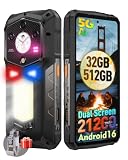
10. Ulefone Armor 34 Pro Plus
Spec line: 25,500 mAh · 66 W charging · built-in projector (listed at 150 lumens) · up to 512 GB storage, expandable · Android 16 · premium tier
Most rugged phones add battery; this one adds a feature. The projector is a real differentiator for field crews who brief teams on site or travelers who want a screen bigger than the phone. The 25,500 mAh cell means days of light use between charges, but expect a brick-like feel, so plan on a belt holster or bag.
Best for: Camp, site and expedition users who want a power bank, a projector for slides or movies, and a phone in one body. Skip if: you carry the phone in a pocket; the battery class puts it among the heaviest rugged phones.
Pros: Biggest battery in this guide, projector for presentations or outdoor movies, current Android version at launch. Cons: Very heavy, projector brightness suits dim rooms only, premium tier, update promise unclear.

11. Oukitel WP60
Spec line: 7.2 in display · 10,000 mAh · 108 MP main camera · 5G · Android 15 · mid-range tier
The headline here is screen size. A 7.2 in display is closer to a small tablet than a phone, which helps with reading plans, checking dashboards or following a route, and the 10,000 mAh cell keeps it running for about two days of mixed work. High megapixel counts do not guarantee better photos, so judge the camera by daylight sample shots rather than the number.
Best for: People who want the biggest screen in a rugged phone for maps, drawings, spreadsheets and video, with a camera for site documentation. Skip if: you want one-hand use; the 7.2 in panel makes it large for small hands and pockets.
Pros: Large screen, 10,000 mAh battery class, high-megapixel main camera, mid-range tier. Cons: Bulky, exact protection ratings should be confirmed on the maker page, long-term update support unclear.

12. Sonim XP10
Spec line: 5.5 in display · IP68 · MIL-STD-810H · 100 dB loudspeaker · 3-year warranty · mid-range tier
Sonim builds for workplaces rather than hobbyists. The loudspeaker rating is the main reason to choose it: it stays audible beside machinery, and the compact body fits a pocket better than the 10,000 mAh crowd. It also suits buyers who value a multi-year warranty over spec-sheet bragging. Verify bands with your carrier before ordering.
Best for: Industrial, construction and public-safety users who need a loud speaker, glove-friendly handling and a long warranty on a compact body. Skip if: you want a modern high-refresh display or big battery; this one is built around durability and call clarity.
Pros: Compact for a rugged phone, very loud speaker, three-year warranty, designed for US carrier use. Cons: Smaller, lower-resolution screen than newer rivals, no flagship chip, basic camera.

13. Ulefone Armor X31 Pro
Spec line: Dimensity 6300 · 6.56 in 120 Hz display · 64 MP + 25 MP night-vision camera · Android 16 · 256 GB storage · entry-level tier
A sibling of the Armor X16 Pro with the same chip, it targets the same buyer: a tough second phone for the truck, boat or workshop. The night-vision camera is a practical extra for checking dark corners, though image quality is modest compared with a mainstream phone. Pick whichever of the two is cheaper on the day.
Best for: Budget buyers who want a 5G rugged phone with a night-vision camera and a smooth 120 Hz screen. Skip if: you need a long update promise or high performance; the chip is entry-level.
Pros: Low price tier, 5G, 120 Hz display, night-vision camera for dark sites. Cons: Entry-level processor, panel is not AMOLED-class, software support is short.

14. Ulefone Armor 29 Pro Thermal
Spec line: Dimensity 7400 · 6.67 in AMOLED display · rear sub-screen · built-in thermal imaging camera · up to 512 GB storage · premium tier
Thermal imaging in a phone is a screening tool: it spots overheating breakers, missing insulation or a warm engine block, but it will not replace a calibrated inspection camera. For trades that need a quick look many times a day, having it in a rugged phone saves carrying a second device.
Best for: Electricians, HVAC technicians, inspectors and hunters who need a thermal camera in the same device as their phone. Skip if: you will never use thermal imaging; you pay for a sensor you will not touch.
Pros: Thermal camera for finding hot spots and leaks, AMOLED panel, strong battery class. Cons: Premium tier, heavy, thermal resolution is far below dedicated inspection cameras.

All 14 rugged phones compared
| Phone | Battery | Protection | Standout feature | Price tier |
|---|---|---|---|---|
| Samsung Galaxy XCover7 Pro | 4,350 mAh, removable | IP68, MIL-STD-810H | Removable battery | Mid-range |
| Ulefone Armor 29 Ultra | 21,200 mAh | IP68/IP69K | Strongest chip | Premium |
| 8849 Tank 5 | 17,600 mAh | IP68 | 3K AMOLED | Premium |
| 8849 Tank 4 Pro | 11,600 mAh | IP68/IP69K | Best weight to endurance | Premium |
| Oukitel WP61 Ultra | 20,000 mAh | IP68/IP69K | Battery first | Mid-range |
| Oukitel WP210 | 8,800 mAh | IP68/IP69K | Lightest fast phone | Mid-range |
| Doogee S200 | 10,100 mAh | IP68/IP69K | Balanced all-rounder | Mid-range |
| Ulefone Armor X16 Pro | 10,360 mAh | IP68/IP69K | Entry-level | Entry-level |
| Ulefone Armor 29 Pro | 21,200 mAh | Rugged class, confirm rating | 120 W charging | Mid-range |
| Ulefone Armor 34 Pro Plus | 25,500 mAh | Rugged class, confirm rating | Built-in projector | Premium |
| Oukitel WP60 | 10,000 mAh | Rugged class, confirm rating | 7.2 in screen | Mid-range |
| Sonim XP10 | not verified | IP68, MIL-STD-810H | 100 dB speaker, 3-year warranty | Mid-range |
| Ulefone Armor X31 Pro | not verified | Rugged class, confirm rating | Night-vision camera | Entry-level |
| Ulefone Armor 29 Pro Thermal | not verified | Rugged class, confirm rating | Thermal camera | Premium |
Frequently asked questions
What is the toughest rugged smartphone?
No single phone wins every test, because makers use different drop methods. Phones with IP68/IP69K and MIL-STD-810H listings, such as the Armor 29 Ultra and CAT S75, are the strongest on paper.
Look at the specific rating and drop height the brand claims, not just the logo.
Is IP68 enough, or do I need IP69K?
IP68 is enough for rain, splashes and brief dunks. Choose IP69K if you wash the phone with a pressure hose or work around hot water jets.
Most buyers never need IP69K, but it is a useful safeguard for food service, agriculture and car washes.
Do rugged phones get software updates?
It varies widely. The Galaxy XCover7 Pro promises seven years, the 8849 Tank 5 states five years of security updates, and many others state little or nothing.
If updates matter for security or business apps, ask the seller for the written policy.
Will these work on my US carrier?
The Samsung XCover7 Pro is sold through major US carriers. Several imported rugged phones may support only some bands.
Compare the phone’s LTE and 5G band list with your carrier’s list before ordering, and ask about Wi-Fi calling.
Are rugged phones fast enough for gaming and video?
Models with the Dimensity 9300+ or 9400e are quick enough for most games, while entry-level chips like the Dimensity 6300 are better for calls, maps and messaging.
Extra thickness can also make heat build up under heavy loads.
Can I charge a rugged phone with a standard charger?
Yes, most use USB-C, but very large batteries take a long time to fill on slow chargers.
Use the supplied cable and charger, and keep port covers sealed to preserve water resistance.
Is a bigger battery always better?
No. Past about 12,000 mAh the weight grows quickly, and the phone may be uncomfortable to carry.
Match battery size to how long you go between charging opportunities, not to a spec sheet.
How should I look after a rugged phone?
Rinse mud and salt off with fresh water and keep the charging port dry before plugging in.
Replace worn port covers and seals when they stiffen, since water resistance depends on them.
More from Amazon
Programs that pair well with the guide above. Offers and eligibility are set by Amazon and may change.
Free shipping on eligible items, Prime Video and more. Eligible new members can start with a free trial.
Start a Prime free trialAudiobooks and podcasts to listen to on the go. Eligible new members can start with a free trial.
Try Audible freeAd-free music streaming. Eligible new subscribers can start with a free trial.
Try Music Unlimited freeA free business account with business pricing and bulk-buying tools for work, shop or home office.
Create a business accountAs an Amazon Associate we earn from qualifying purchases.