Key takeaways
- GuideRails support reduces knee and ankle rotation without feeling rigid
- DNA LOFT midsole stays cushioned well past a typical wear-in period
- Heavier than slip-on alternatives, which some find tiring on shorter legs
Spending eight or ten hours on your feet means your shoes are doing more than covering your toes. They are the only thing between your joints, plantar fascia, and hard floors all day. The wrong pair leaves you limping by mid-afternoon, whether you are walking a warehouse aisle, pacing a classroom, or standing at a workstation.
What separates the best shoes for walking and standing all day from mediocre ones comes down to a handful of structural choices: how the midsole absorbs repeated impact, whether the arch support actually engages your foot or just sits there, and how the upper holds everything in place over thousands of steps. We lined up eight options on published specs and long-term owner feedback to see which ones solve that problem at different price points.
Our top picks




As an Amazon Associate we earn from qualifying purchases at no extra cost to you. Ratings are shown as listed on Amazon.
Quick Picks
| Product | Best for | Price |
|---|---|---|
| Brooks Adrenaline GTS 25 | Overall support | $146.98 |
| ALLSWIFIT Slip-On | Budget pick | $54.39 |
| Skechers Uno Stand On Air | Casual comfort | $69.98 |
| Skechers Max Cushioning Endeavour | Value cushioning | $69.94 |
| Hoka Bondi 9 | Premium cushioning | |
| Under Armour Charged Assert 9DISC | Wide feet on a budget | $59.99 |
| Dr. Scholl’s Walk Longer Insoles | Budget add-on | $14.97 |
| Ryka Devotion X | All-day standing comfort | $65.76 |
How We Picked
We filtered these options on four criteria that owners consistently cite when a shoe either lasts or fails for all-day wear. First, midsole construction: whether the foam or air unit stays springy past the first few weeks. Second, arch and heel support geometry, because flat insoles cause the fatigue most walkers blame on the shoe. Third, upper structure and fit options, since width and lockdown matter more than people expect. Fourth, long-term value: how the price compares to the cushioning and durability you can reasonably expect from the build.
The 8 Best Shoes For Walking And Standing All Day in 2026
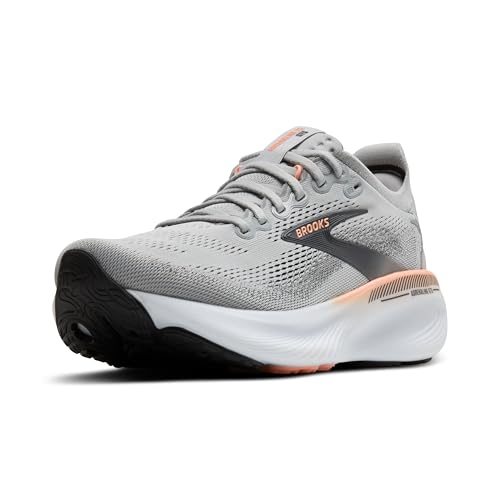
Brooks Adrenaline GTS 25
Brooks built the Adrenaline line around GuideRails technology, a support system that keeps your knee and ankle aligned without a hard medial post. For walkers and anyone on their feet for full shifts, that translates to less joint strain by hour six. Owners praise the roomy toe box and the stability that comes from the segmented crash pad midsole.
- GuideRails support reduces knee and ankle rotation without feeling rigid
- DNA LOFT midsole stays cushioned well past a typical wear-in period
- Heavier than slip-on alternatives, which some find tiring on shorter legs
Skip this if you want a lightweight, flexible feel or need a shoe you can kick off between tasks.
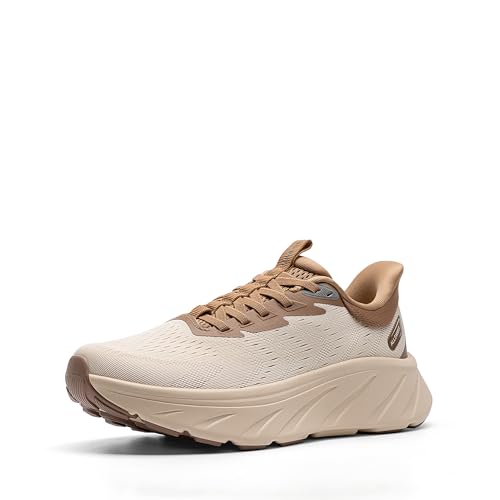
ALLSWIFIT Women’s Slip-On Walking Shoes
At roughly a third of the price of premium trainers, the ALLSWIFIT slip-on earns its spot through a knit upper that breathes and a basic memory-foam insole that handles moderate wear. Owners with service-industry jobs report it holds up for a full shift, though the outsole wears noticeably faster on rough concrete. The beige and khaki colorway hides scuffs better than white alternatives at this price.
- Slip-on design saves time on repeated breaks or entry-check routines
- Knit upper breathes well in warm environments
- Outsole tread smooths quickly; expect to replace within a few months of heavy daily use
Pass if you need structured arch support or plan to walk more than a few miles daily.
Skechers Women’s Uno – Stand On Air Sneaker
The Uno borrows the air-cushion heel unit from Skechers’ running line and pairs it with a lace-up upper that looks more like a casual sneaker than a work shoe. Owners like the retro silhouette for environments where scrubs or uniforms leave room for personality. The midsole foam is softer than most, which feels good walking but can bottom out after prolonged standing.
- Visible air unit in the heel provides noticeable impact relief
- Casual look transitions to after-work settings without changing shoes
- Soft midsole compresses over long standing periods; add an insole if you are still on your feet past seven hours
Not ideal if you need maximum stability or have a high arch that requires more support.
Skechers Women’s Max Cushioning Endeavour Canova
Skechers markets this as their highest-stack cushioning option under a hundred dollars, and owners confirm the thick midsole makes a real difference on tile and polished concrete floors. The wide toe box accommodates foot swell that develops over a long shift. The tradeoff is a chunky profile that some find unstable on uneven surfaces.
- Extra-thick midsole absorbs impact that thinner soles pass through to your knees
- Relaxed fit accommodates swelling without pinching
- High stack raises your center of gravity; avoid on loose gravel or wet industrial flooring
Skip if you work on uneven ground or need a lower-profile shoe for stability.
Hoka Women’s Bondi 9
The Bondi is the cushioning benchmark. Hoka’s meta-rocker geometry guides your foot through each stride with less calf effort, which matters when you are logging thousands of steps before lunch. Owners with plantar fasciitis or post-surgical feet frequently name it as the one shoe they can wear all shift. The black-and-white colorway keeps it versatile beyond the gym.
- Maximum-stack EVA midsole delivers the best impact protection on hard floors
- Meta-rocker reduces calf and Achilles workload over repetitive steps
- Premium price; at roughly two and a half times a budget pair, you are paying for the stack height and rocker geometry specifically
Overkill if your day involves mostly sitting with occasional standing, or if you dislike a heavy, high-profile shoe.
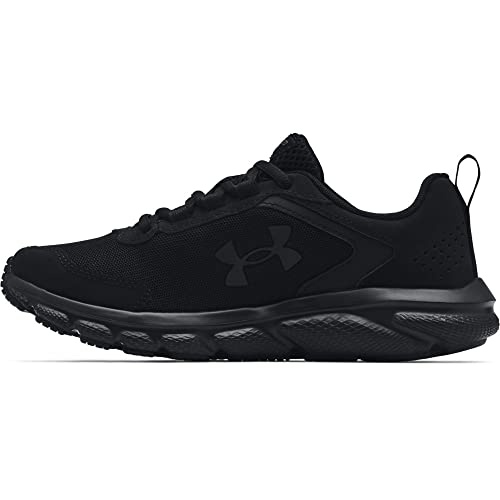
Under Armour Women’s Charged Assert 9DISC
The 9DISC uses a dial-lacing system instead of traditional eyelets, which lets you micro-adjust tightness mid-shift without retying. Under Armour’s Charged cushioning is firmer than what most budget walking shoes offer, so the feel is more responsive than plush. Owners with wide feet appreciate the available Wide sizing that locks in without the laces digging.
- Dial closure allows quick tension adjustments on the fly
- Wide size option accommodates broader feet without sacrificing lockdown
- Firmer ride takes longer to break in; the first week may feel harsh on sensitive heels
Not the best pick if you want an immediate out-of-the-box soft feel.
Dr. Scholl’s Walk Longer Shoe Insoles
These insoles are not shoes, but they earn a slot because pairing a plush foam arch insert with a budget pair can approximate the comfort of a mid-range shoe. Owners report reduced muscle fatigue over full shifts when they drop them into flats or slip-ons that lack built-in support. The 50-percent-longer walking claim references subjective endurance feedback rather than a controlled trial.
- Arch support and plush cushioning transform a thin-soled shoe into an all-day option
- At roughly fifteen dollars, the lowest entry cost to reduce standing fatigue
- Not a standalone solution; pair with a shoe that has enough depth to accommodate the insole without pressing your toes
Skip if your current shoes already feel cramped; the added thickness will only make pressure points worse.
Ryka Devotion X Walking Shoe
Ryka designs specifically around the female foot, and the Devotion X reflects that with a narrower heel and wider forefoot than unisex lasts. The cushioned insole and rocker-style outsole keep your gait rolling smoothly, which reduces the push-off effort your calf makes on every step. Owners in retail and healthcare praise the comfort across eight-hour days without needing a break-in period.
- Female-specific last reduces heel slip and improves overall fit
- Rocker outsole encourages a natural stride and reduces calf fatigue
- Black-only colorway limits versatility if you prefer lighter options for warm months
Not ideal if you have a very narrow foot that a standard unisex last already fits well.
Buying Guide
Midsole Material and Stack Height
EVA foam dominates this category because it balances weight, compression recovery, and cost. Premium options like the Bondi 9 use thicker EVA stacks, which protect your heels on concrete but add bulk. Some shoes layer a gel or air unit into the heel, which helps if your primary complaint is rearfoot impact. Whatever the material, a stack under fifteen millimeters of midsole will not keep sensitive joints happy over long standing hours.
Arch and Heel Support Geometry
Flat insoles are the single biggest reason a comfortable shoe stops feeling comfortable around hour five. Look for a defined arch contour under the midfoot and a structured heel counter that cradles rather than pinches. If you are buying a shoe without built-in support, an insert like the Dr. Scholl’s insoles can compensate, but only if the shoe’s interior depth allows the extra layer without crowding your toes.
Fit and Width Options
Feet swell throughout a long shift, so a shoe that fits perfectly in the morning can feel tight by afternoon. If you know your foot is wide, prioritize brands that offer true wide or extra-wide sizing rather than guessing a half size up, which lengthens the shoe and changes where the bend point falls on your sole. Women-specific lasts, like Ryka’s, matter more than most buyers expect because they account for a narrower heel-to-forefoot ratio.
Our Verdict
The Brooks Adrenaline GTS 25 is our top pick for anyone who needs genuine structure without the premium cushioning price. Its GuideRails system supports alignment in a way that protects knees and arches across full shifts, and owners consistently confirm the cushioning holds past the first month. For a budget pick, the ALLSWIFIT slip-on delivers acceptable comfort at a fraction of the cost, though you will replace it sooner. If your primary complaint is heel or plantar impact and budget is secondary, the Hoka Bondi 9 wins on sheer absorption.
FAQ
How often should I replace walking shoes for all-day use?
Most owners of cushioned walking shoes report noticeable midsole compression between three and six months of daily use. A visual check helps: if the outsole tread is smooth and the midsole looks creased or compressed on one side, the shock absorption is gone even if the shoe still looks wearable.
Are running shoes appropriate for standing all day?
Yes, but with a caveat. Running shoes are engineered for forward motion and heel-strike cadence. Standing in place loads the forefoot differently, so a shoe with a flat, broad base and structured arch support serves standing better than a highly rockered racing shoe. The options on this list all fall on the stable-cushion side of that spectrum.
Do insoles help more than buying a new shoe?
They help most when your current shoe has adequate depth and structure but lacks support. Insoles cannot fix a worn-out midsole or a shoe that is too shallow inside. Pairing them with a budget shoe like the ALLSWIFIT often outperforms a mid-range shoe alone, but they will not save a compressed, flat outsole.
Which shoe works best for plantar fasciitis while walking?
Owners with plantar fasciitis most frequently cite the Hoka Bondi 9 and the Brooks Adrenaline GTS 25. The Bondi’s thick midsole reduces impact on the plantar fascia with every step, while the Adrenaline’s heel counter and arch engagement support the foot’s natural structure. Either is a reasonable starting point before consulting a specialist.