Key takeaways
- 160° ultra-wide angle keeps head-to-toe coverage without distortion
- Chime included in the box eliminates a hidden accessory cost
- Local microSD storage reduces pressure to subscribe for recordings
- Wireless-only; no wired option if you prefer uninterrupted power
A smart doorbell solves a specific, recurring problem: you want to see who is at your front door, hear what they say, and record the interaction — all without walking to the entryway or rearranging your day around a delivery window. For people with packages piling up on porches, for renters who cannot rewire a landlord’s electrical box, and for homeowners who simply want a visual record of every approach, the category has matured into a practical security layer rather than a novelty gadget.
What separates a worthwhile unit from a regrettable purchase comes down to a handful of trade-offs. Resolution and field of view determine whether you can read a face or recognize a delivery uniform. Battery longevity versus wired reliability shapes where you can install. Ecosystem lock-in and subscription requirements inflate the true cost far beyond the sticker price. And at the low end, some 1080p units deliver honest value while others skimp on night vision or refuse to work with modern 5 GHz routers. This roundup in 2026 compares published specs and owner-reported feedback across eight models to help you match a doorbell to your actual situation rather than marketing language.
Our top picks



As an Amazon Associate we earn from qualifying purchases at no extra cost to you. Ratings are shown as listed on Amazon.
Quick Picks
| Product | Best for | Price |
|---|---|---|
| Tapo D210 | Wireless installers who want 2K resolution without a subscription | $58 |
| Ring Battery Doorbell 2K — Matte Mocha | Ring ecosystem users who prefer a warm color finish | $69.99 |
| Orbitell 1080p | Ultra-budget buyers needing basic video and audio | $9.99 |
| Ring Battery Doorbell 2K — Speckled Gray | Ring ecosystem users who prefer a neutral color finish | $69.99 |
| Blink Video Doorbell (with Sync Module) | First-time Blink users who want the complete starter kit | $35.99 |
| Google Nest Doorbell (Wired, 3rd Gen) | Google Home households wanting 2K video with live-view integration | $199 |
| Tapo D225 | Buyers who want 2K+ resolution with a wired-or-battery choice | $99.99 |
| Blink Video Doorbell (Add-On, no Sync Module) | Existing Blink users adding a second camera at the lowest price | $29.99 |
How We Picked
We narrowed the field using four criteria drawn from spec sheets and recurring themes in owner reviews. First, video resolution and field-of-view angle, because a doorbell that cannot show a face from head to toe fails its primary purpose. Second, power flexibility — whether a unit runs on battery, wires, or both — since that determines installation compatibility for renters, older homes, and people who refuse to drill through brick. Third, total cost of ownership, accounting for mandatory subscriptions, chime or sync-module requirements, and whether the included storage option is genuinely free. Fourth, ecosystem fit, because a doorbell that conflicts with the rest of your smart-home setup creates friction no spec sheet warns you about.
The 8 Best Smart Doorbell in 2026
Tapo D210 — Best Wire-Free 2K Value
For renters or anyone who cannot run a wire to the doorbell position, the D210 delivers a 2K sensor and a 160° ultra-wide view at a mid-fifties price with a chime included. Owner feedback consistently praises the field of view, noting that packages and faces remain in frame even on narrow porches.
- 160° ultra-wide angle keeps head-to-toe coverage without distortion
- Chime included in the box eliminates a hidden accessory cost
- Local microSD storage reduces pressure to subscribe for recordings
- Wireless-only; no wired option if you prefer uninterrupted power
Skip it if you already own Ring or Google devices and want unified notifications across one app. For a standalone wire-free entry point, it is hard to beat at this price.
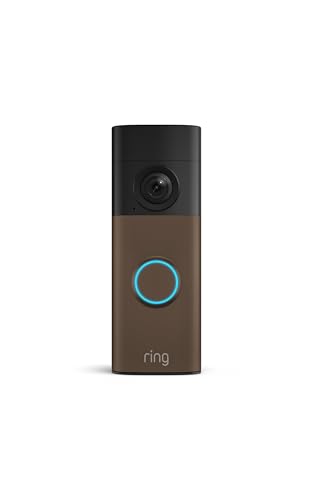
Ring Battery Doorbell 2K — Matte Mocha
This model targets existing Ring users who want the latest Retinal 2K sensor and up to 6x enhanced zoom without changing their app or routine. The matte mocha finish is the aesthetic variant; internally it shares the same wide-angle optics and built-in battery as the gray version.
- Retinal 2K resolution with up to 6x enhanced zoom lets you inspect faces at distance
- Built-in battery means no wiring and a straightforward peel-and-screw mount
- Full Ring ecosystem integration — Alexa announcements, shared household access
- Requires a Ring subscription to unlock most recorded-video features
Skip it if you refuse to pay ongoing fees for clips. If you already pay for Ring Protect, the zoom and resolution justify the upgrade from older 1080p units.
Orbitell 1080p Wireless Wi-Fi Video Doorbell
At under ten dollars this unit asks very little of your budget and delivers honest basics: 1080p video, two-way audio, night vision, cloud storage, and AI motion detection. It is for people who need a working doorbell camera today and will not fuss over ecosystem depth.
- 1080p with night vision and AI motion detection at an entry-level price
- Cloud storage included rather than locked behind a paid tier
- 2.4GHz Wi-Fi only — will not connect to 5GHz networks without a workaround
Skip it if you demand 2K clarity or need the device on a modern 5GHz-only band. As a secondary doorbell or a first attempt at smart entry monitoring, it clears the bar.
Ring Battery Doorbell 2K — Speckled Gray
Functionally identical to the matte mocha variant above, the speckled gray option exists for buyers who prefer a cooler, more neutral finish against light-colored siding or stone facades. The same Retinal 2K sensor, 6x zoom, two-way talk, and built-in battery apply.
- Identical 2K optics and zoom performance as the mocha version
- Speckled gray blends cleanly with modern minimalist exteriors
- Full Ring ecosystem compatibility and Alexa integration
- Subscription required for meaningful clip history
Skip it if color is irrelevant and you can find either finish on sale. Choose based on which hue matches your trim, not on any performance difference.
Blink Video Doorbell — Starter (Black, Sync Module Core Included)
This is the correct choice for someone new to Blink who wants a complete package out of the box. Head-to-toe HD view, two-year battery life on AA cells, and simple setup are the headline specs. The included Sync Module Core handles local storage and Wi-Fi bridging.
- Two-year battery life on standard AA cells cuts maintenance to near-zero
- Sync Module Core included, so local clip storage works without a subscription
- HD (1080p) resolution — one step below the 2K leaders in facial detail
Skip it if you want to zoom in heavily on distant faces or if you need 2K as a minimum. For a no-fuss, subscription-free entry point, it is dependable.
Google Nest Doorbell — Wired, 3rd Gen (Snow)
For households already running Google Home, this is the most integrated option. 2K video, live view on any Google display, and three hours of free event history from the Nest app make it a compelling wired choice at a premium price.
- 2K video with head-to-toe aspect ratio optimized for doorbell perspective
- Three hours of free event history without a subscription
- Native Google Home, Assistant, and Nest Display integration
- Wired-only installation; requires existing doorbell wiring at the frame
Skip it if you are a renter or if your entryway has no low-voltage wiring. The price also demands you are already inside the Google ecosystem; outside it, cheaper rivals offer comparable specs.
Tapo D225 — Best Wired-or-Battery 2K+ Option
The D225 answers the limitation of its wireless sibling by offering both wired and battery-powered modes in one unit. The 2K+ sensor and included chime make it a strong value, and owner feedback highlights the sharpness advantage over pure 1080p competitors.
- 2K+ resolution with a chime included at a sub-$100 price
- Wired or battery flexibility covers both renters and homeowners
- Tapo app integration supports multi-camera household setups
- Limited third-party voice-assistant support compared to Ring or Google units
Skip it if you need deep Alexa or Google Home routines tied to your doorbell. For resolution and power-option versatility at this price, few rivals match it.
Blink Video Doorbell — Add-On (Black, No Sync Module)
This is the same hardware as the starter kit above, sold at a lower price because it omits the Sync Module Core. If you already own any Blink camera or the Sync Module separately, this add-on is the cheapest path to a Blink doorbell.
- Lowest price in the Blink lineup — $29.99 for the doorbell alone
- Two-year battery life and head-to-toe HD view identical to the starter kit
- Requires an existing Sync Module Core to function; unusable standalone
Skip it if you have no other Blink device, because buying the module separately erases the savings. For expansion in an existing Blink home, it is the obvious budget doorbell.
Buying Guide
Resolution and Field of View
Resolution alone does not guarantee a usable image; aspect ratio matters because a standard 16:9 frame at the door trims off the package you set down or the face looking up from below. Look for a head-to-toe or tall-aspect sensor at 2K or above if you want to identify people and parcels without digital zoom artifacts. A 160° diagonal angle, as on the Tapo D210, helps on narrow porches, but verify the vertical coverage independently from the horizontal figure.
Power: Battery, Wired, or Both
Battery-powered units are friendlier to renters and homes without an existing transformer, but they introduce a maintenance cycle — even two-year battery life means you will swap cells eventually. Wired models eliminate that chore but require 16-24V AC at the doorbell position, which means drilling and possibly hiring an electrician. Dual-mode units like the Tapo D225 let you start wireless and go wired later, which suits people who plan a future renovation.
Ecosystem and Subscription Costs
The sticker price is rarely the full story. Ring bundles features behind a monthly plan; Google gives three hours of free event history and locks longer storage behind Nest Aware; Blink and Tapo lean toward local microSD or USB storage that costs nothing after purchase. Before buying, confirm whether your chosen model works inside the voice-assistant and smart-home platform you already use, or whether it will live as a separate app notification on your phone.
Our Verdict
Top pick: the Tapo D225 offers the best balance of 2K+ resolution, dual power options, and a low total cost of ownership without mandatory fees. Budget pick: the Blink Video Doorbell Starter at $35.99 provides a complete kit with two-year battery life and local storage for under forty dollars. If you are deeply embedded in the Google Home ecosystem and have wiring at your door, the Google Nest Doorbell (Wired, 3rd Gen) earns its premium through integration and free event history that rivals charge a monthly fee to match.
FAQ
Do I need a subscription for every smart doorbell?
No. Tapo and Blink models support local storage via microSD or Sync Module without a recurring fee. Ring and Google Nest require a subscription to unlock extended clip history, though basic live view and motion alerts work free.
Can I install a wireless doorbell on brick or stucco?
Yes, but you will need masonry drill bits and appropriate wall anchors because the adhesive mounting pads assume flat siding. Wireless models do not require any wiring, which is their main advantage on thick or historic walls.
Is 2K resolution a meaningful upgrade over 1080p for a doorbell?
At typical porch distances of three to six feet, 2K gives you more pixel density for facial recognition and reading package labels. If your primary use is general motion alerts rather than identification, 1080p remains adequate and saves money.
What happens if my Wi-Fi goes down?
Most wireless doorbells stop sending alerts and cannot be accessed remotely until connectivity returns. Wired models with local chime transformers still ring the doorbell locally, and units with microSD or Sync Module storage will keep recording clips to review after the network recovers.