Key takeaways
- Large individual puddings: 70-76mm top diameter x 35-45mm depth. Ideal for serving with roast beef where a deep well is needed for gravy.
- Small/medium puddings: 60-68mm diameter x 25-32mm depth. Better for Toad in the Hole bites or children’s portions, but less dramatic rise.
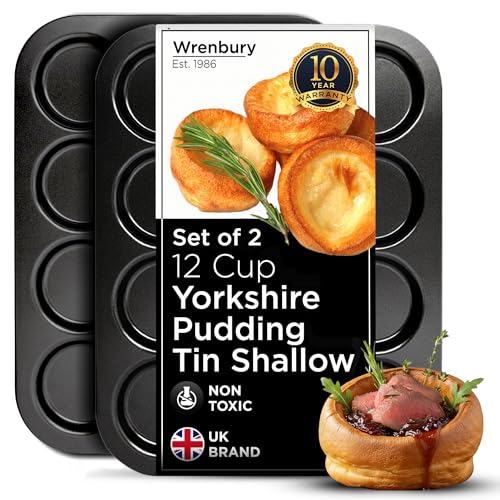
- 12-cup shallow trays: Usually 65mm x 20-25mm. These are actually bun/muffin tins marketed as Yorkshire trays — they work for mini puddings but will not give a classic tall, crisp edge.
The best Yorkshire pudding tin for British baking is a 4-cup heavy-gauge carbon steel tin with 70-76mm diameter cups, 35-45mm depth, and a dark, uncoated or high-quality PFOA-free non-stick finish — the MasterClass 4 Hole Deep Yorkshire Pudding Pan and the Prestige Inspire Heavy Gauge 4 Cup Yorkshire Pudding Tin are the most reliable all-rounders for crisp, well-risen puddings.
Our top picks


As an Amazon Associate we earn from qualifying purchases at no extra cost to you. Ratings are shown as listed on Amazon.
What Actually Matters for a Crisp, High Rise
Yorkshire puddings need intense, even heat transfer and room to climb. Shallow bun tins and thin muffin trays produce flat, pale puddings because the batter spreads before the structure sets. Depth, cup diameter, metal thickness, and finish determine the result more than brand alone.
1. Cup depth and diameter
Traditional Yorkshire pudding tins use large, deep cups. Look for:
- Large individual puddings: 70-76mm top diameter x 35-45mm depth. Ideal for serving with roast beef where a deep well is needed for gravy.
- Small/medium puddings: 60-68mm diameter x 25-32mm depth. Better for Toad in the Hole bites or children’s portions, but less dramatic rise.
- 12-cup shallow trays: Usually 65mm x 20-25mm. These are actually bun/muffin tins marketed as Yorkshire trays — they work for mini puddings but will not give a classic tall, crisp edge.
Deeper cups create steam pressure and force the batter upwards. If the cup is wider than 80mm, the batter thins out and browns before it can lift properly.
2. Metal thickness and heat response
Carbon steel remains the standard for British baking for a reason. It heats faster and hotter than aluminium or enamelled cast iron at the same oven temperature, which is critical for the initial sizzle when batter hits hot fat.
- 0.6mm – 0.8mm steel: Lightweight, heats very fast but warps easily above 220C and cools quickly when batter is added, leading to uneven bases.
- 1.0mm – 1.2mm heavy-gauge carbon steel: The sweet spot. Holds preheated heat long enough to set the base instantly, resists warping, and still responds quickly to oven temperature changes.
- Enamelled carbon steel / aluminised steel: Slightly slower heat response but excellent corrosion resistance.
- Cast aluminium or cast iron: Very even heat but heavy, slow to preheat, and requires more fat and preheat time to achieve the same crispness. Best for cooks who value durability over maximum lift.
3. Non-stick vs. uncoated
Traditional tins were plain tinned steel and relied on well-seasoned fat. Modern PFOA-free non-stick coatings make release easier but change browning:
- Double-layer quantum non-stick (e.g., Circulon, Prestige Inspire, MasterClass): Releases cleanly even with less oil, but a very slick, light-coloured coating can reduce edge crispness slightly. Look for dark, textured coatings for better browning.
- Uncoated heavy-gauge steel (e.g., Samuel Groves Mermaid, Falcon): Produces the darkest, crispiest crust and can be used at higher heat (up to 240C), but requires thorough greasing and will discolour with use. Avoid dishwasher use entirely.
- Enamel coated: Easy to clean and dishwasher tolerant, but chips if knocked and does not develop seasoning.
4. Dishwasher durability
Most carbon steel Yorkshire pudding tins are marketed as dishwasher safe yet degrade quickly with repeated machine washing. The alkaline detergent strips non-stick and accelerates edge rust on bare steel. If you must use a dishwasher, choose hard-anodised or enamelled options and expect coating life to shorten by 40-60% compared to hand washing. Hand wash with hot water, soft cloth, and no abrasive scourers to preserve release performance.
Spec Comparison: Leading Yorkshire Pudding Tins in 2026
These are widely available UK options that cover the main configurations for British baking. Dimensions and weights are manufacturer specifications for the current ranges.
| Model (Type) | Cups & Dimensions | Cup Diameter x Depth | Material / Thickness | Weight (approx.) | Max Oven Temp |
|---|---|---|---|---|---|
| MasterClass 4 Hole Deep Yorkshire Pudding Pan | 4-cup, 26 x 20cm | 76mm x 38mm | 1.0mm heavy-gauge carbon steel, PFOA-free non-stick | 420g | 220C |
| Prestige Inspire 4 Cup Yorkshire Pudding Tin | 4-cup, 28 x 18cm | 74mm x 35mm | 0.8mm carbon steel, double-layer non-stick | 365g | 240C |
| Circulon Momentum 4 Cup Yorkshire Pudding Tray | 4-cup, 27.5 x 19cm | 72mm x 36mm | 1.0mm carbon steel, Total non-stick system | 445g | 230C |
| Samuel Groves Mermaid 4 Cup Yorkshire Pudding Tin | 4-cup, 28 x 20cm | 75mm x 40mm | 1.2mm hard-anodised / plain aluminised steel, uncoated | 590g | 240C+ |
| Lakeland 12 Cup Mini Yorkshire Pudding Tray | 12-cup, 35 x 27cm | 66mm x 28mm | 0.6mm carbon steel, PFOA-free non-stick | 480g | 220C |
For a classic Sunday roast, the 76mm x 38mm deep cup is the clearest indicator of a true Yorkshire tin. The heavier 1.0mm+ tins hold preheated oil temperature 15-20C higher when cold batter is added, which prevents the soggy base that thin 0.6mm trays are known for.
Decision Matrix: Which Tin Fits Your Baking Style
| Your Situation | Recommended Tin Type | Why It Works |
|---|---|---|
| Weekly roast for 2-4, want tall, crisp puddings with minimal fuss | MasterClass or Circulon 4-cup heavy-gauge non-stick | Best balance of heat retention, release, and easy cleaning. Dark non-stick aids browning without seasoning. |
| Traditionalist / high-heat cook, comfortable with greasing and seasoning | Samuel Groves Mermaid 1.2mm uncoated | Thickest steel maintains sizzle, tolerates 240C and beef dripping, develops natural patina for superior crispness. |
| Limited storage or small oven (compact, combination ovens) | Prestige Inspire 4-cup | Slightly lighter and smaller footprint than heavy anodised tins, still deep enough for proper rise. |
| Batch baking for family / Toad in the Hole for 6+ | Lakeland 12-cup shallow + one 4-cup deep tin | Use deep tin for showcase puddings, shallow 12-cup for extra portions and batter testing. Avoid using 12-cup shallow alone if height matters. |
| Prioritise dishwasher convenience | Enamelled or hard-anodised non-stick (Circulon) | Coating withstands occasional machine washing better than standard carbon steel, though hand washing still extends life. |
Heat, Fat and Batter: Getting the Most From Any Tin
The tin only works if the method matches it. For heavy-gauge steel, preheat correctly and manage batter temperature.
- Preheat with fat, not dry: Add 1 tsp beef dripping, lard, or sunflower oil per cup (about 5ml). Place the empty tin with fat on the middle shelf at 220C fan / 240C conventional for 10-12 minutes until the fat is smoking and almost rippling. Thin tins need only 7-8 minutes; heavy 1.2mm tins need the full 12.
- Batter rest: 30 minutes at room temperature minimum, or 2 hours chilled then bring back to room temperature. Cold batter in hot fat lowers tin temperature by up to 30C on a thin tray, stalling the lift. Heavy tins recover temperature in 90 seconds vs. 3+ minutes for thin tins.
- Fill level: Fill 1/3 to 1/2 full (about 35-45ml per large cup). Overfilling causes overflow and steaming rather than crisping.
- Do not open the oven: Bake 20-25 minutes for large cups, 12-15 minutes for mini cups, without opening the door for the first 15 minutes or the structure will collapse.
Durability and Ownership Realities
Yorkshire pudding tins fail in predictable ways. Knowing what wears first helps you maintain performance.
- Non-stick dulling: The first failure point is the centre of each cup where fat pools and steel wool or metal utensils abrade the coating. Use silicone-tipped tongs or wooden utensils and never cut puddings in the tin. Once food begins to stick in the centre despite greasing, the coating is spent — typically after 150-200 uses with hand washing, or 60-80 with regular dishwasher cycles.
- Warping: Thin 0.6mm trays warp permanently if plunged from a 220C oven into cold water. Always cool for 10 minutes before washing, even if you hand wash.
- Rust on rims and rivets: Uncoated and aluminised steel will show orange spots on folded rims if left damp. Towel dry immediately after washing and warm in a low oven for 2 minutes to evaporate trapped moisture.
- Stacking damage: Stacking tins without protection scratches the interior coating. Store with a tea towel or baking paper between tins.
Simple Maintenance Routine (Reason for Each Step)
1. Cool tin on a wire rack, not a cold worktop with water — prevents thermal shock warping.
2. Soak 5 minutes in hot soapy water to soften baked-on oil — avoids abrasive scrubbing.
3. Wipe with soft sponge, no scourer — preserves non-stick texture that grips oil for next preheat.
4. Rinse, towel dry, then heat 2 minutes at 100C — removes moisture from seams where rust starts.
5. For uncoated tins, wipe a thin film of neutral oil while warm — maintains seasoning and prevents oxidation.
Cost Per Use: Why Thickness Pays Off
A heavy-gauge tin typically costs £12-£18 in the general UK market range, versus £6-£10 for a thin 12-cup shallow tray. If the heavy tin lasts 4 years with weekly use (about 200 bakes) before coating wear, the cost is around £0.06-£0.09 per use. A thin tin replaced every 18 months due to warping or sticking (about 75 bakes) costs £0.08-£0.13 per use and produces less consistent results. Weight and thickness are more predictive of long-term value than coating claims.
Frequently Asked Questions
Can I use a muffin tin instead of a Yorkshire pudding tin?
You can, but standard 12-hole muffin tins are usually 68-70mm x 30mm with sloped sides optimised for cakes, not batter rise. The wider, shallower shape gives less lift and softer sides. A dedicated deep Yorkshire tin with straighter, deeper cups will consistently give a higher, crisper result.
What size Yorkshire pudding tin is best for a standard British oven?
A 4-cup tin measuring 26-28cm long fits all standard 60cm ovens, including compact and fan ovens, with room for a roasting tin on the shelf below. The 12-cup trays at 35cm wide can block airflow in smaller ovens and cause uneven browning.
Is carbon steel or aluminium better for Yorkshire puddings?
Heavy-gauge carbon steel is better for Yorkshire puddings because it holds and transfers the high initial heat needed to create steam quickly. Aluminium heats evenly but needs a longer preheat and more fat to achieve the same sizzle, and light-coloured aluminium reflects heat, slowing browning.
Do I need to grease a non-stick Yorkshire pudding tin?
Yes. Even with non-stick, you must heat fat in the tin before adding batter. The hot fat is not just for release — it instantly fries the exterior of the batter to set the crust and start the rise. Without smoking-hot fat, puddings will be pale and sticky regardless of coating.