Key takeaways
- Meta Quest 3 vs PlayStation VR2 compared head to head, plus Quest 3S, Vive XR Elite and Quest Pro, to help you pick the right VR headset for you.
- Top Pick: Meta Quest 3 512GB
- Runner-up: PlayStation VR2
- Also consider: Meta Quest 3S 128GB
Meta Quest 3 and PlayStation VR2 sit at the centre of the current virtual reality market, yet they are built for very different buyers. One is a standalone headset that works without a console or a gaming computer, while the other is a wired headset designed to draw its power from a PlayStation 5. Both offer sharp displays, inside-out tracking and motion controllers, but setup, game libraries and long-session comfort are not the same.
This comparison puts the two headline headsets side by side, then adds three more options so the choice is not limited to a two-way contest. The Meta Quest 3S covers the budget end of standalone VR, the HTC Vive XR Elite offers a modular standalone and PC VR design, and the Meta Quest Pro adds eye and face tracking for buyers who want a premium standalone headset.
As an Amazon Associate, we earn from qualifying purchases.
Quick answer
Choose Meta Quest 3 if you want wireless standalone VR with a large game library and no console. Choose PlayStation VR2 if you already own a PlayStation 5 and want console VR with an OLED display and haptic feedback. Quest 3S suits first-time buyers on a tighter budget, while Vive XR Elite and Quest Pro suit buyers who want PC VR flexibility or premium tracking features.
1. Meta Quest 3 512GB

Meta Quest 3 is the most flexible headset here because it runs on its own hardware. The Snapdragon XR2 Gen 2 processor, 512GB of storage and 8GB of memory sit inside the headset, so games and apps download directly to the device. Pancake lenses and a per-eye resolution of 2064 by 2208 pixels give a sharp image, and full-colour passthrough lets the wearer see the room while using mixed reality apps. The field of view is listed at 110 degrees, and the refresh rate runs at 90 hertz with support for 120 hertz in supported content. Two Touch Plus controllers are included, battery life is rated at about 2.2 hours, and the headset weighs 515 grams. Quest 3 also connects to a gaming computer for PC VR, so it covers both standalone and PC play.
Specs
| Specification | Detail |
|---|---|
| Display | LCD with pancake lenses |
| Resolution per eye | 2064 by 2208 pixels |
| Processor | Snapdragon XR2 Gen 2 |
| Storage | 512 GB |
| Memory | 8 GB |
| Refresh rate | 90 hertz, up to 120 hertz |
| Battery life | About 2.2 hours |
| Weight | 515 grams |
2. PlayStation VR2
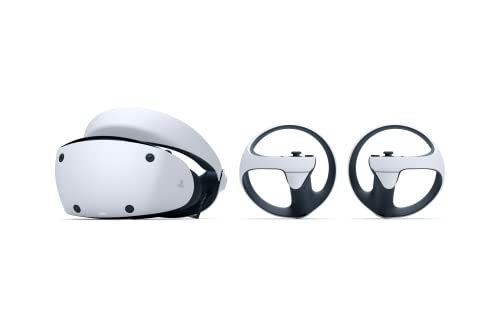
PlayStation VR2 is the console headset in this group, built around the PlayStation 5. It connects to the console with a single cable, and the console supplies the processing power, so the headset itself needs no large battery or onboard storage. The OLED display gives deep blacks and strong contrast, with a resolution of 2000 by 2040 pixels per eye and a refresh rate of 90 or 120 hertz. The field of view is listed at about 110 degrees, and eye tracking is built in. The Sense controllers add haptic feedback and adaptive triggers, and the headset itself includes haptic feedback as well. The headset weighs 560 grams and includes a built-in microphone and stereo headphones in the box. The main limit is the library: it plays PlayStation VR2 games, and it does not run the Quest library or PC VR games without a separate PC adapter and a compatible computer.
Specs
| Specification | Detail |
|---|---|
| Display | OLED |
| Resolution per eye | 2000 by 2040 pixels |
| Processor | Uses PlayStation 5 |
| Storage | Uses console storage |
| Memory | Not stated |
| Refresh rate | 90 or 120 hertz |
| Battery life | Wired, no battery |
| Weight | 560 grams |
3. Meta Quest 3S 128GB

Meta Quest 3S is the budget entry point into the same standalone ecosystem as Quest 3. It uses the same Snapdragon XR2 Gen 2 processor and the same Touch Plus controllers, and it runs the same library of Quest games and apps. The main differences are the display and the optics: Quest 3S uses Fresnel lenses and a per-eye resolution of 1832 by 1920 pixels, which is lower than Quest 3 but still clear for most games and media. Storage is 128GB, and memory is 8GB. Battery life is rated at about 2.5 hours for general use, the headset weighs 514 grams, and the refresh rate runs at 90 hertz with support for 120 hertz in supported content. Full-colour passthrough is included for mixed reality, although the lower resolution makes text and fine detail less crisp than on Quest 3.
Specs
| Specification | Detail |
|---|---|
| Display | LCD with Fresnel lenses |
| Resolution per eye | 1832 by 1920 pixels |
| Processor | Snapdragon XR2 Gen 2 |
| Storage | 128 GB |
| Memory | 8 GB |
| Refresh rate | 90 hertz, up to 120 hertz |
| Battery life | About 2.5 hours |
| Weight | 514 grams |
4. HTC Vive XR Elite

HTC Vive XR Elite is the most modular headset in this comparison. It works as a standalone headset with its own Android-based system, and it also supports PC VR through wired or wireless streaming. The display uses pancake lenses with a resolution of 1920 by 1920 pixels per eye and a refresh rate of 90 hertz. The field of view is listed at up to 110 degrees. Inside, a Snapdragon XR2 processor is paired with 12GB of memory and 128GB of storage. The rear battery cradle can be removed, leaving a lighter glasses-style form that needs a separate power source. With the cradle attached, the headset weighs about 625 grams, and battery life is rated at about two hours. Four tracking cameras and a depth sensor handle inside-out tracking, and the headset supports hand tracking as well as controllers.
Specs
| Specification | Detail |
|---|---|
| Display | LCD with pancake lenses |
| Resolution per eye | 1920 by 1920 pixels |
| Processor | Snapdragon XR2 |
| Storage | 128 GB |
| Memory | 12 GB |
| Refresh rate | 90 hertz |
| Battery life | About 2 hours |
| Weight | About 625 grams |
5. Meta Quest Pro 256GB
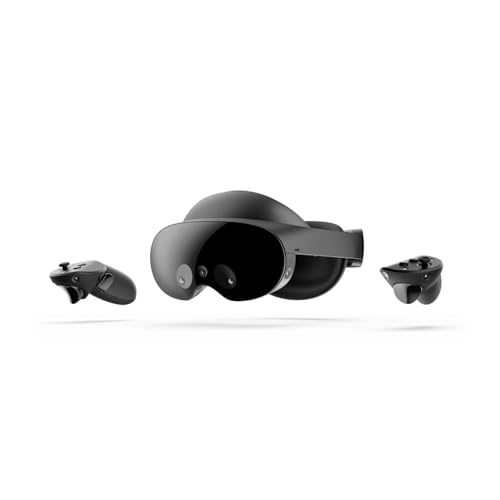
Meta Quest Pro is the premium standalone headset in the Meta range, aimed at buyers who want advanced tracking and a more open design. It uses a Snapdragon XR2 Plus processor with 12GB of memory and 256GB of storage. The display resolution is 1800 by 1920 pixels per eye, with a refresh rate of 90 hertz and pancake lenses. Eye tracking and face tracking are built in, which supports foveated rendering in supported apps and more expressive avatars in social spaces. The headset weighs 722 grams, heavier than Quest 3, and the open peripheral design lets some of the real room stay visible around the edges of the display. That design suits productivity and social use, but it is less immersive for games that rely on a sealed view. Self-tracking controllers are included, the charging dock is part of the standard package, and battery life is rated at about two hours.
Specs
| Specification | Detail |
|---|---|
| Display | LCD with pancake lenses |
| Resolution per eye | 1800 by 1920 pixels |
| Processor | Snapdragon XR2 Plus |
| Storage | 256 GB |
| Memory | 12 GB |
| Refresh rate | 90 hertz |
| Battery life | About 2 hours |
| Weight | 722 grams |
How to choose
Start with the hardware you already own. If you have a PlayStation 5 and want the simplest route into high-quality VR, PlayStation VR2 is the natural match, because the console does the heavy work and setup is a single cable. If you have no console and no gaming computer, a standalone Quest headset is the better starting point, because it needs nothing else to run. Quest 3S is the budget choice, and Quest 3 is the sharper, more capable version of the same idea. Think next about where you will play. Standalone headsets suit living rooms, travel and shared spaces, because there is no cable to manage. PlayStation VR2 suits a fixed spot near the console. PC VR buyers should look at Vive XR Elite or Quest 3, both of which support streaming from a gaming computer.
Who should skip
Skip PlayStation VR2 if you do not own a PlayStation 5 and do not plan to buy one, because the headset needs the console to run. Skip Quest 3S if sharp text and mixed reality detail are a priority, because the Fresnel lenses and lower resolution are a visible step down from Quest 3. Skip Vive XR Elite if you mainly want a large standalone game library, because its catalogue is smaller than the Quest library and its strengths are in PC VR and professional use. Skip Quest Pro if you want the best value for gaming alone, because its eye and face tracking add cost without changing most games, and it is heavier than Quest 3. Skip Quest 3 if you only want occasional casual play, because Quest 3S runs the same library for less.
FAQ
Do I need a console or a computer for Meta Quest 3?
No. Meta Quest 3 runs standalone games and apps on its own processor and storage, with no console or computer required. A gaming computer is optional, and it adds PC VR games through a link cable or wireless streaming.
Does PlayStation VR2 work without a PlayStation 5?
No. PlayStation VR2 needs a PlayStation 5 to run, and it connects to the console with a single cable. A separate PC adapter can add SteamVR access on a compatible Windows computer, but the headset does not run standalone.
Is Quest 3S a good first VR headset?
Yes, for most first-time buyers. Quest 3S runs the same library and uses the same processor as Quest 3, with a lower resolution display and Fresnel lenses. It is a sensible first headset when budget matters more than the sharpest mixed reality image.
Can these headsets be used for PC VR?
Quest 3, Quest 3S, Quest Pro and Vive XR Elite all support PC VR through streaming from a compatible gaming computer. PlayStation VR2 needs the separate PC adapter and a compatible Windows computer for SteamVR access.
Final verdict
For most buyers, Meta Quest 3 is the best all-round pick. It is wireless, it runs a large standalone library, it supports PC VR, and its display is sharper than Quest 3S. PlayStation VR2 is the better pick for PlayStation 5 owners who want console VR with an OLED display, eye tracking and strong haptics, and who are happy with a wired setup and a console-only library. Quest 3S is the right choice when budget is the deciding factor, Vive XR Elite suits buyers who want modular standalone and PC VR in one device, and Quest Pro suits buyers who specifically want eye and face tracking.
More from Amazon
Programs that pair well with the guide above. Offers and eligibility are set by Amazon and may change.
Free shipping on eligible items, Prime Video and more. Eligible new members can start with a free trial.
Start a Prime free trialAudiobooks and podcasts to listen to on the go. Eligible new members can start with a free trial.
Try Audible freeAd-free music streaming. Eligible new subscribers can start with a free trial.
Try Music Unlimited freeA free business account with business pricing and bulk-buying tools for work, shop or home office.
Create a business accountAs an Amazon Associate we earn from qualifying purchases.