Key takeaways
- Ten wireless earbuds for running compared by listing details, from Soundcore Sport X20 and Powerbeats Pro 2 to open-ear and hook-fit models with IP ratings.
For running, pick earbuds that stay put and resist sweat before worrying about sound: the Soundcore Sport X20 (IP68, adjustable hooks) and the Beats Powerbeats Pro 2 (earhooks and heart rate monitoring) are the clearest sport-first designs in this group, while the Soundcore V20i and TRAUSI suit runners who want open ears. Ten listings are compared below using only what their titles say, so gaps are flagged rather than filled in from memory. Check the fit style and water rating on each page, and keep the return window in mind in case the shape does not suit your ears.
Quick picks
Our top picks

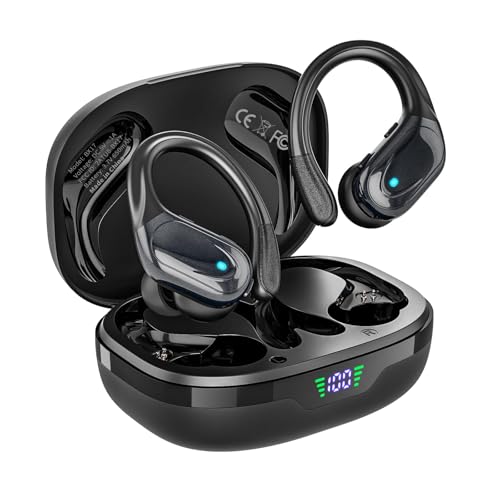


As an Amazon Associate we earn from qualifying purchases at no extra cost to you.
- Most weatherproof on paper: Soundcore Sport X20, listed at IP68
- Heart rate built in: Beats Powerbeats Pro 2
- Awareness of surroundings: Soundcore V20i and TRAUSI, both open-ear
- Biggest battery claims: HAOYUYAN, bmani, TRAUSI and PocBuds, at 80 hours each
- Wireless charging case: PocBuds
Comparison table
| Model | Key point from title | Best for |
|---|---|---|
| Soundcore V20i | Open ear, IP55, 36H | Aware outdoor runs |
| HAOYUYAN | 80H, IPX7, ANC label | Long battery |
| bmani | 80H, hook, mic, buttons | Button control |
| TRAUSI | Open ear, ENC, IPX7 | Calls on the move |
| PocBuds | Wireless charging case | Pad charging |
| Boean | 16H, BT 5.3, IPX7 | Casual use |
| Powerbeats Pro 2 | Heart rate, earhooks | Tracking workouts |
| Sport X20 | IP68, adjustable hooks | Sweaty or wet runs |
| JLab Go Sport+ | Workout true wireless | Short-spec shortlist |
| TOZO A1 | Light in-ear, IPX5, app EQ | Light gym use |
Every model, with pros and cons
Soundcore V20i by Anker (open-ear)
The title describes an open-ear design with adjustable hooks, an IP55 rating, 36 hours of playtime (presumably with the case), Bluetooth 5.4 and multipoint connection. Open-ear designs leave the ear canal uncovered, which many runners prefer on roads and paths. IP55 is a lower dust and water rating than the IP68 on the Sport X20 below, so sweat resistance is the realistic expectation. Check the listing for what each rating covers.
Pros
- Open-ear fit lets outside sound in
- Multipoint pairing named in the title
Cons
- IP55 is a lower rating than IP68
- Open designs usually let more bass escape
Who it’s for: Road and trail runners who want to keep hearing traffic and other people, and who will confirm the fit on the listing and check how much bass they are willing to give up.
HAOYUYAN Sports Bluetooth Earbuds
HAOYUYAN lists an 80-hour playtime figure, an LED power display on the case, IPX7 waterproofing and a noise canceling headset label. The 80 hours probably includes recharges from the case, so ask what a single charge gives. The title also pairs noise cancelling with running, which deserves caution outdoors because it can mask approaching vehicles. Check the warranty page, since the title says nothing about it.
Pros
- IPX7 water protection listed
- LED display shows case battery
Cons
- Noise cancelling is not ideal on busy roads
- Single-charge time is not stated
Who it’s for: Gym runners and treadmill users who prefer a sealed fit and a big battery figure, and who run indoors or on quiet paths.
bmani Over-Ear Hook Earbuds
bmani offers 80 hours of playtime with a case that has an LED display, an over-ear hook with a mic, stereo sound and easy button controls. Physical buttons are the useful part for runners, because touch controls can misfire with sweaty fingers. The title does not give a water rating, so do not assume it will survive heavy rain.
Pros
- Physical button controls
- Hook design aimed at running
Cons
- No water rating in the title
- Single-charge time not stated
Who it’s for: People who want simple buttons and a hook fit rather than a touch-control stem, particularly with damp or gloved fingers.
TRAUSI Open-Ear Wireless Earbuds
TRAUSI shares an 80-hour playtime figure with a handful of rivals and adds ENC noise cancelling for calls, fast charging, IPX7 and an earhook. The title also calls it open ear, which keeps surroundings audible. ENC usually refers to call noise reduction rather than blocking outside sound, so the open-ear fit and the cancelling label are not contradictory. A quick read of the listing will confirm which it is.
Pros
- IPX7 and fast charging listed
- Open-ear and hook fit
Cons
- ENC meaning needs checking on the page
- 80-hour figure likely includes case charges
Who it’s for: Runners who take phone calls on the move and want to stay aware outdoors, once they have read what ENC means on the page.
PocBuds Over-Ear Wireless Earbuds
PocBuds lists 80 hours of playtime, a wireless charging case with a digital display, earhooks, deep bass and IPX7. Wireless charging is rare in this group, and useful if you already own a charging pad. The title also lists TV, phone and laptop, so these are general-purpose rather than purely sporty.
Pros
- Wireless charging case
- Digital display on the case
Cons
- General-purpose wording, not only for runners
- Playtime figure likely counts case recharges
Who it’s for: Shoppers who like case charging on a pad and want a hook fit, and who also plan to use the buds for TV or laptop audio.
Boean Bluetooth Running Headphones
Boean lists 16 hours of playtime, Bluetooth 5.3, IPX7 and an “AI Music Generation” feature that is hard to judge from a title. The 16 hours is the shortest battery claim in the group, though it may be a more modest and realistic figure than the 80-hour headlines. It positions itself for running and sports through its title text.
Pros
- IPX7 listed
- Bluetooth 5.3 named
Cons
- Shortest playtime claim here
- AI music feature is unclear
Who it’s for: Casual runners who care more about water protection than battery figures, and who do not mind a shorter run time between case charges.
Beats Powerbeats Pro 2
Beats describes noise cancelling workout earbuds with secure-fit earhooks, up to 45 hours with the charging case, sweat and water resistance and heart rate monitoring, in Quick Sand. The heart rate sensor is the standout in this list. The title gives no IP number, so water resistance details sit on the page.
Pros
- Heart rate monitoring in the title
- Secure-fit earhooks
Cons
- No IP rating given in the title
- Noise cancelling needs care on roads
Who it’s for: Runners who want built-in heart rate data without a separate chest strap.
Soundcore Sport X20 by Anker
The X20 lists noise cancelling, rotatable and extendable ear hooks, IP68 waterproof, sweatproof and dustproof protection and 48 hours of playtime. IP68 is the highest water rating in this group. The adjustable hooks suit varying ear shapes, which matters because poor fit is the main reason runners return earbuds.
Pros
- IP68 rating stated
- Adjustable, rotating ear hooks
Cons
- Noise cancelling can hide road noise
- 48-hour figure probably counts the case
Who it’s for: Runners who sweat heavily or train in wet weather and want a fit they can adjust, and who accept that noise cancelling needs care outdoors.
JLab Go Sport+ True Wireless Earbuds
JLab’s listing is short: true wireless workout earbuds with Bluetooth sport earbuds, clear calling and a Graphite colour. No playtime or water rating appears in the title. That leaves a lot to confirm, though the name and form point to workout use. It is the least documented title here, so treat it as a candidate rather than a conclusion.
Pros
- Workout-focused name
- Clear calling noted
Cons
- No battery or IP figures in the title
- Fewest details to compare
Who it’s for: Buyers who will read the listing page closely before deciding.
TOZO A1 Wireless Earbuds
TOZO lists Bluetooth 5.3, a light in-ear design, IPX5, two mics for AI calls, a charging case and a 32-preset EQ in the app. It is the only entry here that is not marketed for sport in the title, and it has no hook, so the fit relies on the tips. IPX5 handles sweat and splashes but offers less than IPX7.
Pros
- Light in-ear design
- 32 EQ presets via app
Cons
- No hook or wing to hold it in place
- Not described as a sport model
Who it’s for: Casual joggers and gym users who prioritise weight and sound tuning.
How we picked these
We selected listings whose titles pitch wireless earbuds for running, workouts or sports and compared the claims each title makes: fit style, water rating, battery and extras. Our basis is published specifications, manufacturer documentation and buyer reviews. Nobody on the team used or measured these units. Where a figure probably includes the charging case, we say so, and we avoid ranking on sound quality, which we cannot judge from a title. Several listings share nearly identical wording, so we group them by what actually differs.
What to look for in running earbuds
Fit: hooks, wings or tips
For running, the fit style matters more than any spec. Earhooks, like those on the Powerbeats Pro 2, X20 and TRAUSI, loop over the ear and resist bouncing. Plain in-ear designs, like the TOZO A1, depend entirely on the tip seal. If you are unsure, look for a return window and try a short jog around the block before committing. Eartip size matters too: the tips that ship in the box may not be the right size, so check whether spare sizes come with the pair.
Water and sweat ratings
IP ratings are not interchangeable. IPX5 covers water jets and splashes, IPX7 allows temporary immersion, and IP68 adds dust protection and stronger water claims. For ordinary sweat, IPX4 and up is usually plenty, but a long rainy run is easier on a higher number. Remember, the case may not carry the same rating as the earbuds. A rating also describes a new product, not one that has been through months of salty sweat, so rinse and dry them now and then if the maker allows it.
Open-ear versus noise cancelling
Noise cancelling is nice on a treadmill or a bus, but it can hide cars, bikes and other runners outdoors. Open-ear designs keep surroundings audible at the price of thinner bass. Pick based on where you run most. If you train on roads, lower the volume and keep at least one ear aware of traffic. Some people prefer to wear a single earbud on busy stretches, which only works if the pair supports single-bud use, so check the listing.
Battery claims: read them carefully
Playtime is the most inflated number in this category. Four titles quote 80 hours, but that figure normally combines the earbuds with several recharges from the case. A single charge is usually a fraction of that. Worked example: if a listing says 80H with a case and you run three times a week for an hour, the real question is how often the case itself needs plugging in, not the headline number.
Mistakes buyers make
The most common error is choosing on the biggest playtime number, then finding that it counts the case. Another is wearing noise cancelling on busy roads. Runners also skip the fit check, so a pair that falls out at the first stride goes back in the drawer. Others pick the sleekest case, then find it too big for a running belt or shorts pocket. Another common slip is ignoring the call microphone, which matters if you take work calls on a walk. Finally, check the water rating of the case as well as the buds, and wipe both after sweaty sessions.
Verdict
If you only want one pair, the Soundcore Sport X20 is the safest paper pick for sweat and adjustable fit, and the Powerbeats Pro 2 is the choice for heart rate data. Pick the Soundcore V20i or TRAUSI for open-ear awareness. Read the full listing before ordering any of them, confirm the per-charge battery time, and make sure the return policy covers a fit trial. For a first pair, an adjustable hook is the lowest-risk way to find out what suits your ears.
Related guides
- Sony Wh-1000Xm5 Vs Bose Quietcomfort Ultra Headphones
- Bose Quietcomfort Ultra Vs Bose 700 Headphones
- Carbon Fiber Folding Electric Wheelchairs
Frequently asked questions
Are open-ear earbuds better for running?
They are often the safer choice outdoors because the ear canal stays uncovered, so you can still hear traffic, bikes and other people. The trade-off is that bass is usually thinner and some sound leaks. If you mainly run on a treadmill or in a quiet park, a sealed design with noise cancelling can sound fuller and work just as well.
What IP rating do running earbuds need?
For sweat alone, a moderate rating such as IPX4 is usually enough. For heavy rain, choose IPX7 or higher. IP68 adds dust protection and stronger water claims. Check whether the rating covers the case as well as the earbuds, because many titles only describe the buds, and wipe both after sweaty sessions to keep the contacts clean.
Does 80 hours of playtime mean 80 hours per charge?
Almost certainly not. Titles that quote 80 hours normally count the charging case’s recharges. A single charge of the earbuds themselves is often a small fraction of that. If you run for an hour at a time, this probably does not matter, but check the product page for the per-charge figure before you rely on the headline number.
Is noise cancelling safe for outdoor running?
It can be risky if it blocks traffic noise, so use it carefully. Many runners keep volume low, choose a quiet route, or use transparency mode if the model offers it. Open-ear designs are an alternative. Follow local rules about headphones when cycling or running near roads, and take one earbud out if you feel unsure.
Are hooks better than a plain in-ear fit?
Hooks add stability because they loop over the ear and keep the unit from falling out as you stride. Plain in-ear designs are lighter and fine for gym work or light jogging, but rely on the ear tips for a seal. If you run often, hooks are the more forgiving choice; if you prefer minimal weight, try a plain design and check the return policy.