The best cordless drill for most homeowners in 2026 is the DeWalt DCD800 20V Max XR, a compact brushless drill that handles shelves, decks and furniture assembly. Heavy users and pros usually choose the Milwaukee M18 Fuel for its power and durability, while the Ryobi ONE+ HP drill is the budget route into a large battery platform. This guide compares seven drills by voltage, motor type and chuck size, and explains how to choose a brand ecosystem.
Our top picks


As an Amazon Associate we earn from qualifying purchases at no extra cost to you.
Quick Comparison of the Best Cordless Drills
| Pick | Best for | Voltage | Chuck | Motor | Price range |
|---|---|---|---|---|---|
| DeWalt DCD800 XR | Best overall | 20V Max | 1/2 in | Brushless | Mid-range |
| Milwaukee M18 Fuel 2903 | Best for heavy use | 18V | 1/2 in | Brushless | Premium |
| Makita XFD131 | Best for finish work | 18V LXT | 1/2 in | Brushless | Mid-range |
| Ryobi ONE+ HP brushless | Best value | 18V | 1/2 in | Brushless | Budget |
| Milwaukee M12 Fuel 3403 | Best compact | 12V | 1/2 in | Brushless | Mid-range |
| Ridgid 18V brushless | Best warranty | 18V | 1/2 in | Brushless | Mid-range |
| Black+Decker LDX120C | Best entry level | 20V Max | 3/8 in | Brushed | Budget |
Specifications come from manufacturers’ spec sheets and may change between model revisions, so check the exact kit before you buy.
Best Overall: DeWalt DCD800 20V Max XR
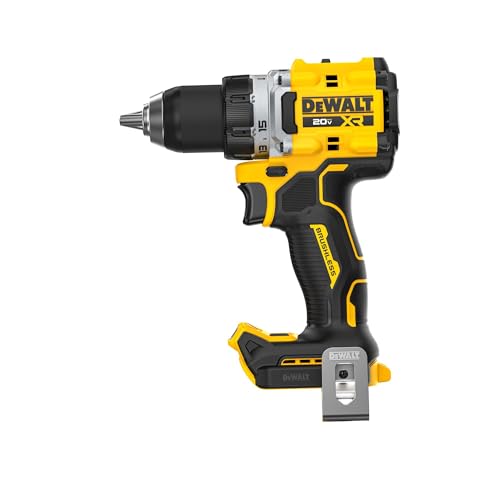
The DCD800 is a compact, brushless drill with a 1/2 inch chuck that suits drilling into wood and driving long screws. Compared with older DeWalt models it is shorter and lighter, which helps overhead work and tight spaces. It sits on the 20V Max battery platform, with a wide range of other tools. It is not the strongest option for heavy construction, but it covers nearly every home task.
Best for Heavy Use: Milwaukee M18 Fuel 2903
The M18 Fuel drill is known for high torque, around 1,200 inch-pounds per Milwaukee’s specification, and a durable brushless motor. Contractors tend to choose it for drilling large holes and driving lag screws. The tools are priced at the premium end and are slightly heavier than the DeWalt, so occasional users may not need them.
Best for Finish Work: Makita XFD131
Makita’s XFD131 is well regarded for smooth, quiet operation and fine control at low speed. That makes it useful for cabinet installation, trim and furniture where a smooth trigger matters. It has less outright power than Milwaukee’s heavy-duty drill but a comfortable balance.
Best Value: Ryobi ONE+ HP Brushless
Ryobi’s HP line has a brushless motor and a 1/2 inch chuck at a lower price, with a very large range of compatible tools on the ONE+ battery. It is a good choice for homeowners who plan to own many tools. The build is less rugged than professional lines, and continuous heavy use will shorten its life.
Best Compact: Milwaukee M12 Fuel 3403
The 12V M12 Fuel drill is smaller and lighter than 18V and 20V models, which is useful for overhead work and tight spots like cabinets. It handles most household drilling and driving. For large holes or long sessions, step up to an 18V or 20V drill.
Best Warranty: Ridgid 18V Brushless
Ridgid’s drills are known for a lifetime service agreement, which is available when you register the tools. They are a good option if you value long-term coverage. Check the current terms on the maker’s site, because conditions change.
Best Entry Level: Black+Decker LDX120C
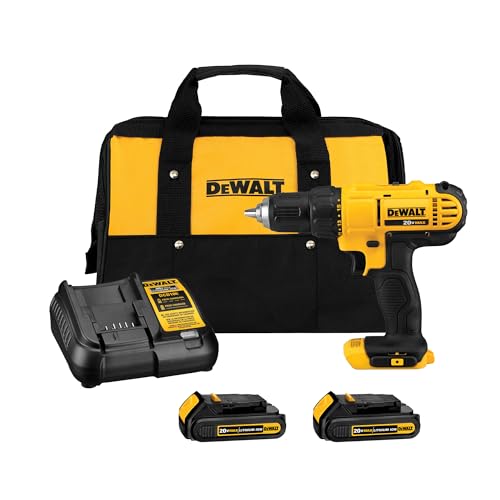
This basic 20V Max drill has a 3/8 inch chuck and a brushed motor. It suits hanging pictures, assembling furniture and light chores. It lacks the power and run time of the brushless models, and it is limited for long screws.
How to Choose a Cordless Drill
Choose a battery platform first
You are buying into a battery system, not just a drill. Check that the brand has the other tools you may want, such as an impact driver, circular saw or lights. Buying a kit with two batteries saves money over buying them separately.
Choose brushless if possible
Brushless motors run cooler, last longer and give more run time per charge than brushed motors. Brushless drills usually cost somewhat more but are a better long-term pick.
Look at torque and speed
Torque is measured in inch-pounds or unit watts out. For home use, 400 to 600 inch-pounds is enough. A two-speed gearbox, with a low range under 500 RPM for driving and a high range around 1,800 to 2,000 RPM for drilling, is standard.
Match battery size to the job
A 2.0 Ah battery is light for quick tasks, while 4.0 to 5.0 Ah batteries give longer run time but add weight. For overhead work, lighter is better. For decks, bigger is better.
Check ergonomics
Weight, balance and grip affect fatigue. A drill under 4 pounds with its battery is comfortable for most users. Try to hold it, or check the weight spec, before buying.
Worked Example: Run Time for a Deck Project
Driving a 3 inch deck screw uses roughly 0.5 to 1 percent of a 5.0 Ah battery on an 18V drill. A deck needing 800 screws is a rough 4 to 8 full battery charges at the high end, which is why two batteries and a charger are valuable. A kit with two 5.0 Ah batteries would typically get through the job with a lunch-break recharge.
Frequently Asked Questions
What is the difference between a drill and an impact driver?
A drill spins steadily and uses a chuck for bits. An impact driver adds rotational hammering and uses hex bits, so it drives screws harder. Many users buy both as a combo kit.
Is 18V or 20V better?
They are essentially the same. The 20V Max label refers to peak voltage with no load, while 18V refers to nominal. Compare torque and battery capacity instead.
Are brushless drills worth the extra cost?
Usually yes. They run more efficiently, last longer and handle heavy loads better. For occasional light use, a brushed drill can be enough.
What size chuck do I need?
A 1/2 inch chuck takes larger bits and is better for general use. A 3/8 inch chuck is lighter and fine for small jobs.
How long do cordless drill batteries last?
Lithium-ion batteries commonly last several hundred charge cycles, which is a few years for most users. Storing them partly charged and avoiding heat extends life.
Can a cordless drill drive concrete anchors?
Only with a hammer drill mode and masonry bits, and heavy use is better handled by a rotary hammer. Check that your drill has a hammer setting before attempting masonry.
More from Amazon
Programs that pair well with the guide above. Offers and eligibility are set by Amazon and may change.
Free shipping on eligible items, Prime Video and more. Eligible new members can start with a free trial.
Start a Prime free trialAudiobooks and podcasts to listen to on the go. Eligible new members can start with a free trial.
Try Audible freeAd-free music streaming. Eligible new subscribers can start with a free trial.
Try Music Unlimited freeA free business account with business pricing and bulk-buying tools for work, shop or home office.
Create a business accountAs an Amazon Associate we earn from qualifying purchases.