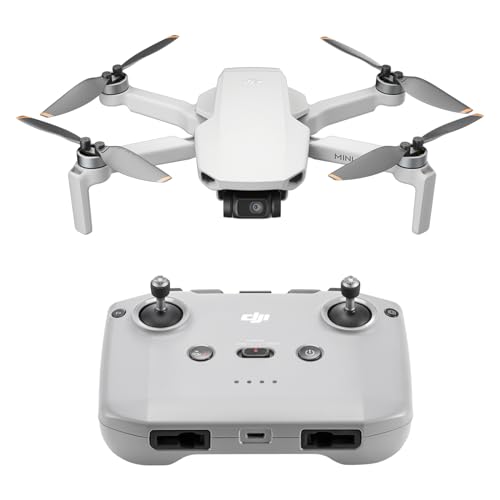
The best drone for most beginners in 2026 is the DJI Mini 4K, because it weighs about 246 g, flies for around 31 minutes per battery and uses a real controller that teaches skills transferable to any drone. If you want maximum crash protection and hands-free shooting, the DJI Neo 2 is easier; if you want better image quality plus safety, the DJI Flip is the step up.
Our top picks



As an Amazon Associate we earn from qualifying purchases at no extra cost to you.
Quick Comparison of Beginner Drones
| Pick | Best for | Weight | Video | Rated flight time | Obstacle sensing | Price range |
|---|---|---|---|---|---|---|
| DJI Mini 4K | Learning to fly | about 246 g | 4K at 30 fps | about 31 min | Downward only | Budget to mid |
| DJI Neo 2 | Easiest, safest, selfies | about 151 g | 4K at 60 fps | about 19 min | All-around | Budget |
| DJI Flip | Best image and safety | under 249 g | 4K at 60 fps HDR | about 31 min | Forward | Mid to upper-mid |
| Potensic Atom 2 | Non-DJI alternative | under 249 g | 4K, 3-axis gimbal | See maker spec | Not listed here | Mid |
| DJI Mini 4 Pro | Won’t outgrow it | under 249 g | 4K at 100 fps | Longer than Mini 4K | All-around | Premium |
Specs reflect the manufacturers’ published sheets; real flight times are usually shorter than the rated figures.
Best Overall for Learning: DJI Mini 4K
The Mini 4K has a 3-axis gimbal, GPS return-to-home and strong wind resistance for its size. Because it uses a traditional controller, you learn throttle, yaw and altitude control properly. Its sub-250 g weight keeps it in the lightest regulatory class in many countries, though you should always check local rules.
Who it suits: first-time pilots who want to progress to bigger drones. Main trade-off: no forward obstacle sensing, so you must fly in open space and watch trees and walls.
Best for Safety and Ease: DJI Neo 2
The Neo 2 is tiny at about 151 g, with propeller guards, all-around obstacle sensing and palm takeoff. You can launch it from your hand and have it follow you with gestures or voice, which suits selfies and family clips.
Who it suits: absolute beginners, parents and travelers. Main trade-off: real-world flight time is closer to 9 to 13 minutes than the 19 minutes rated, and phone-only control has a limited range compared with a controller.
Best Image Quality With Safety: DJI Flip
The Flip uses a 1/1.3-inch sensor, records 4K at 60 fps HDR and has full foldable propeller guards, with AI subject tracking and palm launch. It is as close as you get to a safe drone with a camera that satisfies more experienced shooters.
Who it suits: beginners who care about footage quality more than the lowest price. Main trade-off: it costs noticeably more than the Mini 4K and Neo 2.
Best Non-DJI Option: Potensic Atom 2
Potensic’s Atom 2 is the most common alternative for buyers who want a sub-250 g drone with a gimbal from another brand. It suits people who want to avoid regional DJI availability issues. Check the maker’s spec sheet for current flight time and sensing features before you buy.
Best Long-Term Pick: DJI Mini 4 Pro
With omnidirectional sensing and a more capable camera, the Mini 4 Pro is the drone you will not outgrow. It costs well above the entry level, so it is best for beginners who are certain they will keep flying.
Which Drone Fits Your Situation?
| Situation | Choose |
|---|---|
| Tight budget, want to learn properly | DJI Mini 4K |
| Crash-prone, young family, selfies | DJI Neo 2 |
| Travel photography and video | DJI Flip |
| Serious about the hobby long term | DJI Mini 4 Pro |
How to Choose a Beginner Drone
Weight and registration
Drones under 250 g face lighter rules in many places, but you may still need to register or take a short test. Check your local aviation authority before the first flight.
Flight time
Count on 70 to 80 percent of the rated time in real use. Buy a combo with at least two batteries so a session lasts 40 minutes rather than 20.
Obstacle sensing
Sensors reduce crashes but never remove them. Learn in an open field, away from people and power lines, whatever the drone offers.
Controller type
A dedicated controller gives more range and better control than a phone alone. Phone-only drones are simpler but limit distance and precision.
Camera and gimbal
A 3-axis gimbal produces smoother video than a 2-axis one. If footage matters, prioritize the gimbal and sensor size over headline resolution.
Mistakes First-Time Pilots Make
- Flying out of line of sight, which is often illegal and risky.
- Skipping the compass and firmware update before the first flight.
- Taking off in strong wind; check the drone’s wind resistance level first.
- Forgetting spare propellers, the part that breaks most often.
Your First Week: A Practice Plan
Most early crashes happen in the first five flights, so plan a simple routine. Day one, hover at eye level over grass and practice slow turns. Day two, fly a square pattern at 10 meters while keeping the drone’s nose pointed away from you. Day three, practice return-to-home with the drone at 30 meters in an empty field. Only then try tracking shots, because following a moving subject adds a second task.
Worked Example: Real Flight Time
If a battery is rated for 31 minutes, expect about 22 to 25 minutes of usable flying after you reserve 20 percent for return-to-home and account for wind. For a one-hour outing you want two to three batteries. With the Neo 2, where real flights are around 9 to 13 minutes, a one-hour session needs four or five. This is why combos with extra batteries are usually the better buy than a bare drone.
Wind and Weather
Small drones struggle in gusts. Manufacturers list a wind resistance level, but you should land long before the limit. Rain and fog damage electronics and also confuse vision sensors, so wait for a clear day.
Where You Can Fly
Stay away from airports, crowds, stadiums, power lines and other restricted places. Use your drone maker’s no-fly map and your national regulator’s app. Keep the drone in line of sight, and respect privacy by not hovering over private property.
Ownership Costs
Budget for propellers, spare batteries, a microSD card and possibly a carrying case. Propellers are inexpensive but are the most commonly replaced part. A landing pad keeps dust out of motors and helps vision sensors. Firmware updates are free and often fix flight issues.
Frequently Asked Questions
What is the easiest drone to fly for a beginner?
The DJI Neo 2 is the easiest thanks to propeller guards, all-around sensing and palm takeoff. The Mini 4K is easier to grow with because it uses a standard controller.
Do I need to register a beginner drone?
It depends on your country and the drone’s weight. Many regions require registration at or above 250 g, and some require it for any camera drone, so check your national aviation authority.
How long do beginner drone batteries last?
Rated times run from about 19 to 31 minutes, but real flights are shorter. Spare batteries are the cheapest upgrade you can buy.
Is a drone with a controller better than phone-only control?
Usually yes. A controller offers more range and more precise inputs, while phone-only control is simpler and cheaper but limited in distance.
Can I fly a drone indoors?
Small drones with propeller guards, like the Neo 2, can fly in large rooms, but GPS-reliant drones are less stable indoors. Keep a safe distance from people and fragile objects.
Are cheap drones worth buying?
Very cheap models often lack GPS and stable cameras. A modest step up buys better stability, return-to-home and safer flights.
More from Amazon
Programs that pair well with the guide above. Offers and eligibility are set by Amazon and may change.
Free shipping on eligible items, Prime Video and more. Eligible new members can start with a free trial.
Start a Prime free trialAudiobooks and podcasts to listen to on the go. Eligible new members can start with a free trial.
Try Audible freeAd-free music streaming. Eligible new subscribers can start with a free trial.
Try Music Unlimited freeA free business account with business pricing and bulk-buying tools for work, shop or home office.
Create a business accountAs an Amazon Associate we earn from qualifying purchases.