Key takeaways
- Location accuracy. True GPS trackers resolve to roughly 5–15 meters outdoors. Bluetooth finders like AirTag are precise within a few meters of your phone but useless beyond it. Check whether a device uses GPS only or augments with Wi-Fi positioning indoors.
- Update speed. Cheap plans poll every 3–5 minutes; premium plans offer 10–60 second updates. For a stolen vehicle moving at highway speed, a 5-minute ping leaves a half-mile blind spot.
- Coverage. Cellular trackers rely on LTE-M/NB-IoT networks. Rural dead zones mean stale last-known positions. Pet trackers with multi-carrier SIMs outperform single-carrier units in low-coverage regions.
- Geofencing reliability. Good firmware filters GPS drift so your tracker doesn’t fire false alerts at 2 a.m. Look for adjustable radius (minimum 50m) and exit-only vs. enter-and-exit alerting.
The best GPS trackers in 2026 split cleanly by use case: dedicated cellular trackers like the LandAirSea 54 and Tracki cover cars and gear with real GPS and cellular reporting, pet-specific units like the Tractive GPS Tracker handle animals, compact devices like the Jiobit Smart Tag are built for kids and vulnerable adults, and Bluetooth finders like the Apple AirTag and Tile remain the cheapest way to track items — but only where crowds of phones exist to relay their location.
Our top picks
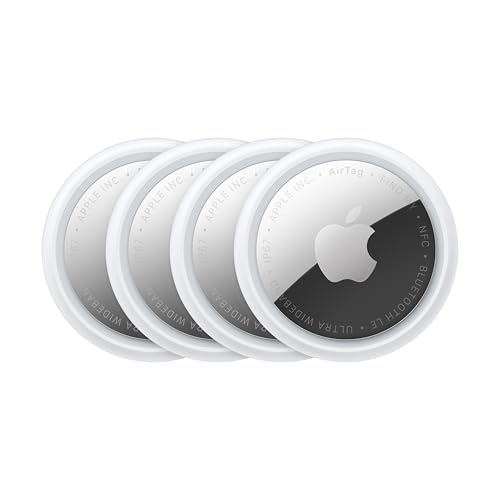

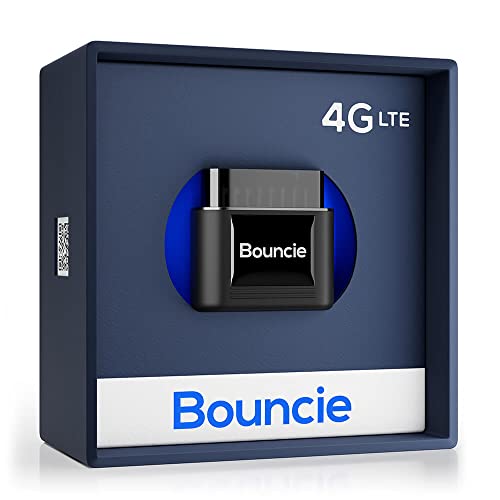

As an Amazon Associate we earn from qualifying purchases at no extra cost to you. Ratings are shown as listed on Amazon.
What Actually Separates a Good Tracker from a Bad One
Spec sheets bury the four things that determine whether a tracker works when you need it:
- Location accuracy. True GPS trackers resolve to roughly 5–15 meters outdoors. Bluetooth finders like AirTag are precise within a few meters of your phone but useless beyond it. Check whether a device uses GPS only or augments with Wi-Fi positioning indoors.
- Update speed. Cheap plans poll every 3–5 minutes; premium plans offer 10–60 second updates. For a stolen vehicle moving at highway speed, a 5-minute ping leaves a half-mile blind spot.
- Coverage. Cellular trackers rely on LTE-M/NB-IoT networks. Rural dead zones mean stale last-known positions. Pet trackers with multi-carrier SIMs outperform single-carrier units in low-coverage regions.
- Geofencing reliability. Good firmware filters GPS drift so your tracker doesn’t fire false alerts at 2 a.m. Look for adjustable radius (minimum 50m) and exit-only vs. enter-and-exit alerting.
Comparison Table: Top Picks by Category
| Tracker | Best For | Type | Battery (typical) | Weight | Update Interval | Subscription |
|---|---|---|---|---|---|---|
| LandAirSea 54 | Cars (magnetic) | Cellular GPS | ~1–2 weeks | ~80 g | 10 s–3 min | ~$10–30/mo |
| Bouncie | Cars (OBD-II) | Cellular GPS | Vehicle-powered | ~40 g | 15 s driving | ~$10/mo |
| Tractive GPS | Dogs/cats | Cellular GPS | 5–10 days | ~35 g | Live mode ~2–3 s | ~$5–13/mo |
| Jiobit Smart Tag | Kids, elderly | Cellular GPS + Bluetooth | ~1 week | ~18 g | On-demand live | ~$9–17/mo |
| Apple AirTag | Keys, luggage, gear | Bluetooth/UWB | ~1 year (CR2032) | 11 g | Crowd-relayed | None |
| Tracki | Worldwide gear | Cellular GPS | 2–5 days | ~42 g | 1 min default | ~$10–20/mo |
Best GPS Trackers for Cars
For vehicles, choose between two mounting philosophies. Magnetic-mount units like the LandAirSea 54 hide anywhere on the undercarriage — ideal for theft recovery — but need recharging every week or two. OBD-II plug-in devices like Bouncie draw power from the car itself, update every 15 seconds while driving, and double as driver-behavior monitors, but are easy for a thief to spot and unplug.
A quick cost reality check: a $30 magnetic tracker plus a mid-tier plan (~$20/month) costs roughly $510 over two years. An OBD unit at ~$10/month totals around $280 — cheaper and maintenance-free, at the cost of concealment. If theft protection is the goal, concealment wins.
For rural areas, verify the tracker’s carrier coverage map before buying — most US units run on AT&T or T-Mobile LTE bands, and performance in dead zones differs meaningfully between carriers.
Best GPS Trackers for People
For children and adults who need check-in tracking, the Jiobit Smart Tag remains the benchmark: 18 grams, clips to clothing or a belt loop, and combines GPS, Wi-Fi, cellular, and Bluetooth for reliable indoor fixes — the weak point of car trackers repurposed for people. Its “Trusted Places” feature reduces false geofence alerts by learning Wi-Fi fingerprints, which matters more than raw GPS accuracy for school and home use.
Budget alternative: an AirTag works as a passive locator for kids in dense urban areas, but it isn’t a true tracker — it only reports when an iPhone passes nearby, and Apple deliberately adds anti-stalking alerts that can reveal its presence.
Best GPS Trackers for Pets
Pet trackers live and die on three things: weight, live-tracking speed, and escape alerts. The Tractive GPS Tracker (for dogs ~4 kg and up) offers live mode updating every 2–3 seconds — fast enough to follow a bolting dog — and escape alerts that trigger within about a minute of a geofence breach. Whistle and Fi collars compete in the same space with health and activity metrics layered on.
Two ownership realities worth knowing:
- Live mode drains the battery in hours, not days — it’s for active searches, not always-on use.
- Collar mounting fails for cats and small dogs; a 35 g unit is uncomfortable under roughly 4 kg body weight. For cats, lighter Bluetooth trackers or harness-mounted options are more humane.
Best Trackers for Gear and Everyday Items
For keys, luggage, camera bags, and bikes, Bluetooth finders win on cost. The Apple AirTag (~$25–29, often less in multipacks) leverages the entire iPhone network for crowd-sourced location — extremely effective in cities and airports, effectively blind in rural areas. Tile models work cross-platform but with a smaller crowd network. Android users also now have Google’s Find My Device-compatible tags.
The cost math is stark: an AirTag costs about $0.07/day over a year including the battery, versus $0.40–0.70/day for a cellular tracker. Use cellular GPS only for gear that travels beyond phone-dense areas — trailers, construction equipment, shipping containers.
Decision Matrix
| Your Situation | Best Choice |
|---|---|
| Theft protection, willing to recharge | Magnetic cellular tracker (LandAirSea 54) |
| Family car, teen driver monitoring | OBD-II tracker (Bouncie) |
| Child or elderly parent | Jiobit Smart Tag |
| Dog over ~4 kg, off-leash | Tractive GPS or Fi collar |
| Cat or toy-breed dog | Lightweight Bluetooth tag on harness |
| Keys, bags, luggage (urban) | AirTag (iPhone) or Tile (Android) |
| Equipment in rural/low-signal areas | Multi-carrier cellular tracker (Tracki) |
Ownership Realities Most Reviews Skip
- Battery estimates assume default ping rates. Cranking updates from 3 minutes to 10 seconds can cut a two-week battery to 3–4 days. Tune the interval to your actual need.
- What wears first: charging-port covers and magnetic seals on waterproof models. Inspect the gasket when you recharge — a cracked seal is the leading cause of field failure.
- Common mistake: mounting a magnetic tracker inside a vehicle’s trunk lid or under thick metal, which attenuates GPS signal. Undercarriage steel frames, not enclosed cavities, are the right spot.
- Annual plans are the real discount. Most trackers cost 30–40% less per month on yearly billing — buy monthly first, verify coverage in your area, then commit.
FAQ
Do GPS trackers work without a subscription?
Cellular GPS trackers require a data plan — the subscription pays for LTE connectivity. Bluetooth finders (AirTag, Tile) have no fees but limited range logic.
Can a GPS tracker work indoors?
Partially. GPS signals weaken through walls; devices that blend Wi-Fi positioning and Bluetooth (like Jiobit) maintain indoor location far better than GPS-only units.
Is it legal to track a car or person?
Tracking your own vehicle, assets, pets, and minor children is generally legal. Tracking another adult’s vehicle or person without consent is illegal in most jurisdictions — check local law before deploying.