Key takeaways
- Foam thickness: 1/2 inch is the minimum for hard tile or stone floors; 3/4 inch is the sweet spot for sessions over 30 minutes; 1 inch-plus suits concrete subfloors or users over ~200 lbs. Thicker isn’t always better — foam over ~1 inch with low density feels unstable when you pivot at the stove.
- Material rebound: Polyurethane (PU) foam compresses under load and springs back within seconds; it typically keeps its shape 5–10 years. PVC foam is cheaper and softer initially but permanently flattens in high-traffic spots, often within 18–24 months. Gel cores feel plush but add weight and can delaminate at the edges.
- Backing and edge design: A rubberized or textured underside matters more than top texture on slick tile. Beveled edges under ~20 degrees reduce trip risk — critical in kitchens where you carry hot pans.
The best kitchen floor mats in 2026 are 3/4-inch polyurethane foam mats with beveled edges and a textured non-slip base — thick enough to keep your heels off hard tile, dense enough that they don’t bottom out after a year, and sized to cover your actual standing zone rather than the whole kitchen.
Our top picks
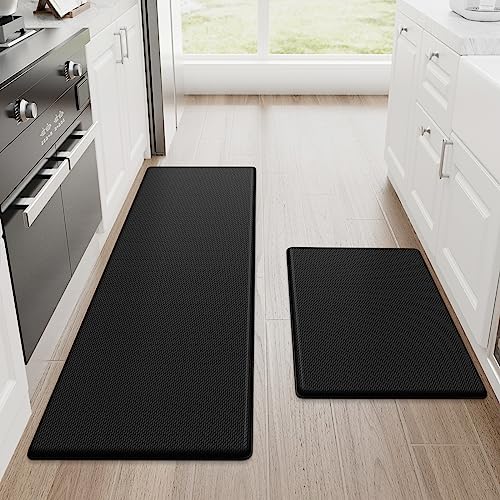


As an Amazon Associate we earn from qualifying purchases at no extra cost to you. Ratings are shown as listed on Amazon.
What Actually Determines Comfort
Marketing copy leans on words like “ergonomic” and “anti-fatigue,” but three measurable factors decide whether a mat works:
- Foam thickness: 1/2 inch is the minimum for hard tile or stone floors; 3/4 inch is the sweet spot for sessions over 30 minutes; 1 inch-plus suits concrete subfloors or users over ~200 lbs. Thicker isn’t always better — foam over ~1 inch with low density feels unstable when you pivot at the stove.
- Material rebound: Polyurethane (PU) foam compresses under load and springs back within seconds; it typically keeps its shape 5–10 years. PVC foam is cheaper and softer initially but permanently flattens in high-traffic spots, often within 18–24 months. Gel cores feel plush but add weight and can delaminate at the edges.
- Backing and edge design: A rubberized or textured underside matters more than top texture on slick tile. Beveled edges under ~20 degrees reduce trip risk — critical in kitchens where you carry hot pans.
Top Picks by Work Zone
Best for the sink zone: NewLife by GelPro Eco-Pro
GelPro’s Bio-Foam mats use 5/8-inch polyurethane with a stain-resistant top — the right call for the wettest spot in the kitchen, since the surface wipes clean without absorbing dishwater splash. The Eco-Pro’s suede-style finish reads more residential than the pebbled industrial look. Expect roughly $60–$110 depending on size.
Best for the stove/prep line: Sky Solutions Sky Mat
A 3/4-inch PU mat that’s slightly softer than GelPro — better for people who shift weight constantly while sautéing rather than standing static. The non-slip backing grips well on sealed tile and LVP. Multiple lengths make it easy to span a 20×39 inch or 20×48 inch prep run. Typically $40–$80.
Best budget option: ComfiLife Anti-Fatigue Mat
3/4-inch high-density foam in the $30–$55 range. It rebounds well for the price, but the backing is lighter-duty — on glossy porcelain it can creep a few centimeters over a week. Add a thin rug pad underneath if your floor is slick.
Best for commercial-grade durability: WellnessMats Original
One-piece polyurethane, heat- and stain-resistant, with a 20-year warranty and edges that won’t curl because there’s no laminated edge to peel. At $100–$160 it’s the buy-once option; the tradeoff is a firmer feel some users find less “cloud-like” than gel mats.
Best long runner: Kangaroo Original Standing Mat (3/4-inch)
Kangaroo offers lengths up to ~70 inches, covering a full sink-to-counter work triangle in one piece instead of two mats with a trip seam between them. PVC-blend foam, so expect a 3–5 year lifespan rather than a decade. Roughly $50–$110.
Spec Comparison
| Mat | Thickness | Material | Sizes offered | Backing | Expected lifespan | Price range |
|---|---|---|---|---|---|---|
| WellnessMats Original | 3/4 in | PU (one-piece) | 2×3 ft to 3×8 ft | Molded non-slip | 10–20 yrs | $100–$160 |
| NewLife by GelPro Eco-Pro | 5/8 in | PU foam + gel hybrid | 20×32 in to 20×72 in | Rubberized | 5–8 yrs | $60–$110 |
| Sky Mat | 3/4 in | PU foam | 20×32 in to 24×70 in | Textured rubber | 4–6 yrs | $40–$80 |
| Kangaroo Original | 3/4 in | PVC/PU blend | 20×32 in to 20×70+ in | Textured | 3–5 yrs | $50–$110 |
| ComfiLife | 3/4 in | High-density PU foam | 20×32 in to 20×39 in | Lightly textured | 3–5 yrs | $30–$55 |
Sizing to Your Actual Standing Zone
Most buyers go too small. The correct size is the floor area your feet occupy plus one step of travel. Measure it: stand at the sink as you normally wash dishes, mark where each foot lands, then add ~6 inches in every direction. For most kitchens that means 20×32 inches at the sink and a 20×39 or 20×48 at the stove/prep run.
A worked example: if your sink and stove sit 4 feet apart, two 20×32-inch mats (~$50 each) beat one 70-inch runner only if the middle floor is never stood on. If you routinely step between zones while stirring — most people do — a single long mat avoids the ridge where two mats meet.
Cost-per-use math favors the premium option: a $140 WellnessMat at 10 years of daily use is about $14/year; a $35 mat replaced every 3 years costs ~$12/year with worse cushioning in year three. The gap is smaller than it looks, but the premium mat also avoids the replacement hassle.
Decision Matrix
| Your situation | Recommended pick | Why |
|---|---|---|
| Tight budget, rentals, slippery floor | ComfiLife + rug pad | Cheapest entry; pad solves creep |
| Daily cooking, one wet zone | GelPro Eco-Pro | Stain/water-resistant top at sink |
| Long counter runs, batch cooking | Kangaroo runner or Sky Mat XL | Single-piece coverage |
| Buy-it-for-a-decade mindset | WellnessMats | Warranty and no edge peel |
| Concrete floors or heavier users | 3/4-in+ PU, e.g. WellnessMats | Density prevents bottoming out |
Ownership Realities
- What wears first: the foam directly under your dominant foot flattens first — rotate the mat 180° every few months to even it out. On laminated mats, the bonded top layer peels at corners before the foam dies.
- Cleaning: dish soap and water only. Citrus-based or bleach cleaners break down PU surfaces and cause the top skin to crack. Never vacuum with a beater bar — it scuffs the finish.
- Common mistakes: placing a mat under a swinging dishwasher door (check clearance — 3/4 inch blocks some low-hung doors); buying a 1/4-inch “kitchen rug” expecting anti-fatigue performance; ignoring off-gassing — let new foam mats air out 24–48 hours before use.
- Comfort limits: mats reduce fatigue but don’t treat pain. If standing causes ongoing back, knee, or foot pain, that’s worth raising with a doctor or physical therapist rather than solved with thicker foam.
FAQ
Is a thicker mat always better?
No. Past about 1 inch, low-density foam makes you wobble when pivoting — a real risk holding a hot pan. Density matters as much as thickness; a dense 3/4-inch PU mat outperforms a squishy 1-inch PVC mat for most users.
Do anti-fatigue mats damage hardwood?
Rubber-backed mats can discolor finishes left in place for months on oiled or waxed floors. Lift and dry under them monthly, or use a felt-backed option on hardwood.
Should I cover the whole kitchen?
Only your standing zones. Mats under the fridge or in walk paths add cost, cleaning surface, and trip edges with no benefit.