Key takeaways
- Everyday family meals: Choose a 14–16-inch porcelain or glazed stoneware platter with a modest 1-inch rim. It is large enough for roasted vegetables, sliced meat, or pasta without becoming difficult to store.
- Buffets: Choose an 18–22-inch melamine, stainless-steel, or lightweight porcelain platter. A shallow profile maximizes usable surface area, while a raised rim helps prevent sauces from running onto the table.
- Formal entertaining: Choose a 16–18-inch porcelain, ceramic, glass, or wooden platter whose finish matches the tableware. Prioritize balanced weight and a rim that frames food without hiding it.
- Outdoor meals: Choose melamine or stainless steel. Both are more practical than glass or delicate ceramic when the table is uneven or the platter must be carried across a patio.
- Small kitchens: Choose an oval platter with vertical storage capability, or a rectangular platter no wider than the largest shelf in your cabinet. The best-looking platter is not useful if it blocks access to other dishes.
The best serving platters are chosen by matching size and rim shape to the food, material to the cleaning routine, and weight to how far the platter must travel from kitchen to table.
Quick picks by serving situation
- Everyday family meals: Choose a 14–16-inch porcelain or glazed stoneware platter with a modest 1-inch rim. It is large enough for roasted vegetables, sliced meat, or pasta without becoming difficult to store.
- Buffets: Choose an 18–22-inch melamine, stainless-steel, or lightweight porcelain platter. A shallow profile maximizes usable surface area, while a raised rim helps prevent sauces from running onto the table.
- Formal entertaining: Choose a 16–18-inch porcelain, ceramic, glass, or wooden platter whose finish matches the tableware. Prioritize balanced weight and a rim that frames food without hiding it.
- Outdoor meals: Choose melamine or stainless steel. Both are more practical than glass or delicate ceramic when the table is uneven or the platter must be carried across a patio.
- Small kitchens: Choose an oval platter with vertical storage capability, or a rectangular platter no wider than the largest shelf in your cabinet. The best-looking platter is not useful if it blocks access to other dishes.
Platter dimensions: the size you actually need
Length is only part of a platter’s capacity. Width determines whether food can be arranged in a single attractive layer, while rim width reduces the usable center. A 16-inch platter with a 1.5-inch rim on each side has an approximate food area of 13 inches across; the same nominal size with a 2.5-inch rim may hold noticeably less.
Our top picks

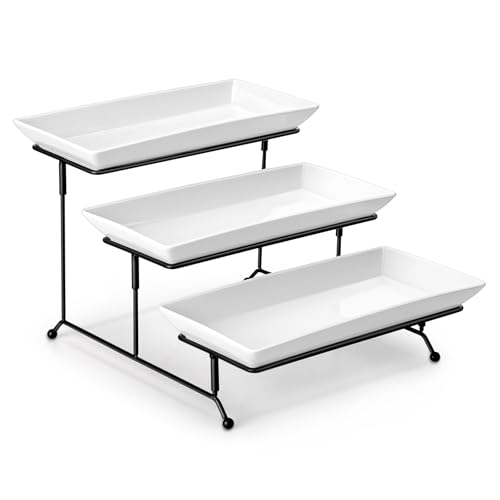
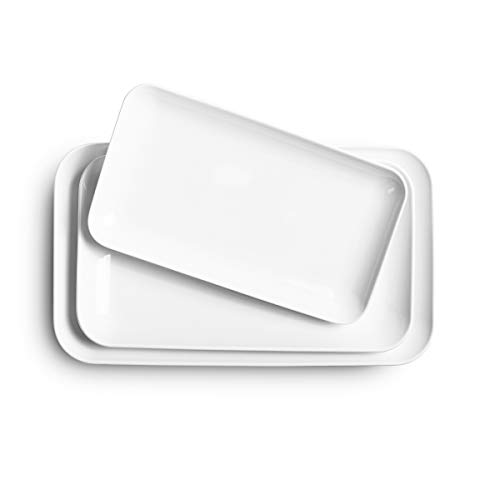

As an Amazon Associate we earn from qualifying purchases at no extra cost to you. Ratings are shown as listed on Amazon.
For four to six people, a 14–16-inch platter is usually sufficient for one main dish or side. For six to ten people, an 18–20-inch platter gives sliced meats and vegetables room to spread out. A 22-inch platter is useful for a buffet or large gathering, but it needs a sturdy serving surface and generous cabinet space.
Rectangular platters are efficient for sandwiches, sushi-style arrangements, and rows of appetizers. Oval platters are more forgiving for whole fish, roast poultry, and irregularly shaped foods. Round platters present food attractively but use more storage space relative to their usable area.
Head-to-head comparison of platter materials
| Material | Typical 16-inch weight | Best use | Dishwasher safety | Main ownership issue |
|---|---|---|---|---|
| Porcelain | 1.5–3.5 lb | Everyday meals and formal serving | Usually yes; check manufacturer guidance | Edges can chip if stacked or knocked against metal |
| Stoneware | 3–5.5 lb | Rustic presentation and oven-to-table dishes | Often yes | Heavy, and rapid temperature changes may cause cracking |
| Melamine | 1–2 lb | Outdoor dining and large buffets | Often top-rack only; verify instructions | Can scratch, stain, or warp with excessive heat |
| Stainless steel | 1.5–3 lb | Outdoor use, catering, and durable buffets | Usually yes | Shows fingerprints and can develop surface marks |
| Tempered glass | 2–4 lb | Cold foods, desserts, and minimalist tables | Usually yes | Still vulnerable to impact and sudden temperature changes |
| Wood | 1.5–3 lb | Bread, cheese, fruit, and dry foods | No | Needs hand-washing, drying, and occasional oiling |
Porcelain versus stoneware
Porcelain is generally the more versatile choice when you want a lighter platter with a clean, formal appearance. Its nonporous glazed surface is suitable for saucy foods and is commonly dishwasher safe. Stoneware has a thicker, more substantial feel and may retain heat well, but its extra weight becomes noticeable with a 20-inch platter loaded with food.
Neither material should move directly from a hot oven to a cold countertop unless the manufacturer specifically permits it. Thermal shock, rather than ordinary use, is a common cause of cracks.
Melamine, stainless steel, and glass
Melamine is a practical choice for patios and children’s gatherings because it is light and resistant to shattering. It is not a substitute for an oven-safe baking dish, and very hot foods may leave stains or cause surface wear. Do not use melamine in an oven or microwave.
Stainless steel is particularly useful when a platter will be carried repeatedly, washed frequently, or used for buffet service. Look for a broad, stable base and a rim that is rolled or reinforced rather than a very thin stamped edge.
Tempered glass makes food visible from every angle and is easy to inspect for cleanliness. However, a large glass platter can be awkward to carry when wet, and “tempered” does not mean impact-proof. Keep it away from sharp countertop edges and avoid pouring boiling liquid onto a cold surface.
Rim design matters more than it looks
A completely flat platter offers the most display area but gives little protection against gravy, dressing, or juices. A raised rim of about 0.5–1 inch is a good general-purpose compromise. It contains moisture while leaving enough central space for the food.
- Low lip: Best for sandwiches, pastries, cookies, and dry appetizers.
- Moderate rim: Best for roasted vegetables, sliced meat, pasta, and foods with light sauces.
- Deep rim or shallow bowl profile: Best for saucy noodles, salad, fruit, and dishes that move during transport.
- Integrated handles: Useful on heavy stoneware or oversized platters, but they increase the storage footprint and may reduce usable serving area.
Check whether the underside is fully glazed or has an unfinished foot ring. An unglazed ring can protect the table from sliding, but it may also collect moisture and make stacking less stable.
A decision matrix for choosing the right platter
| Your situation | Recommended size | Best material | Features to prioritize |
|---|---|---|---|
| Budget-conscious, frequent use | 14–16 inches | Porcelain or stainless steel | Dishwasher safety, replaceable matching pieces, moderate rim |
| First-time buyer with limited storage | 16 inches | Lightweight porcelain or melamine | Stackable shape, narrow rim, cabinet clearance |
| Weekly family buffet | 18–20 inches | Stoneware, porcelain, or stainless steel | Stable base, reinforced rim, comfortable carrying weight |
| Occasional formal entertaining | 16–18 inches | Porcelain, glass, or well-finished wood | Presentation, balanced proportions, scratch-resistant finish |
| Outdoor or child-friendly meals | 16–20 inches | Melamine or stainless steel | Low weight, shatter resistance, stain resistance |
Dishwasher safety and cleaning realities
“Dishwasher safe” does not mean every finish will look unchanged after years of high-heat cycles. Metallic borders and hand-painted decoration may fade or become damaged. Place large platters at an angle only if they cannot touch the spray arm or block water from reaching other dishes. A platter that fits physically may still be too large for the dishwasher’s rack clearance.
For dried starch or baked-on sauce, soak porcelain, stoneware, stainless steel, or glass in warm water before using a nonabrasive sponge. Avoid sudden hot-to-cold transitions. Melamine usually needs less care, but abrasive powders can dull its surface. Wood should be hand-washed promptly, dried upright or on its edge, and kept away from prolonged soaking and the dishwasher.
What wears out first?
- Glazed ceramic and porcelain: Exposed edges chip first, especially when platters are nested without a separator.
- Wood: The surface may dry, roughen, or absorb odors if it is left wet or washed aggressively.
- Melamine: Fine knife marks and discoloration appear before structural damage.
- Stainless steel: Scratches and water spots are mostly cosmetic, but warped thin metal can make a platter wobble.
- Glass: Corners and edges are the vulnerable points; inspect for chips before each use.
Storage: measure before buying
Measure the cabinet opening, not just the shelf surface. A 20-inch platter may require 22 inches of diagonal clearance to insert it into a cabinet, and a platter with handles may need extra width. Allow roughly 0.25–0.5 inch between stacked ceramic pieces if you want to remove one without striking another.
Vertical plate racks can make oversized platters easier to access, but confirm that the rack supports the platter’s thickness and weight. Do not stack heavy stoneware on a delicate glass platter. If storage is tight, one 16-inch oval platter usually offers a better balance of capacity and flexibility than a collection of specialized oversized shapes.
How to calculate the right size for your table
Leave at least 12 inches of clear table width for each seated diner, then reserve space for serving dishes. On a 36-inch-wide table, a 20-inch platter leaves only 8 inches total for place settings if it sits across the center, so a 16-inch platter or an offset arrangement is more practical.
For quantity, estimate about 1.5–2 ounces of sliced meat or cheese per guest for an appetizer platter, and 3–5 ounces per guest when the platter is the main protein. For ten guests at 4 ounces each, that is 40 ounces, or 2.5 pounds of food. A 18–20-inch platter is usually more appropriate than a 14-inch platter because the food can be spread into a single layer rather than piled high.
Bottom line
For most households, the best serving platters are a dishwasher-safe 14–16-inch porcelain platter for everyday meals and a lightweight 18–20-inch melamine or stainless-steel platter for buffets and outdoor entertaining. Choose stoneware when heat retention and a substantial look matter more than weight, glass for visible cold foods, and wood for dry foods that benefit from a natural presentation. Before purchasing, verify the food area inside the rim, loaded carrying weight, dishwasher clearance, and the storage path into your cabinet.