Key takeaways
- Pro: Local-first processing means automations continue even when internet access drops.
- Pro: The largest community-driven device integration library of any hub on this list.
- Con: No built-in radios—Zigbee, Z-Wave, and Thread require separate USB dongles that add cost and setup steps.
Buying a smart home hub in 2026 means choosing between ecosystems that are more locked-down than ever—or stepping outside them entirely. The frustration is universal: you start with a single smart bulb, then add a thermostat, then a doorbell, and suddenly your phone has four incompatible apps fighting for the same automation trigger. A hub solves that by bridging protocols, giving you a single control plane for voice commands, routines, and device grouping.
What separates a genuinely useful hub from a mediocre one comes down to three things: how many radios it carries (Z-Wave, Zigbee, Thread, Matter), whether it requires a cloud subscription to function, and how much local processing it does. A hub that depends entirely on cloud servers can leave you locked out during an internet outage. A hub that runs automations locally keeps your lights turning on even when your router does not. Owner feedback consistently flags these two factors as the difference between satisfaction and abandonment.
Our top picks




As an Amazon Associate we earn from qualifying purchases at no extra cost to you. Ratings are shown as listed on Amazon.
Quick Picks
| Product | Best for | Price |
|---|---|---|
| Home Assistant Green | Power users who want total local control | $219 |
| Aeotec Smart Home Hub | Z-Wave and Zigbee bridging on a budget | $149.99 |
| Echo Show 11 | Central kitchen control with a large screen | $249.99 |
| Echo Hub | Wall-mounted control with Alexa+ | $179.99 |
| Echo Show 15 | Family organization and built-in TV streaming | $349.99 |
| Echo Show 5 | Compact bedside or desk display | $99.99 |
| Echo Dot | Entry-level voice control in any room | $79.99 |
| Echo Show 21 | Maximum screen real estate for large kitchens | $499.99 |
How We Picked
We narrowed this list by filtering on four criteria that matter most in practice: protocol breadth (how many wireless standards the hub speaks natively), local execution capability (whether automations survive a cloud outage), price relative to radio count, and the depth of owner-reported integration with third-party devices. We also required that each product have a sufficient volume of published spec sheets and user reviews to evaluate real-world reliability rather than relying solely on manufacturer claims.
The 8 Best Smart Home Hubs in 2026
Home Assistant Green
Home Assistant Green is the hardware-backed entry point into an open-source ecosystem that runs entirely on your local network. It targets users who want their automations to never depend on a vendor’s cloud and who are comfortable with a terminal or configuration files when they want to push past the default interface.
- Pro: Local-first processing means automations continue even when internet access drops.
- Pro: The largest community-driven device integration library of any hub on this list.
- Con: No built-in radios—Zigbee, Z-Wave, and Thread require separate USB dongles that add cost and setup steps.
Skip it if you want a plug-and-play experience without reading documentation. The learning curve is steeper than any consumer-grade alternative here.
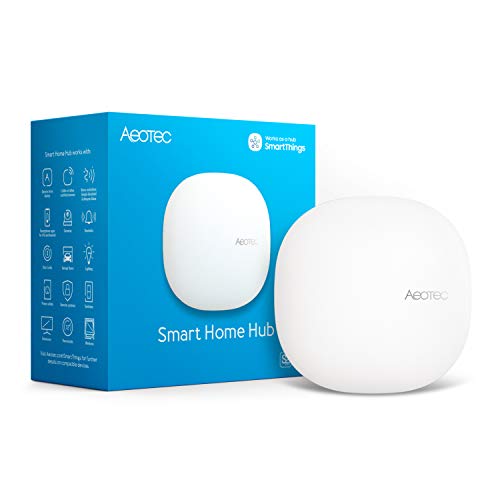
Aeotec Smart Home Hub
The Aeotec hub is essentially a SmartThings-branded controller with broad radio support baked into a single compact box. It suits people who already own SmartThings-compatible devices or who want Z-Wave and Zigbee coverage without juggling multiple bridges.
- Pro: Supports Z-Wave, Zigbee, and Matter gateway functionality in one unit.
- Pro: Integrates with Alexa and Google Assistant for voice control across ecosystems.
- Con: Automations rely on Samsung’s cloud; a service outage can disable routines.
Skip it if local-only execution is non-negotiable for you. The cloud dependency is the trade-off that makes its protocol breadth affordable.
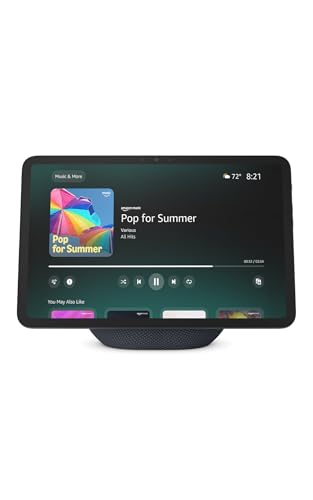
Amazon Echo Show 11
The Echo Show 11 fills the gap between the compact Echo Hub and the oversized Show 15, offering an 11-inch full-HD panel with spatial audio. It is designed for people who want a prominent wall or counter display for dashboards, video calls, and camera feeds without the premium footprint of a 15-inch unit.
- Pro: More viewing area than smaller Echo displays while remaining compact enough for most kitchen shelves.
- Pro: Alexa+ integration unlocks generative AI responses and advanced device grouping.
- Con: Locked into the Amazon ecosystem; limited utility for users outside Alexa.
Skip it if you need Z-Wave or Zigbee radios built in. This is a display and voice controller, not a multi-protocol bridge.
Amazon Echo Hub
The Echo Hub is Amazon’s dedicated wall-mounted control panel, redesigned around Alexa+ with a customizable dashboard. It serves homeowners who want a single fixed point of control—replacing multiple remotes and apps—without the screen size or streaming hardware of the Show lineup.
- Pro: Wall-mountable form factor keeps it unobtrusive yet always accessible.
- Pro: Compatible with thousands of devices through Alexa’s integration catalog.
- Con: Eight-inch screen is smaller than competitors offering 11 to 15 inches at similar price points.
Skip it if you plan to use the display for video streaming or as a family calendar hub in a shared kitchen. The smaller panel limits its utility beyond control functions.
Amazon Echo Show 15
The Echo Show 15 is a full-HD 15.6-inch kitchen hub with built-in Fire TV, positioned for households that want device control, streaming entertainment, and family organization tools consolidated into one wall-mounted panel.
- Pro: Fire TV integration means it doubles as a streaming device without a separate stick or console.
- Pro: Large canvas supports widgets, calendars, and camera feeds simultaneously.
- Con: Premium pricing reflects the streaming hardware, which is redundant if you already own a Fire TV device.
Skip it if you already have a TV or streaming box on the same wall. The Fire TV redundancy inflates the price without adding control functionality.
Amazon Echo Show 5
The Echo Show 5 is a compact smart display aimed at nightstands, desks, and small kitchen nooks. With the latest model bringing improved bass and clearer audio alongside Alexa+ integration, it occupies the entry tier of Amazon’s screen-equipped devices.
- Pro: Smallest and second-cheapest display option for basic glanceable information.
- Pro: Doubled bass compared to the previous generation improves podcast and music playback at this size.
- Con: Limited screen real estate makes dashboards feel cramped with more than two or three tiles.
Skip it if your primary use case involves reviewing camera feeds, managing complex routines, or displaying family calendars. The panel size becomes a constraint quickly.
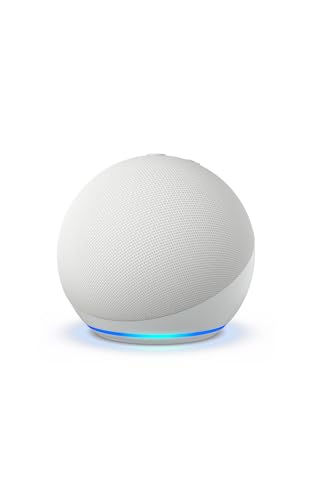
Amazon Echo Dot
The Echo Dot is Amazon’s speaker-first hub, designed for rooms where a screen adds clutter but voice control and device grouping remain valuable. At $79.99, it is the most affordable entry into the Alexa+ ecosystem.
- Pro: Lowest price on this list while still supporting Alexa+ and thousands of compatible devices.
- Pro: Compact form factor fits bedrooms, dining rooms, and offices without visual disruption.
- Con: No display means you cannot check camera feeds, calendars, or device status at a glance.
Skip it if you rely on visual feedback for your automations or want a dashboard you can leave mounted and readable. Pair it with a Show device elsewhere in the home for that.
Amazon Echo Show 21
The Echo Show 21 is the largest kitchen hub Amazon offers, with a 21-inch full-HD panel and built-in Fire TV. It targets households where the screen serves as a de facto command center for streaming, photo frames, calendar management, and device control simultaneously.
- Pro: Largest display on this list makes widgets and camera feeds genuinely legible from across a room.
- Pro: Fire TV integration turns it into a primary kitchen TV alternative.
- Con: Highest price at $499.99; the premium is almost entirely about screen size and streaming hardware.
Skip it if your kitchen already has a dedicated TV. The additional $300+ over smaller options buys pixels and a streaming tuner, not better hub functionality.
Buying Guide
Protocol Radios: What the Hub Actually Speaks
The most consequential spec difference on this list is whether the hub carries Z-Wave, Zigbee, Thread, or Matter radios internally or not. The Aeotec Smart Home Hub includes Z-Wave and Zigbee natively, letting you connect hundreds of compatible sensors and switches without an extra adapter. Home Assistant Green, despite its power, ships with no radios—you must add USB dongles per protocol. Echo devices communicate primarily over Wi-Fi and Thread, so Zigbee and Z-Wave accessories require a separate bridge. If your existing device collection spans multiple protocols, a hub with built-in radios saves money and eliminates points of failure.
Local vs. Cloud Execution
Cloud-dependent hubs—every Amazon Echo model and the Aeotec—route automation triggers through remote servers. If Amazon’s or Samsung’s servers go down, your motion-activated lights stop working until they come back. Home Assistant Green runs automations on-device, keeping your schedules and triggers functional during internet outages. For most households, cloud execution is acceptable because outages are rare and brief. But if you live in an area with unreliable internet or your security automations must never fail, local processing is worth the higher setup effort.
Ecosystem Lock-In and Voice Assistant Compatibility
Amazon Echo devices deliver the deepest integration with Alexa and Alexa+, but their functionality outside that ecosystem is limited to basic Matter bridging. Home Assistant Green supports Alexa, Google Home, and Apple HomeKit as front-end controllers while keeping the logic local. The Aeotec works within the SmartThings app and also accepts voice commands through Alexa and Google. Before committing, consider which voice assistant your household already uses and whether you want the hub to be your only control interface or one layer beneath a multi-assistant setup.
Our Verdict
Our top pick is the Home Assistant Green for anyone willing to spend an evening on setup: its local-first architecture and unmatched integration library make it the hub you never outgrow. Our budget pick is the Amazon Echo Dot at $79.99, which delivers Alexa+ voice control and device grouping at the lowest entry cost here. The exception: if your home already runs on SmartThings and you want multi-protocol coverage without tinkering, the Aeotec Smart Home Hub at $149.99 is the most practical all-in-one bridge.
FAQ
Do I need a smart home hub if I only have a few devices?
Not necessarily. A handful of same-ecosystem devices—say three Alexa bulbs—work fine with just an Echo Dot. A hub becomes valuable once you add devices from different manufacturers or want automations that coordinate across rooms and protocols.
Can smart home hubs work without internet?
Only hubs with local processing, like Home Assistant Green, keep automations running fully offline. Cloud-dependent hubs such as the Aeotec and all Echo devices can still execute locally cached routines for a short window, but new changes and voice queries typically fail without connectivity.
Is Matter a replacement for a hub?
Matter is a communication standard, not a physical controller. You still need a hub or bridge that speaks Matter alongside Thread. The Aeotec Smart Home Hub and newer Echo devices act as Matter controllers, letting you pair Matter-certified devices into your existing setup.
Should I choose a display-equipped hub or a speaker-only hub?
A display earns its premium only if you regularly check camera feeds, calendars, or device status at a glance. If you interact with your smart home primarily through voice commands and phone apps, a speaker-only option like the Echo Dot saves significant money for identical automation capability.