Key takeaways
- 1 to 1.5 acres, mostly flat, few trees: A 42-inch lawn tractor or 42-inch residential zero-turn is the sweet spot. Wide enough to finish in 60-80 minutes but still maneuverable and easy to store.
- 1.5 to 3 acres, open or with moderate obstacles: Step up to a 46 to 50-inch fabricated deck zero-turn or lawn tractor. The larger deck and faster ground speed cut mowing time by 30-40% compared to a 42-inch tractor.
- 3+ acres or mowing commercially: A 52 to 60-inch zero-turn with a commercial-grade transmission (like Hydro-Gear ZT-2800 or higher) and a larger fuel capacity is needed for sustained speed and durability.
- 1 acre, steep or tight storage: If you cannot store a rider, a 28 to 30-inch wide-area walk-behind (like Toro TurfMaster or TimeMaster) or a 56V/80V self-propelled battery mower with two 7.5Ah+ batteries is workable, but expect longer cut times.
The best lawn mowers for large yards are 42 to 54-inch gas riding mowers and zero-turn mowers for 1 to 3+ acres, with high-voltage battery riding mowers as a lower-maintenance alternative for 1 to 2 acres if you can handle longer charge times and higher upfront cost.
For a yard over one acre, deck width, fuel or battery capacity, and slope handling matter more than horsepower alone. A 21-inch push mower will cut an acre, but it will take you 2+ hours and drain multiple batteries. Matching the mower type to your acreage, terrain, and storage situation saves more time than any single feature upgrade.
Our top picks

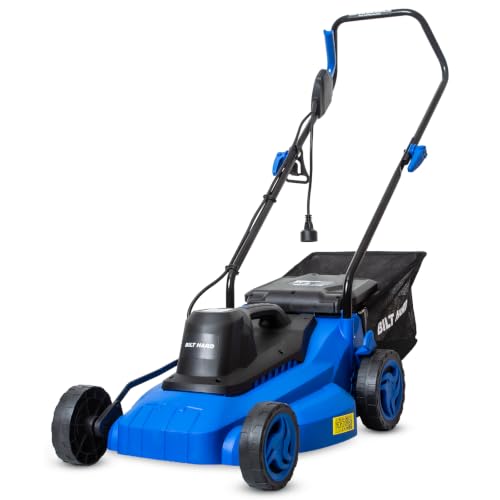
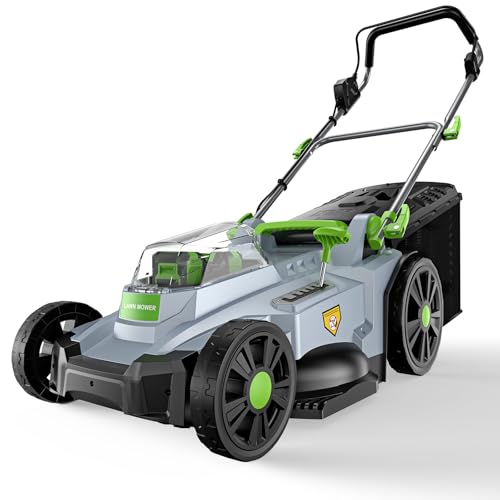
As an Amazon Associate we earn from qualifying purchases at no extra cost to you. Ratings are shown as listed on Amazon.
How to Match Mower Type to Acreage
Large yards are not all the same. Use acreage as your first filter, then refine by hills and obstacles.
- 1 to 1.5 acres, mostly flat, few trees: A 42-inch lawn tractor or 42-inch residential zero-turn is the sweet spot. Wide enough to finish in 60-80 minutes but still maneuverable and easy to store.
- 1.5 to 3 acres, open or with moderate obstacles: Step up to a 46 to 50-inch fabricated deck zero-turn or lawn tractor. The larger deck and faster ground speed cut mowing time by 30-40% compared to a 42-inch tractor.
- 3+ acres or mowing commercially: A 52 to 60-inch zero-turn with a commercial-grade transmission (like Hydro-Gear ZT-2800 or higher) and a larger fuel capacity is needed for sustained speed and durability.
- 1 acre, steep or tight storage: If you cannot store a rider, a 28 to 30-inch wide-area walk-behind (like Toro TurfMaster or TimeMaster) or a 56V/80V self-propelled battery mower with two 7.5Ah+ batteries is workable, but expect longer cut times.
Spec Comparison: Deck, Power, and Slope for Large-Yard Mowers
These are representative specs for common large-yard categories in 2026. Actual numbers vary by model year and engine option.
| Mower Type | Example Models | Deck Width | Power Source / Capacity | Approx. Runtime / Coverage Per Charge or Tank | Max Safe Slope | Weight |
|---|---|---|---|---|---|---|
| Lawn Tractor | John Deere S100 Series, Husqvarna TS 354XD | 42-48 in. stamped or fabricated steel | Gas: 3.5 gal tank, 22-24 HP V-twin | 2.5-3.5 hours / 2.5-3 acres per tank | 15 degrees | 450-550 lbs |
| Residential Zero-Turn | Toro TimeCutter, Husqvarna Z254F, Cub Cadet Ultima ZT1 | 42-50 in. fabricated steel | Gas: 3 gal tank, 23-24 HP V-twin | 2-3 hours / 2-3 acres per tank | 15 degrees (avoid slopes sideways) | 550-650 lbs |
| Residential Battery Rider / Zero-Turn | Ryobi 80V 42-in., EGO Power+ 42-in. Z6 | 42 in. stamped or fabricated steel | 80V/56V lithium: 40Ah-60Ah total (4-6 x 10Ah bricks) | 1.5-2 hours / 1.5-2 acres per charge | 15 degrees | 550-700 lbs (with batteries) |
| Wide-Area Walk-Behind | Toro TimeMaster 30 in., Toro TurfMaster 30 in. | 30 in. steel | Gas: 0.3 gal or 60V x 2 batteries | 45-60 min / 0.3-0.5 acre per tank or charge | 20 degrees (more control walking) | 130-180 lbs |
| Self-Propelled Battery Push | EGO Power+ LM2135SP, Greenworks 80V 25-in. | 21-25 in. steel / poly | 56V 7.5Ah or 80V 5Ah | 45-60 min / 0.5 acre per battery | 20+ degrees (lightest, most control) | 55-85 lbs |
Key takeaway: Deck width and ground speed determine how fast you finish, fuel/battery capacity determines if you can finish without stopping, and weight plus drive type determine where you can mow safely.
Decision Matrix: Which Mower Makes Sense for Your Situation?
| Your Situation | Best Match | Why |
|---|---|---|
| Budget under $2,500, 1-2 acres, flat to gentle slopes, want to bag or tow | 42-inch Lawn Tractor | Lowest cost rider, tightest turning for a tractor, accepts bagger, cart, and aerator attachments. Slower than zero-turn but more versatile. |
| Want the fastest mow for 1.5-3 acres with trees, fences, beds | 46-50-inch Residential Zero-Turn | Lap-bar steering cuts mowing time significantly around obstacles. Fabricated deck handles rough ground better than stamped. |
| Want low noise, low maintenance, and have outdoor 240V or time to charge overnight for 1-2 acres | 42-inch Battery Rider / Zero-Turn | No oil, fuel, belts or plugs. Instant torque and quiet operation. Higher purchase price and 4-7 hour charge time are the trade-offs. |
| Slopes over 15 degrees or ditch banks | Walk-behind or lawn tractor (up/down slope), avoid zero-turn | Zero-turns lose traction steering downhill and can slide. A lighter walk-behind or tractor driven straight up and down is safer. Consider a stand-on or AWD model for consistent hills. |
| No garage space for a rider, must fit through 36-inch gate | 30-inch Wide-Area Walk-Behind | Fits where riders cannot. Cuts time by about 30% vs. a 21-inch push but still requires walking 1+ acre. |
Worked Calculation: How Long Will It Actually Take?
Estimate mowing time before you buy to avoid undersizing deck or battery.
Formula: Mowing Time (hours) = Yard Area (sq ft) / (Deck Width (ft) x Ground Speed (mph) x 5280 x Field Efficiency)
Field efficiency accounts for overlap, turns, and obstacles. Use 0.75 for open rectangular yards, 0.65 for yards with many trees or beds.
Example 1: 1 acre with a 42-inch (3.5 ft) lawn tractor at 4.5 mph, moderate obstacles (0.65 efficiency):
43,560 sq ft / (3.5 x 4.5 x 5280 x 0.65) = 43,560 / 54,054 = ~0.80 hours or 48 minutes of actual cutting. Add 10-15 minutes for trimming and turning and you are at about 60 minutes total.
Example 2: Same 1 acre with a 21-inch (1.75 ft) self-propelled at 3.0 mph:
43,560 / (1.75 x 3.0 x 5280 x 0.65) = 43,560 / 18,018 = ~2.42 hours. You will need at least two large batteries (7.5Ah at 56V or 5Ah at 80V per 0.5 acre) to finish without recharging.
Example 3: 2.5 acres with a 50-inch (4.16 ft) zero-turn at 6 mph, open layout (0.75 efficiency):
108,900 sq ft / (4.16 x 6 x 5280 x 0.75) = 108,900 / 98,870 = ~1.10 hours or 66 minutes.
Use this to size batteries too. If a manufacturer rates a battery rider at 1.5 acres per charge, do not expect it to do 2.5 acres of thick spring growth without a mid-day recharge. Cold, wet, or tall grass can cut runtime by 20-30%.
Best Picks by Situation for Large Yards in 2026
Best Value for 1 to 2 Flat Acres: 42-Inch Lawn Tractor
Models like the John Deere S120 or Husqvarna TS 242XD remain the default for a reason. A 42-inch stamped or fabricated deck with a 22 HP Briggs & Stratton or Kawasaki engine will handle weekly mowing on 1 to 2 acres with the lowest upfront cost and cheapest parts. Look for a fabricated deck if your yard is bumpy or has roots, as it resists dents and rust longer. Hydrostatic transmission is essential for large yards; avoid gear-drive or CVT on this size property.
Fastest Cut for 2 to 3 Acres With Obstacles: 50-Inch Residential Zero-Turn
A Toro TimeCutter 50-inch or Cub Cadet Ultima ZT1 50 is built to finish faster. Zero-turns travel 6-7 mph vs 4.5-5.5 mph for tractors and pivot around trees without three-point turns. The trade-off is slope handling and price. They are less stable across hillsides and do not tow or bag as well as tractors. Choose a model with a fabricated 10-gauge deck and Hydro-Gear EZT or ZT-2200 transaxles if you mow more than 50 hours per year.
Best Battery Option for 1 to 2 Acres: 42-Inch Battery Rider
The Ryobi 80V 42-inch riding mower and EGO Power+ Z6 42-inch zero-turn are the most viable battery riders for acreage in 2026. They cut roughly 1.5 to 2 acres per charge with 40-60Ah of capacity and recharge in 4 to 7 hours on standard chargers. Ownership is simpler with no fuel to stale, no oil changes, and far less vibration. Budget for an extra set of batteries if you are at the top end of the range or let grass grow tall between cuts, and store batteries indoors over winter at 40-60% charge.
Best When You Cannot Store a Rider: 30-Inch Wide-Area Walk-Behind
The Toro TimeMaster 30-inch (residential) and TurfMaster 30-inch (commercial) use a dual-blade 30-inch deck that cuts a 21-inch mower’s time by roughly a third. They fit through gates and take up half the garage space of a rider. They are still walk-behinds, so 1+ acre will be a workout in summer heat, and the dual-blade Personal Pace system needs more frequent belt and blade attention than a single-blade push mower.
Durability and Ownership Realities No Listing Tells You
Large yards punish cheap components faster than small suburban lots. What wears first:
- Spindles and belts: On stamped decks, spindle housings and belt tensioners wear first from vibration on rough acreage. Greasable spindles and Kevlar belts last 2-3x longer. Check and tension belts every 25 hours.
- Transmission: Light-duty CVTs and K46 hydrostatic axles overheat on long, hot mows or hills. If you mow 2+ acres weekly or tow, step up to a K58/K62 or Hydro-Gear ZT-2800 serviceable transmission with external filters.
- Batteries: Lithium packs degrade with heat and being stored fully charged. Expect 3-5 years or 400-600 full cycles before capacity drops to ~80%. Replacement packs cost several hundred dollars per unit, so factor that into long-term cost vs. gas.
- Blades and deck: Tall, thick acreage dulls blades quickly. Sharpen or swap every 20-25 hours (about once a month in peak season) and scrape the deck after every 2-3 mows to prevent rust and keep airflow for a clean cut.
Common mistakes on large properties: mowing a slope sideways with a zero-turn, running a tractor at full speed on rough ground which scalps and cracks the deck, letting gas sit for 30+ days without stabilizer, and cutting more than one-third of grass height at once which clogs decks and strains batteries.
Maintenance that prevents most failures: change oil and air filter every 50 hours or annually, keep tire pressure equal (low pressure on one side causes uneven cuts on wide decks), grease front axles and spindles every 25 hours, and store battery mowers and packs at room temperature, not in a freezing shed.
Final Buying Checklist
- Measure gates, shed door, and trailer width before choosing a 50-inch+ deck.
- Walk your slopes with an inclinometer app. Anything consistently over 15 degrees should not be mowed sideways with a zero-turn.
- For battery, calculate your worst-case acreage in tall grass and buy capacity that covers it plus 25%, or ensure you can charge during a lunch break.
- Choose fabricated decks and serviceable transmissions if you plan to keep the mower 7-10 years on acreage.
- Price-wise, expect general market ranges of $1,800-$2,800 for 42-inch lawn tractors, $2,800-$4,500 for residential zero-turns, and $3,500-$6,000+ for 42-inch battery riders in 2026. Commercial 52-60 inch zero-turns typically start above $5,500.
FAQ
Is a zero-turn or lawn tractor better for hills?
A lawn tractor is generally safer on gentle slopes because you steer with a wheel and can drive straight up and down with better control. Most residential zero-turns are rated to about 15 degrees and should not be driven across a slope due to risk of sliding. For steep or sustained hills, a walk-behind, AWD tractor, or a stand-on zero-turn with better weight distribution is a safer choice.
How big a battery do I need for 1 acre?
For a 21 to 25-inch push mower, plan on 500-750Wh total (for example, one 56V 7.5-10Ah or 80V 5-7.5Ah battery per half acre, so two batteries for an acre). For a 42-inch battery rider, you need 3000-4500Wh total (40-60Ah at 56V/80V) to reliably cut 1.5 to 2 acres. Thick or wet grass increases consumption.
Can I use a 42-inch mower on 3 acres?
Yes, but it will take 90-120 minutes of cutting time plus trimming, and you will be putting more hours on a light-duty transmission. If you mow 3 acres weekly, a 50 to 54-inch deck with a serviceable transmission will save 30+ minutes per mow and last longer.