Key takeaways
- 8–9 inches: Best for travel, ebooks, and one-handed use. The smaller screen limits split-screen work and detailed drawing.
- 10–11 inches: The best compromise for most people. It fits bags, works well for notes, and remains comfortable for video.
- 12–13 inches: Better for keyboard work, art, spreadsheets, and frequent multitasking, but less convenient to carry.
- 14 inches and above: A portable desktop replacement rather than a casual tablet. Choose it only if workspace is a priority.
The best Android tablets in 2026 are the Samsung Galaxy Tab S11 for most people, the Galaxy Tab S11 Ultra for a laptop-sized screen, the OnePlus Pad 2 for performance per dollar, the Xiaomi Pad 7 for affordable all-round use, and the Google Pixel Tablet if smart-home features and a clean Android interface matter most.
Our top picks

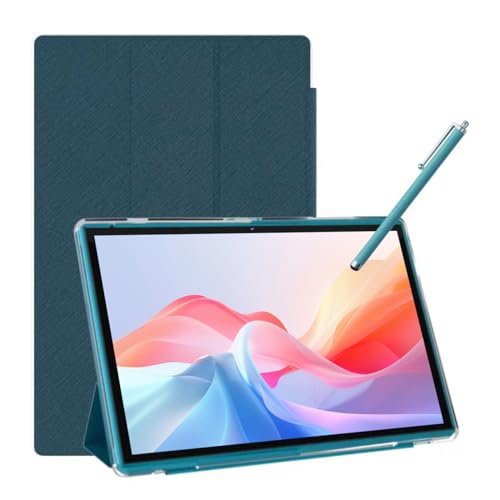


As an Amazon Associate we earn from qualifying purchases at no extra cost to you. Ratings are shown as listed on Amazon.
Best Android tablets at a glance
| Tablet | Screen and weight | Processor | Battery | Best for | Typical market range |
|---|---|---|---|---|---|
| Samsung Galaxy Tab S11 | 11-inch AMOLED, about 469g | MediaTek Dimensity 9400+ | About 8,400mAh | Best overall, notes, drawing, portability | Roughly $700–$900 |
| Samsung Galaxy Tab S11 Ultra | 14.6-inch AMOLED, about 692g | MediaTek Dimensity 9400+ | About 11,600mAh | Large-screen work and media | Roughly $1,200–$1,500 |
| OnePlus Pad 2 | 12.1-inch LCD, about 584g | Snapdragon 8 Gen 3 | 9,510mAh | Gaming and demanding apps | Roughly $450–$600 |
| Xiaomi Pad 7 | 11.2-inch LCD, about 500g | Snapdragon 7+ Gen 3 | 8,850mAh | Value and everyday productivity | Roughly $350–$500 |
| Google Pixel Tablet | 10.95-inch LCD, about 493g | Google Tensor G2 | 7,020mAh | Home use and smart-home control | Roughly $300–$500, depending on bundle |
Battery capacities and weights can vary slightly by regional version. Real runtime depends heavily on brightness, cellular connectivity, games, video resolution, and background syncing.
Best overall: Samsung Galaxy Tab S11
The Galaxy Tab S11 is the safest recommendation for most buyers because it combines a high-quality AMOLED display, flagship-class performance, an included S Pen, broad accessory support, and a long software-support commitment. Its 11-inch size is large enough for split-screen work but still manageable on a sofa, in a backpack, or on a small desk.
Its AMOLED panel is particularly useful for movies and reading in dark rooms: blacks are effectively black, contrast is excellent, and the 120Hz refresh rate keeps scrolling and pen input smooth. The trade-off is that AMOLED displays can be more vulnerable to long-term image retention than LCD panels when a static interface is left at high brightness for extended periods.
The included S Pen makes the Tab S11 a better value than tablets that require a separate stylus. It is suited to handwritten notes, PDF markup, diagrams, and casual illustration. Samsung Notes and multitasking tools are more developed than the software on many cheaper Android tablets, although the interface can feel busy if you prefer minimal Android.
Best large Android tablet: Samsung Galaxy Tab S11 Ultra
Choose the Galaxy Tab S11 Ultra when screen area matters more than portability. Its 14.6-inch AMOLED display is close to a small laptop screen, making two documents, a video timeline, or a spreadsheet easier to view without constant zooming. It is also excellent for films and split-screen research.
The Ultra is not simply a larger entertainment tablet. With a keyboard cover, it can act as a lightweight workstation for email, documents, remote desktop sessions, and browser-based tools. However, its size creates practical limitations: it takes two hands to use comfortably, occupies substantial desk space, and is awkward to hold while standing. The keyboard accessory also adds considerable cost, so include it in the budget rather than treating the tablet price as the full purchase price.
Best performance value: OnePlus Pad 2
The OnePlus Pad 2 is the strongest choice for demanding games and heavy multitasking without moving into premium Samsung pricing. Its Snapdragon 8 Gen 3 processor has considerably more performance headroom than the chips in typical mid-range tablets, while the 12.1-inch 3K LCD provides a spacious 7:5 working area.
That unusual aspect ratio is useful for web pages, documents, and split-screen apps, but widescreen video will show larger black bars than on a 16:10 tablet. The LCD cannot match Samsung’s AMOLED contrast, and the OnePlus Stylo 2 and keyboard are generally separate purchases. Check local accessory availability before choosing it for handwriting or schoolwork.
The 9,510mAh battery is a major strength. A reasonable planning estimate is 8–12 hours of mixed Wi-Fi use, although intensive 3D gaming can reduce that substantially. The tablet’s large battery also means longer charging times when using a low-power charger.
Best affordable all-rounder: Xiaomi Pad 7
The Xiaomi Pad 7 offers an appealing balance of price, screen quality, performance, and build. Its 11.2-inch 3.2K LCD has a 144Hz refresh rate, which benefits fast scrolling and supported games. The Snapdragon 7+ Gen 3 is not a flagship chip, but it is quick enough for office apps, streaming, photo editing, and most games at sensible settings.
Its aluminum body feels more substantial than the cheapest plastic tablets, and the 8,850mAh battery is generous for the class. The main compromises are software polish and regional availability. Xiaomi’s interface includes extra system apps and settings that may take time to organize, while pen and keyboard accessories may not be bundled or consistently stocked in every market.
For occasional use—reading, video, recipes, video calls, and light work—the Pad 7 usually offers better value than paying for flagship performance that will remain idle.
Best for home use: Google Pixel Tablet
The Google Pixel Tablet remains distinctive because of its charging speaker dock. It can serve as a kitchen display, music controller, video-call screen, or smart-home panel when docked, then become a conventional Android tablet when carried away.
The 10.95-inch LCD is comfortable for browsing and video, and the Tensor G2 handles ordinary apps well. It is not the best option for sustained high-end gaming or the fastest possible multitasking, and its 60Hz display feels less fluid than newer 120Hz and 144Hz competitors. Stylus support is also less compelling than Samsung’s integrated S Pen experience.
Buy it when the dock is central to your routine. If you will mostly hold the tablet on the couch, a newer high-refresh-rate model may provide more enjoyment for the same money.
Which size should you buy?
- 8–9 inches: Best for travel, ebooks, and one-handed use. The smaller screen limits split-screen work and detailed drawing.
- 10–11 inches: The best compromise for most people. It fits bags, works well for notes, and remains comfortable for video.
- 12–13 inches: Better for keyboard work, art, spreadsheets, and frequent multitasking, but less convenient to carry.
- 14 inches and above: A portable desktop replacement rather than a casual tablet. Choose it only if workspace is a priority.
Decision guide by situation
| Your priority | Best fit | Why |
|---|---|---|
| One tablet for notes, media, and work | Galaxy Tab S11 | AMOLED, included pen, strong software, manageable size |
| Gaming and demanding apps | OnePlus Pad 2 | High-end Snapdragon performance and large battery |
| Lowest sensible cost for frequent use | Xiaomi Pad 7 | High-resolution 144Hz display and capable mid-range chip |
| Large-screen productivity | Galaxy Tab S11 Ultra | 14.6-inch AMOLED workspace and mature multitasking tools |
| Shared household or smart-home use | Google Pixel Tablet | Charging speaker dock and simple Google integration |
Software support and ownership costs
Software longevity should influence the price you are willing to pay. Samsung is the strongest choice here because its premium tablets receive an unusually long period of Android and security updates. Google offers a clean interface and dependable core apps, while Xiaomi and OnePlus can offer excellent hardware value but may differ by region in update length and accessory support. Confirm the exact support policy for your country before buying.
Storage is another ownership decision. A 128GB tablet can be enough for streaming and cloud documents, but downloaded films, large games, offline maps, and high-resolution art files consume space quickly. For frequent gaming or creative work, 256GB is the more comfortable target. A microSD slot can reduce pressure on storage, but it does not always support moving every app or game.
The first components likely to show wear are the charging port, screen coating, keyboard cover, and battery—not the processor. Avoid charging with damaged cables, do not store a stylus pressed against the display, and clean the screen with a soft dry or lightly damp microfiber cloth rather than household glass cleaner. Keyboard covers collect grit around hinges and keys, so detach and wipe them periodically. Keeping brightness and heat under control helps preserve battery capacity over years of use.
Final recommendation
Buy the Galaxy Tab S11 if you want the least-compromised 11-inch Android tablet and will use a stylus. Choose the OnePlus Pad 2 when processor speed and gaming matter most, or the Xiaomi Pad 7 when value is the priority. The Galaxy Tab S11 Ultra earns its premium for serious large-screen work, while the Pixel Tablet makes sense mainly for a docked home setup.