Key takeaways
- Buy the Lenovo IdeaPad Slim 3 15 with a Ryzen 5 or Core 5 processor, 16GB of RAM, a 512GB SSD, and an IPS display if you want the most balanced Windows choice. Choose the Acer Aspire Go 15 when the lowest sensible price matters…
The best budget laptops in 2026 are the Lenovo IdeaPad Slim 3 for the best all-round Windows value, the Acer Aspire Go 15 for the lowest sensible price, the ASUS Vivobook Go 15 for students who prioritize portability, and a Chromebook Plus model for simple web-based work.
A budget laptop should not be judged by processor branding alone. At this price, the differences you notice every day are often the screen’s brightness, the keyboard’s layout, the number of usable ports, whether the memory can be upgraded, and how well the battery holds up after two or three years. The recommendations below focus on typical configurations and general market prices, since retailers frequently change the exact processor, storage, and display fitted to each model.
Our top picks
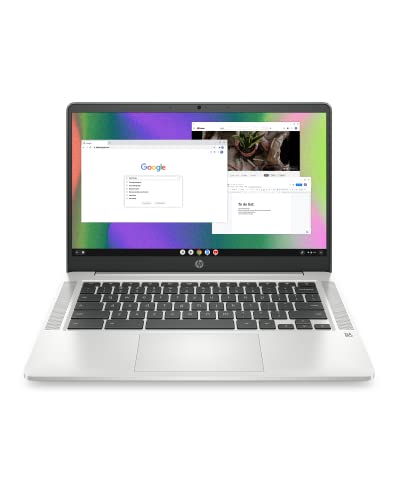


As an Amazon Associate we earn from qualifying purchases at no extra cost to you. Ratings are shown as listed on Amazon.
Quick comparison: the strongest budget choices
| Model or type | Typical price range | Processor class | Memory and storage | Screen | Weight | Typical light-use battery |
|---|---|---|---|---|---|---|
| Lenovo IdeaPad Slim 3 15 | $450–$650 | Ryzen 5 or Core 5 | 8–16GB; 512GB SSD | 15.6-inch, 1920×1080; IPS on selected versions | About 3.6–3.8 lb | 8–11 hours |
| Acer Aspire Go 15 | $300–$500 | Intel Core 3, Core 5, or Ryzen 3/5 | 8GB; 128–512GB SSD | 15.6-inch, 1920×1080 | About 3.8–4.0 lb | 7–10 hours |
| ASUS Vivobook Go 15 | $350–$550 | Intel N-series, Core 3, or Ryzen 3 | 8GB; 128–512GB SSD | 15.6-inch, 1920×1080 | About 3.5–3.8 lb | 8–10 hours |
| Chromebook Plus, 14-inch class | $350–$600 | Intel Core 3/5 or Ryzen 3/5 | 8GB; 128–256GB storage | 14-inch, 1920×1080 | About 3.1–3.5 lb | 9–12 hours |
| Refurbished business laptop | $250–$500 | Intel Core i5 or Ryzen 5, two to four generations old | 8–16GB; 256–512GB SSD | 14-inch, 1920×1080, often matte | About 3.0–3.7 lb | 5–9 hours |
Battery figures are practical ranges for browsing, documents, video calls, and streaming at moderate brightness. Gaming, sustained video editing, high brightness, and weak Wi-Fi can reduce them substantially.
Best overall: Lenovo IdeaPad Slim 3 15
The Lenovo IdeaPad Slim 3 15 is the safest general recommendation when its configuration includes a Ryzen 5 or Core 5 processor, 16GB of memory, and a 512GB solid-state drive. It has enough performance for office applications, dozens of browser tabs, video meetings, light photo editing, and basic coding. Integrated graphics are suitable for older or lightweight games, but this is not a serious gaming laptop.
The keyboard is one of its practical strengths. The full-size layout and, on many 15-inch versions, a numeric keypad make it useful for spreadsheets and finance work. The chassis is primarily plastic, so it does not feel as rigid as a premium laptop, but careful handling should produce several useful years of service.
Check the display before buying. Some inexpensive IdeaPad Slim 3 configurations use a dim TN panel, while others have a much better IPS panel. For frequent use near a window, choose the IPS version with at least 300 nits if available. Memory may be partly or completely soldered depending on the generation, so confirm the upgrade specification rather than assuming it.
Best under the tightest budget: Acer Aspire Go 15
The Acer Aspire Go 15 makes sense when the target price is close to $400 and the main tasks are documents, web research, email, streaming, and schoolwork. Its 15.6-inch Full HD screen gives more working space than a very cheap 1366×768 panel, and the larger body usually provides a comfortable keyboard with a separate number pad.
Choose a version with an SSD rather than eMMC storage. A 128GB SSD can work for cloud-based documents, but 256GB is a more comfortable minimum for Windows updates, applications, and offline files. Eight gigabytes of memory is usable today, although 16GB is preferable if the laptop will remain in service beyond a few years.
The compromises are predictable: speakers are ordinary, the screen may be only moderately bright, and the plastic lid can flex under pressure. The Aspire Go is good value when discounted, but paying nearly the price of a better-configured IdeaPad or Vivobook removes its main advantage.
Best for students carrying it every day: ASUS Vivobook Go 15
The ASUS Vivobook Go 15 is a good match for students and commuters who want a large screen without a particularly heavy laptop. It generally offers a pleasant keyboard, a practical port selection, and a compact charger. Its performance is adequate for writing, research, presentations, web apps, and video calls.
Look for 8GB or 16GB of memory and at least a 512GB SSD if you keep course materials locally. Models with entry-level Intel N-series processors are fine for light work but can feel slow when installing software or working with large spreadsheets. A Ryzen 5 or Core 5 configuration is a better long-term choice if the price difference is reasonable.
As with other budget laptops, the screen specification matters more than the product name. A Full HD IPS panel is preferable to a low-brightness TN alternative. The Go 15 is also not the ideal choice for users who need Thunderbolt, a high-speed SD card workflow, or professional color accuracy.
Best for web-first users: a Chromebook Plus
A Chromebook Plus is often the best budget laptop when your work fits comfortably inside a browser. Gmail, Google Docs, Microsoft 365 on the web, video meetings, streaming, and cloud storage run well on a suitable Core 3, Core 5, or Ryzen 3/5 model. ChromeOS also tends to remain responsive on modest hardware because it has fewer traditional desktop processes.
The most important limitation is software compatibility. Windows-only accounting programs, specialist school applications, many engineering tools, and some full desktop creative applications may not run natively. Offline capability is also more limited than on Windows, although many common web applications provide offline modes.
Chromebook Plus models commonly provide 8GB of memory and a 1080p display. They are attractive for households that want simple setup and automatic updates, but check the device’s stated update-expiration date before purchasing. A newer model with several years of remaining updates is worth choosing over a slightly cheaper older one.
Decision matrix: which budget laptop fits your situation?
| Your situation | Best direction | Minimum specification to target | Why |
|---|---|---|---|
| Absolute budget under $400 | Acer Aspire Go 15 or Chromebook Plus sale model | 8GB RAM, 128GB SSD or 128GB storage, Full HD screen | Avoids the slowest storage and lowest-resolution displays |
| College student using Windows software | Lenovo IdeaPad Slim 3 or ASUS Vivobook Go 15 | Ryzen 5/Core 5, 16GB RAM, 512GB SSD | More headroom for multitasking and several years of use |
| Mostly browser and cloud work | Chromebook Plus | 8GB RAM, Full HD IPS, at least 128GB storage | Usually strong battery life and low maintenance |
| Frequent spreadsheet or number entry | 15-inch Windows laptop with number pad | Comfortable full-size keyboard, 16GB RAM | The larger keyboard can matter more than a small CPU upgrade |
| Need repairability or upgrades | Refurbished business laptop or a modular laptop when discounted | Replaceable SSD and accessible memory where possible | Parts and serviceability can extend useful life |
What specifications matter most under $600?
Memory and storage
Eight gigabytes of RAM is the practical floor for a new Windows laptop. It works for ordinary school and office tasks, but browser tabs, video calls, and large spreadsheets can consume it quickly. Sixteen gigabytes is the better long-term target, especially when the memory is soldered and cannot be expanded.
Choose a 512GB SSD when possible. Compared with a 128GB drive, it leaves more room for applications, photos, and operating-system updates. Avoid treating cloud storage as a complete substitute: files still need local space for offline work and temporary data.
Display quality
Require a resolution of 1920×1080 or higher. IPS is preferable for viewing angles and general comfort. Brightness around 300 nits is workable indoors; 400 nits is more useful in bright rooms. A glossy touchscreen can be convenient, but it may introduce reflections and cost battery life without improving productivity.
Ports and wireless connections
A sensible minimum is two USB-A ports, one USB-C port, HDMI, a headphone jack, and Wi-Fi 6 or newer. Confirm what the USB-C port actually supports: some handle charging and display output, while others provide data only. An SD or microSD slot is useful for cameras, but its absence is manageable with a small adapter.
Long-term ownership: where budget laptops wear out
The first problems are often not processor-related. Hinges can loosen, the keyboard can accumulate crumbs, the charging port can become unreliable, and the battery gradually loses capacity. Keep the laptop on a hard surface so ventilation is not blocked, clean the keyboard with compressed air held at an angle, and avoid carrying it by the screen.
Do not leave the battery permanently at extreme heat or under heavy load on a soft bed. Install firmware and operating-system updates, but keep at least 15–20% of the SSD free so updates and temporary files have room to work. If the laptop becomes slow, check available storage and startup applications before assuming the hardware has failed.
A simple ownership calculation helps explain why the better configuration can be cheaper. Suppose a $400 laptop lasts three years and a $550 laptop with 16GB RAM and a 512GB SSD lasts five years. The purchase cost is approximately $133 per year for the first machine versus $110 per year for the second, before resale value or repair costs. Paying more is worthwhile when it buys memory, storage, battery capacity, or serviceability—not merely a decorative finish.
Bottom line
Buy the Lenovo IdeaPad Slim 3 15 with a Ryzen 5 or Core 5 processor, 16GB of RAM, a 512GB SSD, and an IPS display if you want the most balanced Windows choice. Choose the Acer Aspire Go 15 when the lowest sensible price matters most, the ASUS Vivobook Go 15 for a portable student-friendly package, and Chromebook Plus when your applications are primarily web-based. Whichever model you choose, verify the exact display, memory, storage, ports, and software-update policy—the configuration matters more than the badge on the lid.