Key takeaways
- Streaming: confirm support for your preferred service, especially Spotify Connect, Tidal Connect, Apple AirPlay 2, Chromecast or Roon.
- Television: HDMI ARC or eARC is usually more convenient than optical because the TV remote can control volume.
- Vinyl: a turntable needs either a built-in phono stage or an external phono preamp. A normal line input is not enough.
- Digital files: optical and USB inputs are useful for computers and older sources, but check whether USB audio is actually supported.
- Subwoofer: look for a dedicated subwoofer output or adjustable high-pass filtering if you plan to add one.
- Upgrades: passive-speaker systems offer the broadest upgrade path; active systems offer the shortest setup and smallest footprint.
Best Hi-Fi Systems for Detailed Music in Any Room
The best hi fi systems for detailed music are the KEF LS50 Wireless II for a compact all-in-one setup, the Naim Uniti Atom with suitable passive speakers for premium small-room listening, the WiiM Amp with efficient bookshelf speakers for value, and a separates system built around a Cambridge Audio or Marantz amplifier when you want the easiest long-term upgrade path.
There is no single system that suits every room. A small active-speaker pair can outperform a more expensive stack if the speakers are positioned correctly, while a powerful amplifier and floorstanders may sound boomy in a furnished bedroom. The right choice depends on room size, listening distance, streaming services, physical inputs, setup confidence and how much of the system you may replace later.
Our top picks


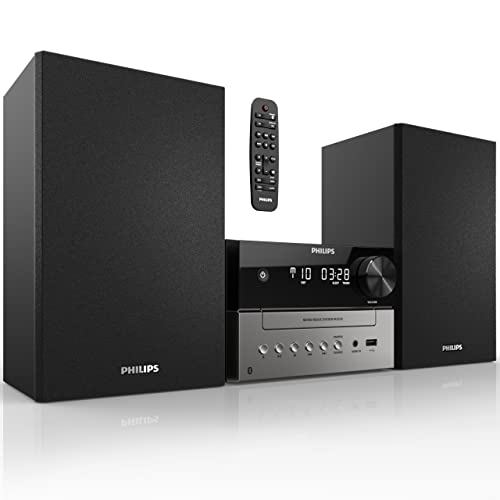
As an Amazon Associate we earn from qualifying purchases at no extra cost to you. Ratings are shown as listed on Amazon.
Quick decision guide
| Situation | Best direction | Typical system cost | Why it fits |
|---|---|---|---|
| Desk, bedroom or small living room | KEF LS50 Wireless II | About $2,000–$2,500 | Compact active speakers, built-in streaming and room-friendly flexibility |
| Small room, premium sound and simple operation | Naim Uniti Atom plus compact passive speakers | About $3,500–$6,000 | Excellent control and streaming in a small footprint, with speaker choice left to you |
| First serious system on a controlled budget | WiiM Amp plus bookshelf speakers | About $700–$1,300 | Strong streaming features, HDMI ARC and an inexpensive upgrade route |
| Medium or large room and varied sources | Integrated amplifier plus bookshelf or floorstanding speakers | About $1,500–$4,000 | More speaker choices, stronger bass options and easier component replacement |
| Vinyl-first listening | Amplifier with phono input plus passive speakers | About $900–$3,000 | Simple turntable connection and no dependence on a proprietary active-speaker app |
Our recommended systems by room and priority
KEF LS50 Wireless II: best all-in-one system for detailed listening
The KEF LS50 Wireless II is the most convincing choice when you want high resolution without assembling separate source, amplifier and speaker components. Each speaker contains its own amplification and digital processing, and the system supports network streaming, Spotify Connect, Tidal Connect, Apple AirPlay 2 and Bluetooth. HDMI eARC, optical and analogue connections cover a television, computer, turntable with a phono stage or CD player.
Its sealed, compact cabinet is easier to place than many rear-ported speakers, but it still benefits from stands and some distance from the wall. In a small room, begin roughly 30–50 cm from the front wall and reduce bass output if the low frequencies become thick. For the clearest stereo image, place the speakers symmetrically and angle them slightly toward the listening position.
This is a particularly good choice for listeners who use streaming every day and do not want a rack of equipment. The trade-off is an active system’s reliance on firmware, an app and the manufacturer’s connectivity decisions. You cannot independently replace the amplifier or upgrade only the speakers later.
WiiM Amp with bookshelf speakers: best value and easiest upgrade path
A WiiM Amp paired with efficient passive bookshelf speakers is the sensible starting point for many first-time buyers. It combines network streaming, Spotify Connect, Tidal Connect, AirPlay 2, Bluetooth, HDMI ARC, optical and analogue inputs in a compact amplifier. Speaker choice determines much of the final character: a neutral bookshelf model suits detailed acoustic music, while a warmer-sounding model can make bright recordings more forgiving.
Allow about $300–$700 for the amplifier and $400–$900 for a suitable pair of speakers, depending on finish and size. This gives a capable system without paying for duplicate features. You can later add a subwoofer, replace the speakers, or move the amplifier to a second room. Check speaker sensitivity and impedance before buying; very large, inefficient floorstanders are not the ideal match for a compact amplifier in a big room.
For a listening distance of roughly 2–3 metres, bookshelf speakers with a 5–6.5-inch woofer are usually a practical starting point. Use rigid stands rather than a deep shelf, keep the tweeters near ear height, and leave at least 20–40 cm behind rear-ported cabinets.
Naim Uniti Atom: best premium compact system
The Naim Uniti Atom is a premium streaming amplifier for listeners who value a refined interface, strong build quality and a small footprint. It supports major network-streaming functions, Internet radio, Bluetooth and physical digital inputs; the exact connection set should be checked before purchase because this product is designed primarily as a streaming hub rather than a phono-heavy control centre.
It needs passive speakers, so the total cost depends heavily on your selection. Pair it with compact standmount speakers in a small or medium room if you want precise imaging and articulate vocals. In a larger room, choose speakers with healthy sensitivity and a stable impedance rather than simply chasing the largest cabinet.
The Atom makes sense when the amplifier is likely to remain in service for many years and you are prepared to spend more on speakers and stands. It is less compelling if you need multiple analogue sources, a built-in phono stage or maximum power per dollar.
Cambridge Audio or Marantz separates: best for flexibility
A conventional integrated amplifier from Cambridge Audio or Marantz, combined with passive speakers, remains the most adaptable route. Models such as the Cambridge Audio CXA61 or Marantz PM6007 illustrate two different priorities: modern digital connectivity and a clean, energetic presentation from the Cambridge, versus a more traditional amplifier layout with useful analogue connections and a phono input from the Marantz.
This approach usually requires more setup. You may need a separate network streamer, speaker cable, stands and perhaps a phono preamp. In return, each part can be replaced independently. If streaming changes, replace the streamer; if your room changes, replace the speakers; if you want a different tonal balance, keep the rest of the system.
Sound balance matters more than headline power
Detailed sound should not mean aggressive treble. A system with excessive upper-midrange energy can make cymbals and sibilant vocals seem impressive for ten minutes but tiring over a long album. Listen for a stable balance between bass weight, vocal presence and treble openness. Neutral speakers reveal recording differences, while a slightly warm balance can be more comfortable in a lively room with hard floors and bare walls.
Room interaction often matters more than the amplifier’s final few watts. Bass builds up near corners and walls, while reflections from glass, tile and empty shelves blur stereo placement. Soft furnishings, a rug and symmetrical speaker positioning can improve clarity without changing equipment.
Streaming, inputs and upgrade checks
- Streaming: confirm support for your preferred service, especially Spotify Connect, Tidal Connect, Apple AirPlay 2, Chromecast or Roon.
- Television: HDMI ARC or eARC is usually more convenient than optical because the TV remote can control volume.
- Vinyl: a turntable needs either a built-in phono stage or an external phono preamp. A normal line input is not enough.
- Digital files: optical and USB inputs are useful for computers and older sources, but check whether USB audio is actually supported.
- Subwoofer: look for a dedicated subwoofer output or adjustable high-pass filtering if you plan to add one.
- Upgrades: passive-speaker systems offer the broadest upgrade path; active systems offer the shortest setup and smallest footprint.
Speaker placement that improves detail
- Place the speakers on a shared wall with equal distances to the side walls.
- Start with the tweeters at ear height and the speakers 1.5–2.5 metres apart.
- Keep the listening position away from the exact centre of the room, where bass cancellations can be severe.
- Move the speakers forward in 5–10 cm steps until bass becomes even, then adjust toe-in for vocal focus.
- Use stands for standmount speakers and fill hollow metal stands with an appropriate material if the manufacturer permits it.
As a practical example, a 3-metre-wide room does not automatically need floorstanders. If you sit 2.2 metres away and listen at moderate levels, a good 5–6.5-inch bookshelf speaker may provide enough bass and headroom. Floorstanders become more useful when the room is larger, the listening distance exceeds about 3 metres, or you regularly listen loudly.
Ownership costs and common mistakes
Budget beyond the central components. Allow roughly $100–$400 for stands, $30–$100 for basic speaker cable, and $100–$500 for a phono stage or network streamer if your chosen amplifier lacks those functions. A subwoofer commonly adds $300–$1,000. These accessories influence usability, but expensive cables rarely offer the same improvement as better placement or room treatment.
The parts that age first are usually app support, streaming compatibility, speaker surrounds and mechanical controls rather than the amplifier electronics. Keep firmware current, dust speaker grilles and drivers with a dry soft brush, and do not use household cleaners on cabinet finishes or tweeter domes. Avoid pushing an amplifier into audible clipping: distortion at high volume is a warning to reduce the level, not evidence that the system needs more cable.
For the lowest total cost, buy passive speakers and an amplifier with the inputs you need today, then add components only when a real limitation appears. For the least complexity, choose an active pair such as the KEF LS50 Wireless II. For the best balance of cost, streaming convenience and future changes, a WiiM Amp with well-matched bookshelf speakers is the strongest starting point.
FAQ
Are expensive amplifiers necessary for detailed music?
Not usually. Once an amplifier has enough clean power for the speakers and room, speaker quality, placement and recording quality tend to matter more. Spend first on a sensible speaker match and stable stands.
Is an active system better than separates?
Active systems are usually simpler and more space-efficient because amplification and digital processing are matched to the speakers. Separates are better if you expect to change speakers, add vinyl equipment or replace the streaming platform later.
Should a small room use small speakers?
Usually, but not exclusively. A compact speaker with controlled bass can work well in a small room, while a large floorstander may overload it. Room placement and bass adjustment are more important than cabinet size alone.