Key takeaways
- Paper and cardstock: all listed machines handle common craft weights, although a fresh mat and a clean blade are important for intricate cuts.
- Fabric: the Maker 4 has the broadest tool-oriented ecosystem, but fabric usually needs stabilizer and a fabric-compatible blade.
- Leather and wood veneer: use only manufacturer-approved thicknesses and cutting settings. These jobs are slower and can mark the mat.
- Print-then-cut stickers: check the machine’s optical alignment and usable page area. Registration marks reduce the printable area, so a nominal 12-inch width does not equal a 12-inch sticker sheet.
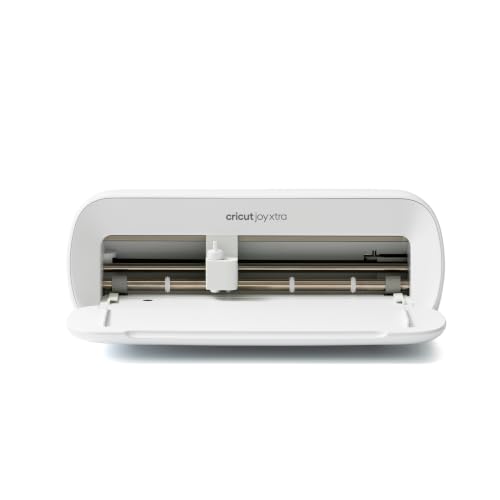
The best vinyl cutting machines in 2026 are the Cricut Maker 4 for broad material flexibility, Silhouette Cameo 5 for detailed desktop work, Siser Juliet for fast and quiet precision, and Cricut Joy Xtra for small projects in limited space.
The right choice depends less on the maximum cutting force than on four practical questions: how wide your designs are, whether you will cut only adhesive vinyl or thicker materials too, how much software control you want, and how often you are willing to replace mats and blades.
Our top picks


As an Amazon Associate we earn from qualifying purchases at no extra cost to you. Ratings are shown as listed on Amazon.
Best vinyl cutting machines at a glance
| Machine | Maximum material width | Best for | Material range | Approx. machine price | Noise and setup |
|---|---|---|---|---|---|
| Cricut Maker 4 | 12 in / 30.5 cm on a mat; longer with Smart Materials | Mixed-material crafters and beginners | Vinyl, iron-on, paper, leather, fabric, wood veneer and more with compatible tools | $400–$450 | Moderate motor noise; simple guided setup |
| Silhouette Cameo 5 | 12 in / 30.5 cm on a mat; up to about 15 in / 38 cm with supported roll material | Detailed decals, signs and repeat production | Adhesive vinyl, heat-transfer vinyl, paper, cardstock, specialty media and selected thicker materials | $300–$350 | Moderate noise; more settings to learn |
| Siser Juliet | 13.5 in / 34.3 cm | Quiet, accurate vinyl cutting and small-business work | Adhesive vinyl, heat-transfer vinyl, paper, cardstock and compatible specialty media | $450–$550 | Relatively quiet; setup is direct but software rewards calibration |
| Cricut Joy Xtra | 9.5 in / 24.1 cm on a mat | Small spaces, labels, cards and occasional projects | Vinyl, iron-on, paper, sticker media and other thin materials | $180–$220 | Quiet-to-moderate; fastest learning curve |
| Silhouette Portrait 4 | 8.5 in / 21.6 cm | Compact decals, stickers and paper crafts | Adhesive vinyl, heat-transfer vinyl, paper and lightweight specialty media | $150–$200 | Moderate noise; compact and uncomplicated |
Widths are maximum working dimensions rather than guaranteed finished-design sizes. A 12-inch machine normally needs a small margin, and mat-based projects lose additional space to the mat edge. For a 12-inch-wide sign, choose a 15-inch-class machine or plan to tile the design.
Head-to-head: which machine suits your situation?
| Your situation | Best choice | Why | Trade-off |
|---|---|---|---|
| You are new to cutting machines | Cricut Maker 4 | Clear Design Space workflow, large user community and reliable presets for common materials | Less open-ended than Silhouette Studio; many advanced tools are separate purchases |
| You want precise decals and multiple copies | Siser Juliet | Wide working area, optical registration and strong focus on clean vinyl cuts | Higher initial cost and a smaller accessory ecosystem |
| You want design control and flexible sizing | Silhouette Cameo 5 | Silhouette Studio provides detailed control over offsets, weeding lines, nesting and repeats | The software has a steeper learning curve |
| You have little desk or storage space | Cricut Joy Xtra | Compact footprint and suitable width for labels, shirts and small signs | Not ideal for large wall graphics or wide batches |
| You cut thick materials occasionally | Cricut Maker 4 | Broad tool system, including blades for heavier craft media | Thick-material capability does not make it a fast production machine |
| You mainly make stickers and paper crafts | Silhouette Portrait 4 | Lower entry cost and an efficient small-format workflow | Limited width becomes frustrating for shirts and signage |
What separates these machines in daily use?
Cutting width and roll handling
A 12-inch machine is the practical middle ground for home crafting. It accommodates standard shirt graphics, labels and medium signs without requiring a large desk. The Cameo 5 and Juliet are more attractive when you regularly cut long rolls, because roll-fed work reduces the need to place every project on a mat. Cricut’s Smart Materials simplify matless cutting, but they can cost more than ordinary vinyl and are not available in every material type.
Compact machines are not merely slower versions of larger ones. Their narrower feed path limits how efficiently you can arrange several decals and makes long lettering more likely to require tiling. Measure the machine with its front and rear clearance, not just its body: a roll-fed project can need several feet of unobstructed space.
Material compatibility
For ordinary adhesive vinyl and heat-transfer vinyl, all five machines are capable choices. The differences matter when you move beyond vinyl:
- Paper and cardstock: all listed machines handle common craft weights, although a fresh mat and a clean blade are important for intricate cuts.
- Fabric: the Maker 4 has the broadest tool-oriented ecosystem, but fabric usually needs stabilizer and a fabric-compatible blade.
- Leather and wood veneer: use only manufacturer-approved thicknesses and cutting settings. These jobs are slower and can mark the mat.
- Print-then-cut stickers: check the machine’s optical alignment and usable page area. Registration marks reduce the printable area, so a nominal 12-inch width does not equal a 12-inch sticker sheet.
Cutting force alone is a poor buying metric. A higher-force machine may still produce poor results if the blade is dull, the material is not held flat, or the design contains tiny unweedable details.
Software: ease versus control
Cricut Design Space is the easiest starting point for importing SVG files, choosing a material preset and sending a project to the machine. It is convenient for guided projects, but some advanced features and content depend on the software ecosystem or optional subscriptions.
Silhouette Studio offers more direct control over offsets, line colors, cut order, nesting and repeated layouts. That makes the Cameo 5 and Portrait 4 appealing for users who prepare their own artwork or optimize material usage. The basic software is available at no charge, while some professional features require a paid upgrade.
Siser Leonardo is designed around Siser machines and is capable of professional-style workflows, including contour-cut projects. It may take longer to learn than a guided beginner app, but that extra control is useful when producing batches rather than one-off crafts.
Noise, precision and setup realities
None of these machines is silent. Cutting pressure, acceleration and material thickness change the sound. Small machines are generally tolerable in a shared room, while long rapid cuts can be distracting. The Juliet is a strong choice when reduced operating noise is important, but “quiet” does not mean suitable for overnight use: blade movement, rollers and material handling still produce intermittent noise.
Expect the first successful project to require calibration. A reliable setup sequence is:
- Install the software and update the machine firmware before loading valuable material.
- Confirm the correct blade type and that the blade is fully seated.
- Clean the mat with a lint-free cloth and test a small square, circle and narrow line.
- Adjust blade depth, force and speed one variable at a time. Increasing force is not always the solution; too much force can damage the mat and create burrs.
- For print-then-cut, calibrate with the exact printer, paper and lighting used for production.
- Weed a corner before committing to a full sheet.
Small lettering exposes precision problems first. If a design repeatedly tears at corners, check blade condition and material temperature before blaming the machine. Cold vinyl can become less flexible, while excessive force can pull delicate shapes from the carrier.
The real cost: mats, blades and wasted material
A machine advertised at $200 can become a $300–$400 first-year purchase once you add tools and failed experiments. Typical replacement costs are approximately $10–$25 for a standard cutting mat, $10–$35 for a replacement blade, and $5–$20 for transfer tape or specialty carriers, depending on brand and size.
Here is a realistic small-project calculation:
- Machine: $350
- Starter tools and one replacement blade: $45
- Two replacement mats during the first year: $36
- Vinyl, transfer tape and test material: $90
- Estimated first-year total: $521
At 100 completed projects, that is $5.21 per project before counting design time. At 25 projects, it is $20.84 per project. Buying wider equipment does not automatically lower the cost: a large machine can waste more vinyl when most designs are small, while a narrow machine can waste time through tiling.
Mats usually wear first at the edges where rollers and repeated loading concentrate pressure. Dust, fabric fibers and paper debris reduce adhesion. Cover the mat after use, avoid touching the adhesive surface, and rotate the working area when possible. Blades wear faster on glitter vinyl, flocked heat-transfer vinyl, cardstock and abrasive specialty media than on ordinary smooth vinyl.
Final buying advice
Choose the Cricut Maker 4 if you want the broadest material and tool ecosystem with guided software. Choose the Silhouette Cameo 5 if design control, repeat layouts and roll-fed work matter more than the easiest learning curve. Choose the Siser Juliet for a wider, precision-focused machine that is particularly well suited to frequent vinyl production. Choose the Cricut Joy Xtra or Silhouette Portrait 4 when storage space, occasional use and a lower entry price outweigh maximum width.
For most buyers, a 12-inch machine is the safest long-term size. It handles common craft projects without the footprint and consumable demands of a larger commercial cutter. Before ordering, price the replacement mat and blade for the exact model, measure operating clearance, and check that the software supports the file types and design control you expect to use.