Key takeaways
- Pro: Built-in screen adds recipe views, video calling, and camera streaming without a tablet.
- Pro: Deepest integration with Alexa routines and smart home commands in this list.
- Con: Only speaks one ecosystem language well, so Google or HomeKit users will find it limiting.
A smart home setup used to mean buying one expensive hub and hoping it would work with everything else you added later. That is no longer the reality, and the shift creates a specific problem for buyers: which devices actually integrate, which ones just sit in a drawer after a month, and which are worth even forty dollars when you are outfitting a room.
This roundup compares eight smart home tech products by their published specifications, current prices, and aggregated owner feedback. We looked for consistent complaints, standout strengths on paper, and real compatibility with major ecosystems. The result is a ranked guide that separates devices that earn their spot in your setup from ones that look good on a listing page but frustrate people once they are actually plugged in.
Our top picks






As an Amazon Associate we earn from qualifying purchases at no extra cost to you. Ratings are shown as listed on Amazon.
Quick Picks
| Product | Best for | Price |
|---|---|---|
| Amazon Echo Show 5 | Screen-equipped Alexa control | $99.99 |
| FFJ TV Backlight | Ambient TV lighting on a budget | $49.99 |
| Amazon Smart Plug | Alexa-native switch for any lamp | $24.99 |
| Linkind Matter Plug | Multi-ecosystem compatibility | $32.99 |
| Levoit Air Purifier | Pet households wanting voice control | $74.95 |
| Addtam Surge Protector | USB charging plus surge protection | $14.99 |
| GoveeLife Humidifier | Quiet bedroom humidity with app control | $24.99 |
| GoveeLife Mini Purifier | Small-space air quality on a budget | $39.99 |
How We Picked
Four criteria drove this list: ecosystem compatibility (does it work with Alexa, Google, HomeKit, or Matter without gymnastics), real-world reliability (what owners consistently report after the first few weeks), value relative to price (whether a cheaper option delivers the same function), and meaningful smart features versus gimmick (an app-controlled on-off switch is useful; a Bluetooth-only light with no schedule support usually is not). For this 2026 edition, we also weighted whether each product supports current connection standards rather than older proprietary protocols.
The 8 Best Smart Home Tech in 2026
Amazon Echo Show 5
Anyone wanting a visual Alexa hub for a kitchen counter or bedside table should start here. The newest model is designed for Alexa+ and delivers twice the bass and noticeably clearer sound compared to earlier generations, making it usable for video calls and music without a separate speaker.
- Pro: Built-in screen adds recipe views, video calling, and camera streaming without a tablet.
- Pro: Deepest integration with Alexa routines and smart home commands in this list.
- Con: Only speaks one ecosystem language well, so Google or HomeKit users will find it limiting.
Skip it if you already own a newer Echo Show or if you need a device that works outside the Amazon ecosystem. The audio upgrade over its predecessor alone does not justify the price if your current unit still functions.
FFJ TV LED Backlight
This strip suits anyone who wants ambient bias lighting behind a 55- to 65-inch TV or monitor without spending over fifty dollars. It stretches 14.7 feet, is cuttable, and syncs color to on-screen content or music. Smart app control handles mode selection and brightness.
- Pro: Game and music sync modes create immersive effects that pricier alternatives often charge more for.
- Pro: Cuttable design adapts to various screen sizes without dead LEDs.
- Con: Owners note the adhesive loses grip over time on textured or matte TV backs.
Skip it if your setup includes a TV with built-in ambient lighting, or if you need something that survives a full year of daily use without re-mounting.
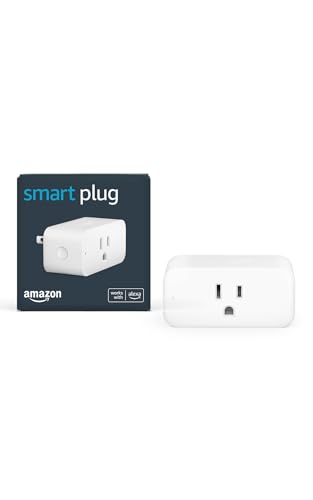
Amazon Smart Plug
The simplest entry into smart home tech for any room with a lamp, fan, or space heater you want to toggle remotely. Setup takes under a minute, and it inherits every Alexa voice command and routine you already use.
- Pro: “Simple Setup” means it pairs without opening an app if your phone is near the Echo.
- Pro: Compact form factor does not block the second outlet on a duplex wall plate.
- Con: Works only within Alexa; no Matter or Google Home support.
Skip it if you already run a mixed-ecosystem household where some members use Google or HomeKit. The ecosystem lock-in is the entire trade-off for its simplicity.
Linkind Matter Smart Plug
Multi-platform households benefit most here. It works with Apple Home, Alexa, Siri, and Google Home simultaneously thanks to Matter certification, so one plug fits whatever ecosystem a room is already using.
- Pro: Matter support means it stays compatible if you switch from Alexa to HomeKit next year.
- Pro: Physical button fallback for on/off when Wi-Fi is down or the router reboots.
- Con: Setup instructions are less polished than Amazon’s, and some owners report a confusing initial pairing.
Skip it if you want zero-friction pairing and are certain you will stay in the Alexa world. The extra $8 buys flexibility you may never use.
Levoit Air Purifier
Pet owners and bedroom dwellers get the most value from this unit. Smart and voice control let you adjust fan speed without crossing the room, and Levoit’s reputation for quiet operation holds up in owner reviews across all but the highest setting.
- Pro: Voice control integration means you can ramp it up before your dog sheds on the couch.
- Pro: Filter replacement notifications reduce guesswork on maintenance timing.
- Con: It covers a bedroom-sized room, not a large open-plan living area.
Skip it if you need whole-home coverage from a single device or if your room already has strong ventilation from an HVAC system. It is a spot purifier, not a central replacement.
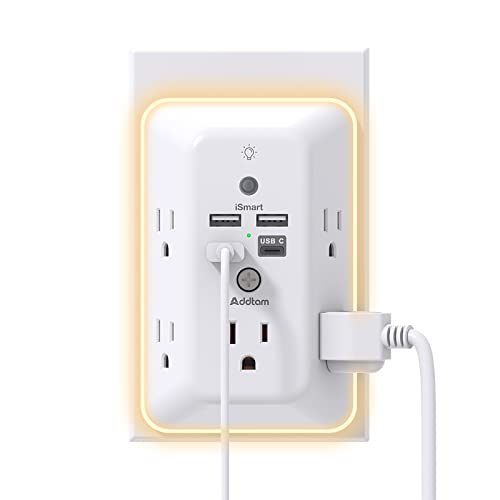
Addtam Surge Protector
At under fifteen dollars, this is the least glamorous item on the list but one of the most practical for a smart home setup. Five outlets plus four USB ports consolidate charging for a nightstand or desk, and the built-in night light doubles as a status indicator.
- Pro: Four USB ports eliminate the need for separate charging bricks at a fraction of their combined cost.
- Pro: Compact and wall-mountable, useful where outlet space is already tight.
- Con: It does not report energy usage or connect to any app, so it sits outside your smart ecosystem.
Skip it if you specifically want outlet-level control or energy monitoring. This is a passive power strip that happens to be well-designed, not a smart device.
GoveeLife Smart Humidifier
Bedroom humidity control without fumbling at 2 a.m. is the appeal here. The 3-liter top-fill design means you add water from above instead of flipping the tank, and the smart app lets you set schedules or timers from bed.
- Pro: Top-fill design is meaningfully easier to maintain than bottom-fill competitors.
- Pro: Cool mist is safe for households with children or pets that get too curious near the outlet.
- Con: App connectivity has been inconsistent for some owners, with occasional re-pairing required.
Skip it if you need warm mist for congestion relief or if your room exceeds the coverage area the 3-liter capacity can sustain overnight without a refill.
GoveeLife Mini Air Purifier
This compact purifier targets desk-sized or small bedroom spaces and includes app plus Alexa control at a price under forty dollars. It is the logical step down from the Levoit for anyone who only needs to clean the air around a single work surface or nightstand.
- Pro: Dual control options (app and Alexa) mean you are not locked into a voice-only interaction.
- Pro: Small footprint fits on a nightstand or shelf without dominating the surface.
- Con: Limited filtration range; it will not clear a full bedroom quickly.
Skip it if you have allergies that demand room-wide air changes or if you already own a larger purifier. It is best as a supplemental unit for a specific zone, not a primary filter.
Buying Guide
Ecosystem and Connectivity Standards
Before buying any smart home tech, confirm which ecosystem your household actually runs. Alexa-only plugs are cheaper and pair faster but become dead weight if you ever migrate to Matter. Devices with Matter certification, like the Linkind plug, trade a slightly more complex initial setup for long-term portability. Wi-Fi is the default for plugs and purifiers; Bluetooth-only or infrared devices limit remote access and scheduling.
Room Size Matching
Air purifiers and humidifiers are rated for specific coverage areas. A mini purifier on a desk will not fix bedroom-wide pet dander, and a 3-liter humidifier will run dry in a large room before morning. Match the device’s rated coverage to the actual square footage, and size up if your ceilings are tall or the room is open to a hallway.
App Reliability and Update Support
Smart features are only as good as the software behind them. Check owner reviews for complaints about dropped connections, forced log-outs, or firmware issues. GoveeLife and Levoit generally score well here, while cheaper devices with minimal app interfaces tend to lose support after a year or two. If a device stops connecting, it reverts to a dumb switch or a manual control you can reach from bed.
Our Verdict
Top pick: Amazon Echo Show 5. It is the anchor that makes every other device on this list more useful because it gives you a screen, a speaker, and a voice hub in one unit at $99.99.
Budget pick: Amazon Smart Plug. At $24.99 it removes friction from daily control of any lamp or fan, and the compact form factor means you are not fighting over outlet space.
Alternative winner: If your household spans Alexa, HomeKit, and Google Home, the Linkind Matter Smart Plug is the better choice despite the $8 premium. Ecosystem flexibility saves you a replacement cycle when someone switches phones.
FAQ
Do I need a hub for all smart home tech?
Most modern Wi-Fi and Matter devices connect directly to your router without a dedicated hub. A hub becomes useful if you run many Zigbee or Thread devices and want local processing without cloud dependency. The Echo Show 5 can function as a simple hub for its own ecosystem.
Are smart plugs safe for high-wattage appliances?
Standard smart plugs rated for household circuits handle lamps, fans, and small electronics safely. Space heaters and window AC units draw close to the circuit limit, so check the plug’s amperage rating before connecting anything that runs continuously near maximum load.
Will these devices work if my internet goes down?
Wi-Fi-dependent devices lose remote access but typically retain local control via physical buttons or schedules stored on-device. Bluetooth-only items work from a nearby phone regardless of internet status. Devices without any local fallback become completely unresponsive until connectivity returns.
Is Matter worth the extra cost over proprietary plugs?
If you plan to keep your setup for three or more years, or if your household includes people who use different phone ecosystems, Matter’s cross-compatibility justifies the small premium. For a single-device, single-user, Alexa-only situation, a proprietary plug is simpler and cheaper.