Key takeaways
- Compare six GPS trackers for cars, from OBD-II plug-ins to magnetic 4G models and no-fee locators, with subscription and placement advice.
For live tracking that actually reports where a car is right now, the Bouncie OBD-II tracker is the best overall pick: it plugs into the diagnostic port, draws power from the vehicle, reports over 4G LTE and adds trip history, speed alerts and geofences. A car GPS tracker is a small device that determines its position from satellites and sends it to your phone, so you can find the vehicle or review where it has been. Battery-powered magnetic trackers such as the Tracki Pro, Cube Pro and LandAirSea 54 suit hidden theft recovery, while the two no-subscription trackers fit casual parking-lot finding.
Quick List
- No-subscription hidden car tracker (Find My style) – best for casual parking-spot finding without recurring fees
- No-subscription undetectable magnetic tracker (Android style) – best for Android users who want a similar no-fee locator
- Bouncie OBD-II tracker – best for daily driving insights, teen drivers and plug-in simplicity
- LandAirSea 54 – best for a rugged magnetic tracker with fast update options
- Tracki Pro 4G LTE – best for a hidden, battery-powered magnetic tracker with a large battery
- Cube Pro 4G LTE – best for long standby time and a waterproof body
Which One Is Right for You?
| If you… | Choose |
|---|---|
| Want trip logs, speed alerts and accident notifications for a family car | Bouncie OBD-II tracker |
| Need a hidden tracker you can move between vehicles | Tracki Pro 4G LTE |
| Want the longest claimed standby between charges | Cube Pro 4G LTE |
| Want to choose how fast the tracker reports | LandAirSea 54 |
| Only want to find a parked car and hate recurring plans | No-subscription hidden car tracker (Find My style) |
| Use an Android phone and want no monthly cost | No-subscription undetectable magnetic tracker (Android style) |
The core trade-off is simple. A tracker with its own cellular connection works almost anywhere there is signal and needs a paid plan. A tracker with no monthly fee relies on a nearby phone network, so it is much weaker in rural areas and as a theft-recovery tool. Pick based on what you want it to do when the car is gone.
All 6 Picks in Detail
1. No-Subscription Hidden Car Tracker (Find My Style) – Best for Casual Parking-Spot Finding
As an Amazon Associate we earn from qualifying purchases at no extra cost to you.

This one is different from the cellular trackers below. The listing says hidden, no monthly fee, no subscription and no SIM card, and it names Apple Find My. A device with no SIM cannot send its own location by cellular, so it typically works by pinging nearby phones on a crowd-sourced network. That is fine for finding the car in a big parking lot or a lot where phones pass by, and it is useless when the car is far from other people. Treat the “real time” language cautiously and confirm how location is reported on the product page. One more caution applies to theft: a Bluetooth tag riding in a stolen car can alert the thief’s own phone that an unknown tag is traveling with them, so do not count on it as a recovery tool. Think of it as a smarter key fob for the parking lot.
- Fee: no monthly subscription, per the listing
- Network: Find My style, no SIM; confirm on listing
- Mounting: hidden placement; magnet and battery type are not stated
- Compatibility: Apple Find My named; other platforms confirm on listing
- Battery life: confirm on listing
Pros:
- No recurring cost
- Small and easy to hide
- Uses your existing phone ecosystem
Cons:
- Not true real-time tracking; depends on nearby phones
- Weak for theft recovery in remote areas
It covers a different job from the cellular models: finding rather than following.
2. No-Subscription Undetectable Magnetic Tracker (Android Style) – Best for Android Users Who Want No Fee

Like the Find My style model, this listing promises no monthly fee and no SIM card for a hidden magnetic locator, and the listing text also names Android. Without a SIM, location again depends on a crowd-sourced network rather than the tracker’s own connection, so the word “real-time” in the title should be read with caution. It is a reasonable low-commitment option for a second car or a family vehicle you only want to find occasionally, and a poor choice if you need to follow a moving vehicle. Before you buy, make sure your phone and operating system version are supported, because these locators lean on a specific ecosystem to relay their position. If the listing does not state which network is used, assume the coverage will be patchy and temper your expectations accordingly.
- Fee: no monthly subscription, per the listing
- Network: no SIM; reporting method confirm on listing
- Mounting: magnetic, hidden placement
- Compatibility: Android named; exact network confirm on listing
- Battery life: confirm on listing
Pros:
- No recurring fee
- Magnet makes placement easy
- Android-friendly according to the listing
Cons:
- Not an independent cellular tracker
- Details about battery and network are thin
Pick it over the Find My style model only if you use Android and the listing confirms your phone is supported.
3. Bouncie OBD-II Tracker – Best for Daily Driving Insights
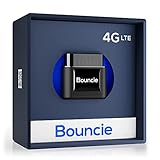
Bouncie is the odd one out in a good way: it plugs into the car’s OBD-II port, so there is no battery to charge and no magnet to hide. The listing names real-time location, route history, speed monitoring, driving insights, geofencing and accident notification. It uses a cellular connection and a paid service plan, so the value is in the software: you see trips, get an alert if a teen driver speeds, and receive notices when the car leaves a set area. Because it sits in the port under the dash, it is easy to find for anyone who looks, so it is better for monitoring than for covert theft recovery. Installation takes seconds: find the OBD-II port, usually under the dashboard near the driver’s knees, and push the unit in until it seats. Teen-driver and shared-family-car use are the sweet spot, because the driving summaries make conversations about speeding and hard braking easier. Check that your vehicle’s port stays powered when the ignition is off, since that affects whether the tracker can report while the car is parked.
- Install: plugs into the OBD-II diagnostic port (most 1996-and-newer vehicles; confirm for your car)
- Power: from the vehicle, no internal battery
- Features: real-time location, route history, speed monitoring, geofence, accident notification
- Connectivity: cellular, with a service plan required
- Waterproofing: not applicable; it sits inside the cabin
Pros:
- Nothing to recharge or hide
- Rich driving and trip data for families
- Easy to move between compatible cars
Cons:
- A thief can unplug it quickly
- Requires an ongoing service plan
Compared with Tracki Pro, it wins for convenience and data, while Tracki is better for covert placement.
4. LandAirSea 54 – Best Rugged Magnetic Tracker With Fast Updates

LandAirSea 54 has been a go-to magnetic tracker for years, and the listing describes it as made in the USA from domestic and imported parts, with a long battery, a magnet, a waterproof body and global tracking. A subscription is required to use it. The attraction is control: depending on the plan, it can report as often as every few seconds, which makes it useful when you want to watch a vehicle move, not just glance at a dot every few minutes. Faster reporting drains the battery faster, so match the plan to how long you need it to run. For a one-off job, such as watching a vehicle during a trip, a fast plan is justified; for everyday parking security a slower, battery-friendly plan is smarter. The magnet is strong enough for steel frames but should still be paired with a spot that is flat and clean, because a rusty or curved surface weakens the hold.
- Mounting: magnetic, intended for hidden exterior placement
- Durability: waterproof, per the listing; exact IP rating is on the listing
- Battery: listed as long life; actual runtime depends on update rate
- Coverage: global tracking, per the listing
- Subscription: required
Pros:
- Choice of reporting speeds on the service side
- Rugged, weather-resistant design
- Magnet allows quick placement and removal
Cons:
- Battery needs periodic charging
- Plans cost more as reporting speed increases
Next to the Cube Pro, it gives more control over reporting but needs charging more often.
5. Tracki Pro 4G LTE – Best Hidden Battery-Powered Magnetic Tracker

The Tracki Pro is a battery-powered 4G LTE tracker with a magnet, made for cars and also assets such as trailers. The listing states long battery life, real-time tracking and that a subscription is required, with the option to cancel. Its large cell is the main selling point for people who want to place it once and forget it for weeks. Because it is not wired in, it can be hidden under a bumper or inside a seat, and moved to another vehicle in a minute, which is helpful for a second car or a rental unit you manage. Because it also suits trailers, generators and tool boxes, it makes sense for anyone who has more than one thing worth locating. Set the reporting interval to the slowest setting that still meets your needs, since that is the single biggest lever on how long a charge lasts.
- Network: 4G LTE, per the listing
- Mounting: magnetic, plus asset use
- Battery: long-life internal battery; actual runtime depends on reporting interval
- Alerts: confirm on listing
- Subscription: required, cancellable per the listing
Pros:
- Not tied to the car’s electrical system
- Magnet and portability
- Works for cars, trailers and equipment
Cons:
- Battery life figures vary a lot with settings
- Subscription required
It is the practical middle ground between the LandAirSea and the long-standby Cube Pro.
6. Cube Pro 4G LTE – Best for Long Standby and a Waterproof Body

Cube Pro leads with a one-year battery claim, which the listing pairs with 4G LTE, an IP67 waterproof rating and a hidden magnetic design for cars, trucks and fleets. IP67 means the housing is dust-tight and can survive short immersion, which suits an undercarriage that gets splashed. A one-year battery figure depends on reporting settings, so read it as a best case. For a car parked for long periods, a tracker that sleeps and wakes on motion is more useful than one reporting constantly and draining quickly. It is a fit for classic cars, boats on trailers, project vehicles and seasonal rides that sit in storage, where you mostly want an alert if the vehicle moves without you. Before relying on it, charge it fully, confirm the app shows a recent position and place it where the magnet gets a firm grip.
- Network: 4G LTE, per the listing
- Battery claim: up to 1 year, per the listing; depends on settings
- Waterproofing: IP67
- Mounting: magnetic
- Subscription: confirm on listing
Pros:
- Long standby life for stored or seasonal vehicles
- IP67 body for outdoor mounting
- Suitable for cars, trucks and small fleets
Cons:
- Battery claim assumes light use
- Service plan details need checking
Choose it over Tracki Pro if standby time matters more than bigger-battery sheer capacity.
Specs Compared
| Product | Power | Network | Mounting | Subscription | Water resistance |
|---|---|---|---|---|---|
| Bouncie OBD-II | Vehicle OBD-II port | Cellular | Plug-in | Required | Confirm on listing |
| LandAirSea 54 | Internal battery | Cellular, global | Magnetic | Required | Waterproof (rating on listing) |
| Tracki Pro | Internal battery | 4G LTE | Magnetic | Required | Confirm on listing |
| Cube Pro | Internal battery (up to 1 year claimed) | 4G LTE | Magnetic | Confirm on listing | IP67 |
| No-subscription hidden tracker (Find My style) | Confirm on listing | No SIM; Find My | Hidden placement | None stated | Confirm on listing |
| No-subscription magnetic tracker (Android style) | Confirm on listing | No SIM; Android | Magnetic | None stated | Confirm on listing |
How We Chose These
We compared the trackers on what their listings state about power source, network type, mounting, waterproofing and whether a service plan is needed. We then read manufacturer descriptions and general guidance on how cellular and crowd-sourced trackers work, so we could explain which tracker suits which job. We separated true cellular trackers from no-subscription locators because they solve different problems, and we flagged any marketing wording that overstates what a device with no SIM can do. When a listing leaves out a figure, the guide says to confirm it on the product page.
What to Look For
Cellular versus crowd-sourced tracking
A cellular tracker has its own SIM and sends position updates over the mobile network, so it works wherever there is coverage. It needs a paid plan because the carrier data is not free. A crowd-sourced locator has no SIM and relies on passing phones to relay its Bluetooth signal, which means it only reports when someone is near. In a dense city lot that can be enough. On a back road or in a rural lot it may never update. If you want theft recovery, choose cellular. If you want to find where you parked, a no-fee locator may do.
Power: battery, wired or OBD-II
Battery trackers are portable and hidden, but you must remember to recharge them; update rate is the biggest factor in battery life. A tracker that reports every few seconds can drain in days, while one reporting every few minutes or only when moving may last months. OBD-II trackers draw power from the car and never need charging, but they are easy to find and unplug. A hardwired tracker, installed to the fuse box, balances both but needs more installation skill. Choose based on whether you value covert placement or no maintenance.
Update rate, geofences and alerts
Update rate is how often a tracker reports its position. A 3-minute interval is fine for locating a parked car; 10 to 60 seconds is better for following movement. Geofences send an alert when the vehicle enters or leaves a drawn area, which is useful for teens, valets and fleet use. Movement and speed alerts are a plus, and low-battery alerts are essential for battery models. Check that alerts arrive by push notification and not only by email.
Safe and legal use
Only track a vehicle you own or have clear permission to monitor. Placing a tracker on someone else’s car without consent can break stalking and privacy laws in many states. Magnets should be mounted on a clean metal surface, away from exhaust parts and moving components. Lithium batteries should not be exposed to extreme heat for long periods, so avoid placing a tracker on or near hot exhaust or engine parts. If you share a car with family, tell them about the tracker.
Total cost of ownership
The purchase price of a tracker is only part of the cost. Cellular models carry a recurring plan, so a device that looks inexpensive can end up costing more over two or three years than a pricier one with a cheaper plan. Add up the plan over the period you expect to own the vehicle, then compare it with the no-fee locators that carry no recurring cost but also no independent connection. Ask whether the plan can be paused during winter storage, whether a fast reporting rate costs extra, and whether cancelling is simple. Those answers matter more than a small difference in hardware.
Privacy and data
Every cellular tracker stores your location history with the service provider, so read how long data is kept and who can see it. Use a strong, unique password for the tracker account, turn on two-step verification where offered, and remove other users who no longer need access. If you sell the car, remove the tracker and delete the device from your account first. This is especially important for plug-in OBD-II units, which are easy to forget in the port.
A worked example
Suppose you park a second car for weeks at a time. A tracker that reports every 15 minutes while moving and sleeps otherwise will last much longer than one set to update every few seconds. You would choose a magnetic 4G tracker with a long battery, a modest plan and a geofence around the driveway. If instead you only worry about forgetting where you parked at the stadium, a no-fee locator is enough.
Questions
Do GPS trackers for cars always need a monthly plan?
Cellular trackers do, because they use mobile data. Trackers that advertise no fee usually rely on a crowd-sourced network and are less reliable for live tracking.
Where should I hide a magnetic tracker on a car?
Mount it on a flat, clean steel surface under the vehicle or inside a bumper cavity, away from exhaust parts and moving components. Keep it dry where possible, even on waterproof models.
Will a tracker drain my car battery?
OBD-II trackers draw small amounts of power and are designed to sleep when the car is off, but a car left parked for months should be checked. Battery trackers do not touch the car battery at all.
Is it legal to put a GPS tracker on my own car?
Generally yes, if you own the vehicle. It becomes risky if the car is shared with a spouse or co-owner or if someone else drives it without knowing, so check local rules and disclose where appropriate.
How accurate are car GPS trackers?
Most consumer trackers resolve location to within a few meters outdoors with a clear view of the sky. Accuracy drops in garages, tunnels and dense urban canyons.
Can a thief find and disable a tracker?
Yes, which is why placement matters. Plug-in OBD-II units are easy to spot, while hidden magnetic trackers are harder to find, though no tracker is invisible.
Update History
- October 20, 2026 – Initial publication; product set drawn from current catalog listings.
- Check the product page for current specifications and availability before buying.
Sources
- Manufacturer product and specification pages for Bouncie, LandAirSea, Tracki and Cube
- Retailer listing titles and specification fields
- Published guidance comparing cellular and Bluetooth-based trackers